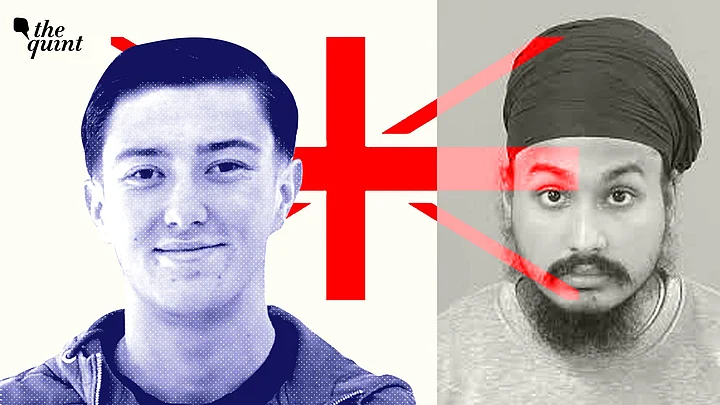
The murder of 18-year-old Henry Nowak, along with the initial failures of police officers who treated him as a suspect, sparked an anti-immigration rhetoric across Britain—and Southampton saw the worst of it.
The case raises serious questions about the British police's decision-making and accountability, including the fact that officers initially accepted Vickrum Digwa’s version of events—who falsely claimed he had been racially abused and had acted in self-defence against university student Nowak—and handcuffed the dying teenager. Body-camera footage later showed Nowak repeatedly telling officers that he had been stabbed and was struggling to breathe.
But let us be honest about what has happened alongside the legitimate outrage against the developments.
The case has since been seized, distorted, and weaponised into a racist onslaught by the far right to push a political agenda that has very little to do with Nowak and everything to do with power.
Narrative Hijacked by the Right
Nowak, an Essex native studying at the University of Southampton, was stabbed to death by 23-year-old Digwa in December 2025. Last month, Digwa was convicted and received a life sentence. In a statement to Parliament, Home Secretary Shabana Mahmood confirmed that investigations into police conduct were ongoing.
Even as the conviction was barely announced, Reform UK politicians, right-wing commentators, and online activists had already decided what it meant.
The term "two-tier policing" became the lens through which the entire case was filtered—the argument being that institutions treat allegations of racism differently depending on the race of those involved.
Reform leader Nigel Farage made the comment, calling it an "anti-white" police prejudice, and called on the public to respond with "pure, cold rage." In a video posted on the Reform UK's YouTube channel, Farage talks of how the "rights and privileges of white people matter less than those of ethnic minorities."
Far-right activist Tommy Robinson claimed on X that Nowak had been “murdered by racist police policies that target white people” and summoned a rally. The rally resulted in a violent confrontation with the police.
Farage addressed the media the next day with a warning:
“What you saw in Southampton last night is the beginning. If we get large numbers of young white males who think the police are prejudiced against them, goodness knows where we go. This has to end.”
Even US Vice President JD Vance took to X and blamed the death on the "mass invasion of migrants"—and said the "only response" was "righteous anger."
This is not a novel argument. Concerns regarding immigration and national identity have resurfaced in the UK in recent years, be it through political rhetoric, media coverage, or anti-immigrant public protests.
Such demonstrations have been frequent since 2024-2025, including rallies outside asylum facilities and large-scale marches in a number of English cities, demanding stricter border controls and fewer immigrants in the UK. Counter-protests led by civil society and anti-racism organisations have coincided with these, reflecting a larger and frequently divisive public discussion about migration, belonging, and governmental policy.
The incident also sparked a wider discussion about how immigrant and minority communities can be collectively associated with the actions of individuals. Prime Minister Keir Starmer criticised attempts to politicise the case, accusing figures, including Elon Musk, of “whipping up division”. He also warned against its use to generalise about communities or policing.
Home Secretary Mahmood also urged restraint in public commentary, cautioning against rhetoric that could inflame tensions while investigations into the incident continued.
Sikh Community Faces Backlash
In the eye of a racist maelstorm, the Sikh community has responded with both organised acts of remembrance as well as public condemnation.
Sikh organisations and gurdwaras throughout the UK put out statements, condemning the killing and expressed ther condolences to Nowak's family.
Categorically denouncing the murder, the groups have emphasised that the act did not reflect Sikh teachings or the Sikh faith. In addition to these declarations, Sikh community organisations announced or planned Akhand Path (a 48-hour nonstop recitation of the Guru Granth Sahib) rituals in Nowak's honour, including at Southall's Sri Guru Singh Sabha Gurdwara.
Although these events were publicly announced and covered, specifics regarding participation and attendance have not been made public.
The case also reignited calls for a ban on the kirpan (dagger). Following Nowak's murder, many voices argued that Sikhs should no longer be permitted to carry the article of faith.
The kirpan makes up one of the Five Ks of Sikhism and is carried by initiated Sikhs on their person as a symbol of duty, justice, and the responsibility to protect the vulnerable. It has been long legally recognised in the UK as an article of religious faith, with the Sikhs wearing the kirpan without controversy for years in the UK now. Nowak's killing, however, has placed the practice under renewed scrutiny.
In the aftermath of violent knife crimes, including the Nowak case, the issue has periodically resurfaced in public debate, with some commentators calling for restrictions. Sikh organisations have consistently responded by emphasising the distinction between the ceremonial kirpan and any unrelated weapons used in acts of violence, warning against conflating individual criminal actions with religious practice.
Sikh communities have been present in Britain since the late 19th century, with legal accommodation for the kirpan developing through a balance between religious freedom and public safety laws. While carrying a kirpan is generally lawful when done as part of Sikh religious practice, its use as a weapon in any criminal act is treated under ordinary criminal law.
Ordinary Sikhs in the UK have also experienced a rise in hostility, with reports of verbal abuse directed at members of the community. Sikh schoolchildren, too, have found themselves on the receiving end of suspicion and prejudice.
An Undeniable Far-Right Pattern
The incidents that unfolded in Belfast simultaneously added fuel to fire.
In the wake of a Sudanese man being involved in a knife-stabbing incident in Northern Ireland, anti-immigrant protesters burned vehicles and houses targeting ethnic minorities. Similar rallies followed in Glasgow. Men went door to door demanding that foreigners leave. MP Claire Hanna called it plainly what it was—a "race-based pogrom."
Across both the Nowak case and the Belfast unrest, similar patterns have emerged in the manner in which violent incidents are discussed in public.
A triggering event—usually a high-profile crime—is followed by rapid circulation of incomplete or early information online. Among others, X owner Elon Musk has of late commented on UK policing and public order cases on his social media platform, amplifying attention and debate around ongoing controversies.
Figures such as Tommy Robinson have frequently been associated with organising and promoting street demonstrations linked to immigration and national identity, where individual incidents are often presented as evidence of wider social breakdown. In this environment, attention quickly shifts from the specific case to broader communities, which become symbolically linked to the actions of individuals.
The rise of anti-immigration politics in Britain cannot be understood without examining the role of Reform UK and figures such as Farage, who for years have built political support around the idea that immigration is the source of many of the country's problems. What is equally striking, however, is the response of the Labour Party.
Rather than confronting this narrative directly, Labour has often appeared to accept its underlying assumptions through policies aimed at tightening immigration rules, making refugee protections more temporary, and emphasising migration as a burden risk reinforcing the very fears that the far right has spent years cultivating.
Politics of Belonging
What is equally notable is how parts of Labour’s recent immigration positioning engage with the same underlying framing of migration as a problem of control and burden. Proposals associated with Home Secretary Mahmood, including plans to extend the qualifying period for Indefinite Leave to Remain (ILR), have been presented as measures to tighten settlement rules and reduce long-term migration pressures. The Migration Advisory Committee has warned that increasing the ILR qualifying period could raise the risk of poverty, exploitation, and labour market insecurity for migrants who are already in the UK.
At the same time, political discourse around “small boats” arrivals has normalised language that frames migration primarily through enforcement and irregularity.
Critics argue that this broader securitised framing risks affecting groups including long-term workers in key sectors such as healthcare and social care, where migrant labour plays a significant role in staffing shortages and service delivery.
Labour MPs such as Nadia Whittome have pushed back against this direction of travel, warning that increasingly restrictive immigration rhetoric and policy risks normalising suspicion towards migrants and reinforcing hostile narratives about “illegality” and burden. In parliamentary debates and public statements, she has argued that such framing can contribute to a political climate in which migrants are viewed primarily through enforcement and compliance lenses rather than as workers and residents embedded in UK society.
This is a political mistake as much as it is a moral one. If voters want a hard-line anti-immigration agenda, many will choose the party that has consistently championed it rather than a centre-left party attempting to imitate it.
In trying to neutralise Reform UK's appeal, Labour risks alienating its own liberal and progressive supporters while failing to win over those committed to anti-immigration politics.
Instead of competing on Reform's terrain, Labour should challenge the premise that immigrants are responsible for Britain's economic and social problems and focus attention on the deeper structural issues facing the country.
Who Benefits?
Migrants represent a significant share of the UK’s workforce and are over-represented in key public services. Foreign-born workers number just over seven million, or around 21 percent of the UK workforce. Approximately 21 percent of the National Health Service (NHS) staff in England are non-British nationals, including 27 percent of NHS nurses and almost 30 percent of doctors in some categories.
About a quarter of the adult social care workforce are foreign nationals and some roles in adult social care, such as care workers, are even more reliant on migrant labour. The census data also shows that nearly half of specialist doctors working in England and Wales (47.5 percent) were born outside the UK.
These numbers reflect a long-standing reliance on overseas recruitment in sectors that have long-standing shortages, not short-term labour trends.
That same language echoes today in Trump's rhetoric, in Elon Musk's posts, and in Reform UK's campaign material. The colonies are gone but the ideology remains, now directed inward at the immigrant communities who came—often from those same former colonies—to do the work Britain needed done.
What the Nowak Controversy is Really About
What the middle class fails to realise is that the war they are being rallied to fight is not for their safety. It is a political war from which the far right extracts economic and electoral power, using manufactured fear to capture institutions and consolidate influence.
Anti-immigration politics is not primarily about solving Britain's problems. It is a tool, deliberately wielded by people who extract economic and electoral power from fear, division, and social anxiety. Its success depends on persuading ordinary people that immigrants are responsible for crises whose roots lie elsewhere.
Migration is not a modern problem—it is the direct consequence of that exploitation. People made their homes where the empire took them, or where the wars it started drove them. That is the history.
To the people who believe this politics is protecting them or saving their country—look around. The same powers fuelling anti-immigration hatred are the ones waging wars and destabilising nations, creating the very refugee and migration crises they then blame immigrants for. You are not being protected. You are being recruited into a project that has never served people like you and never will.
(Nishtha Sood holds a degree in Politics and International Relations from SOAS, London, and writes on terrorism laws in India, linguistic movements, and issues of identity. This is an opinion article and the views expressed above are the author’s own. The Quint neither endorses nor is responsible for them.)