
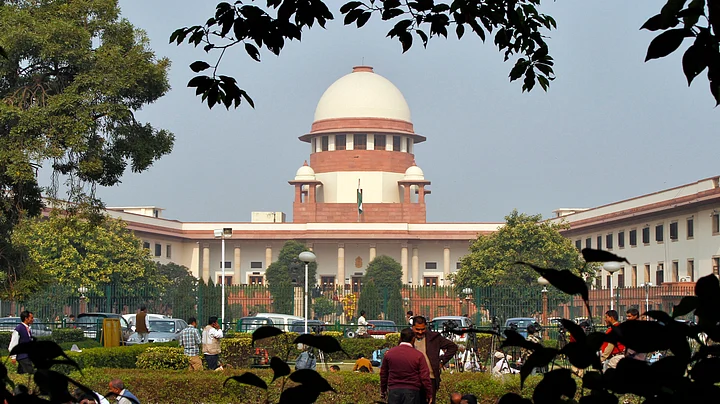
On 20 March 2018, when a Supreme Court bench led by Justices Adarsh Goel and UU Lalit passed a judgment that effectively weakened the power of the Scheduled Castes and the Scheduled Tribes (Prevention of Atrocities) Act, 1989, the historically caste-oppressed communities across the country rose in anger to protect the Act in its originality. The subsequent Bharat Bandh call on 2 April forced the government to overturn the Supreme Court judgment through the approval of Parliament.
The recent 6:1 judgment on 1 August by a seven-judge Supreme Court constitution bench led by Chief Justice of India Justice Chandrachud has held that the sub-classification of Scheduled Caste and Scheduled Tribe categories is permissible. This has once again created a massive outrage among the oppressed groups, and a Bharat Bandh call has been made for 21 August too to protest the judgment.
I intend to analyse the judgment of the apex court on the sub-classification of SC and ST, which overturned the EV Chinniah judgment, in the light of the historical evolution of the Scheduled Caste category. The first question — is it even under the ambit of the Supreme Court to review a well-settled matter in the constituent assembly?