
ADVERTISEMENTREMOVE AD

India's Green Bonds Have Become a Climate Branding Exercise. Nothing More

India's green bonds fund old projects, not new climate action, raising questions over whether they're greenwashing.

Published
story-hero-img
i
Aa
Aa
Small
Aa
Medium
Aa
Large

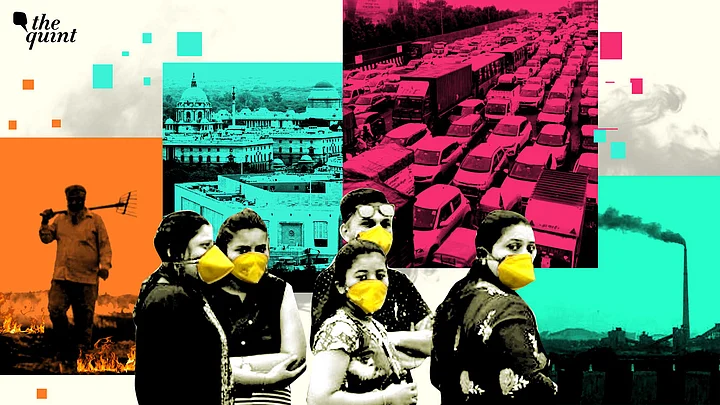
India slipped from the 10th spot in 2025 to 23rd in 2026 in the Climate Change Performance Index that ranks 70 countries. In the World Air Quality Report 2025, it is assessed the sixth-most polluted country—with Loni being its most polluted city, and Delhi the most polluted capital worldwide.

On the water quality front, while several countries scored 100 percent for safe drinking water in the World Population Review 2026 report, India with a lowly 25.5 percent score was placed at 139 out of 180 countries. 

Look at any environmental, climate change, and pollution data or index, India’s performance and quality status is dismal.

Despite India facing nothing short of an environmental emergency, the government remains unmoved. 

There are no major environmental programmes, except some headline-catching ones like PM Surya Ghar Muft Bijli Yojana (PMSGMBY), which seek to heavily subsidise installation of 1 crore home solar power generation systems. 

The government did launch a programme to raise Sovereign Green Bonds (SGrBs) in 2022 to make the Budget a 'Green Budget'.

But is it making any difference to India’s environmental performance? Or is the SGrBs programme a means of "greenwashing"?

ADVERTISEMENTREMOVE AD

The Promise Of Sovereign Green Bonds

Finance Minister Nirmala Sitharaman, after neglecting the environmental agenda in all previous Budgets, decided to make Budget 2022-23 a 'Green Budget'. Several initiatives like energy transition, circular economy, transition to carbon-neutral economy, battery swapping policy, among others, were announced. 

In addition, she announced SGrBs as part of the government’s overall market borrowings to mobilise resources for green infrastructure to "help in reducing the carbon intensity of the economy".

Soon thereafter, the government issued a 'Framework for Sovereign Green Bonds'. The framework defined a 'green project' as any project or programme which encourages energy efficiency in resource utilisation, reduces carbon emissions and greenhouse gases, promotes climate resilience and/or adaptation, and values and improves natural ecosystems and biodiversity.

A detailed list of the Government of India expenditures, investments, and grants that meet these objectives was included in the framework. It was also decided that only the expenditures incurred by government departments and public sector enterprises would be funded from the SGrBs. 

Old Liquor In A New Bottle

Since the 2022-23 Budget, the government has been announcing SGrBs amount to be raised during the year in every Budget. The SGrBs are issued through the traditional Reserve Bank of India (RBI) government borrowing mechanism in the form of government securities which are essentially rupee-denominated domestic sovereign bonds. A part of the larger government securities issuance programme (Rs 0.16 trillion out of Rs 11.59 trillion in 2022-23) are designated as SGrBs. 

There is no difference whatsoever between normal government bonds and SGrBs. The SGrBs, too, are issued by the RBI on behalf of the Government of India. There is no difference in the investor base or the mode of interest payments or repayment as well.

The RBI does state in the SGrBs issue announcement that their proceeds would be used or earmarked by the Government of India for specified climate projects undertaken in the public sector. 

The SGrBs proceeds do not form part of any separate earmarked pool of funds either. An account created in Public Account in the name of SGrBs is proforma only. Nothing is deposited in this account at the time of SGrBs receipts. Instead, like every other government receipt, SGrBs receipts are credited in the Consolidated Fund of India (CFI).

At some point of time, a contra accounting entry is passed in the CFI (transfer to SGrBs account and back) to create the illusion that the SGrBs funds were used for specified green projects (details in Statement 15 in Expenditure Profile).The SGrBs funds, in fact, have been used to substitute ongoing investments, expenditures, and programmes—earlier funded from normal government Budgets.

The government—and the RBI—had expected a greenium (lower interest cost) for the SGrBs over comparable normal government securities, expecting investors’ emotional enthusiasm for being part of servicing the green agenda. For investors, including banks and public sector institutions, however, it did not matter much, resulting in some under-subscription initially. The RBI almost did away with the greenium later.  

There is no difference between the SGrBs and the normal government securities. The SGrBs are an old wine in a new bottle.

Following the Money

The table below summarises projects and programmes funded from the SGrBs, including the SGrBs amounts proposed to be raised in the Budgets and actually raised.

The Green India Mission, an important climate change programme which is operated by the Ministry of Environment, Forests and Climate Change, has the least funding. The Ministry of New and Renewable Energy-focused renewable energy programmes are witnessing increasing fundings thanks to the PMSGMBY programme. Metro projects of the Ministry of Housing & Urban Affairs and the Ministry of Railways (in addition, the Railways Ministry's energy-efficient electric locomotive unit is also covered)—the largest claimants for SGrBs funding—make negligible contribution to climate change. 

Lately, the government seems to have lost enthusiasm for SGrBs. The SGrBs funding was kept at Rs 200 billion in 2024-25 (at 2023-24 level) despite the funding requirement of the designated programmes rising by nearly 50 percent. As a consequence, the government funded Rs 85.77 billion (of Rs 302.74 billion) for these earmarked programmes from the normal Budget. 

The government announced and raised only Rs 150 billion SGrBs in 2025-26. The 2026-27 programme is also for Rs 150 billion, which will not meet even a half of the funding required. 

It would not be surprising if the government decides to further squeeze or discontinue the SGrBs programme in years to come. No one will shed any tears if it happens.

Greenwashing or Green Policy?

The SGrBs programme to reduce carbon intensity of the economy has been in implementation for five years. The government, however, has not produced any report quantifying its contributions. Possibly, the government has nothing to trumpet about.

In fact, the SGrBs funding is too small. The SGrBs raised only Rs 860 billion in this period whereas the government’s total market borrowing exceeded Rs 50,000 billion. The SGrBs contribution is, too, insignificant to make any real difference.

The SGrBs programme did not lead to any new green or climate change programme or investment. The government applied SGrBs to part fund selected programmes, which were earlier funded from the normal Budget. The SGrBs only substituted existing expenditures on these programmes. 

Ironically, the Green India Mission witnessed sharply declining funding (even from its miniscule size) as expenditure thereon fell from Rs 1.57 billion in 2022-23 to Rs 0.62 billion in 2025-26RE. 

The SGrBs programme has been nothing but a small greenwashing. 

ADVERTISEMENTREMOVE AD

Climate as a National Emergency

India’s climate and pollution agenda is enormous, reflected in poor global ranking on climate action, air quality, and water quality—and in the resulting burden on public health and everyday quality of life.

India should not allow itself to be carried away by making grand announcements—500 GW solar power generation by 2030, Net Zero by 2070, hosting COP33 in 2028 in India (offer since withdrawn), or the SGrBs to reduce carbon intensity of the Indian economy. 

Many countries have cleaned up pollution in less than 10 years (including the big-sized and developing China). Many countries witness electric vehicles (EVs) purchase making up more than 75 percent of new passenger vehicles. 

We need to be serious. Instead of trophy announcements, we need to address the climate and pollution emergency facing India, and act on a 10-year plan that cleans up air and water pollution as the national priority number one. 

(The author is economic and fiscal policy advisor, SUBHANJALI, former Finance & Economic Affairs Secretary, and author of 'The $10 Trillion Dream'. This is an opinion piece and the views expressed are the author’s own. The Quint neither endorses nor is responsible for them.)

Speaking truth to power requires allies like you.
Become a Member
Monthly
6-Monthly
Annual
Check Member Benefits
×
×