
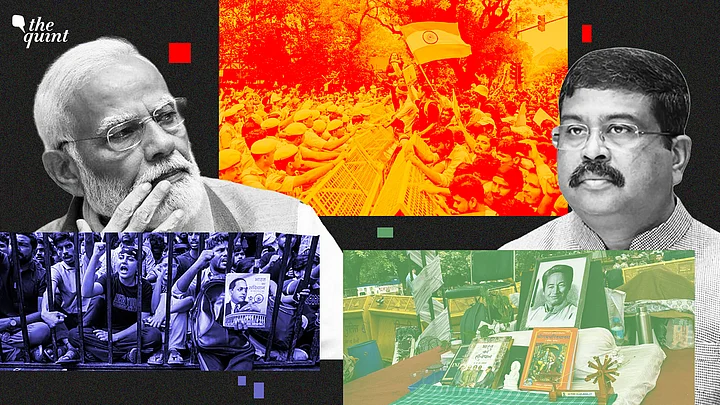
At the time Dharmendra Pradhan posted his resignation letter on X on Saturday afternoon, the air at Jantar Mantar still smelled of tear gas. Police had fired canisters to scatter protesters only hours earlier, and the Centre was preparing for a third round of talks with the Cockroach Janta Party (CJP), the loose but stubborn coalition that had camped at the protest site for over a month demanding exactly this outcome.
The Education Minister's exit is being read, understandably, as a win for the street. But the more interesting and more uncomfortable question is what kind of win it actually is, and what it says about how accountability gets delivered in India today—not through institutions built for the purpose, but through the sheer attrition of public anger.
Let's be clear about what happened. This was not a resignation forced by a parliamentary inquiry, a judicial indictment, or even a formal committee finding institutional failure serious enough to warrant Pradhan's removal. It was a resignation that arrived the same week as a fresh round of negotiations, timed to pre-empt talks rather than follow their conclusion. That timing matters. It suggests a government trying to manage a headline as much as a crisis extracting itself from a news cycle before the optics of tear gas and an intransigent minister could combine into something worse.