(The following article has been republished as the Rekha Gupta-led Bharatiya Janata Party (BJP) government marks one year in power in Delhi.)
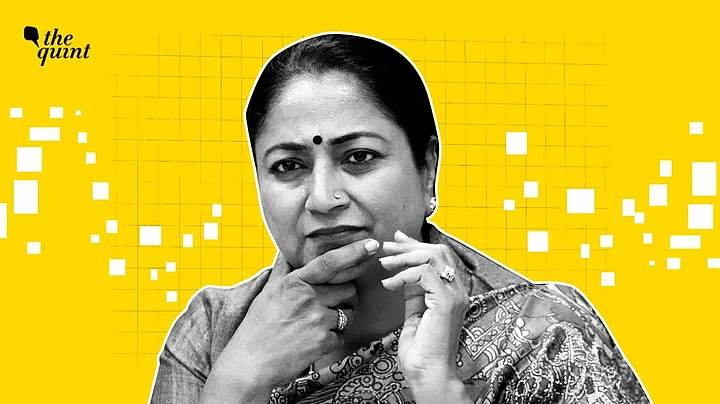
Indian memeverse has a new star. It is not an influencer or celebrity, but Delhi's Chief Minister Rekha Gupta. Since taking office in February 2025, Gupta's verbal slip-ups in public have turned her into a social media socialite, though for all the wrong reasons.
Be it calling freedom fighter Netaji Subhash Chandra Bose as "Netaji Subhash Palace", claiming Prime Minister Narendra Modi "launched a bullet train" from Punjab to Delhi, referring to AQI as “temperature“ and suggesting it could be measured with any instrument, mispronouncing AQI as “AIQ” or mixing up the Congress party with the colonial British inside Delhi Assembly, the new CM has left no meme unturned.
Gupta even featured in a clipped video in which she seemingly admitted to her party being involved in EVM hacking, though fact-checkers later clarified she was being rhetorical.
Sexism or Real Criticism?
Last week, Gupta became emotional while speaking inside the Delhi Assembly, calling out the Aam Aadmi Party (AAP) for making memes about her. “It hurts deeply,” she said, arguing her mistakes were unintentional and alleging she was being targeted for being a woman in power.
“How can a woman run Delhi? This is their mindset,” she claimed. The BJP’s IT Cell head Amit Malviya has also echoed this previously, asking critics to “stop targeting Rekha Gupta just because she is a woman who is doing a good job”.
But the public response to her suggests the messaging has not sunk in. Beyond the obvious ridicule for the meme-able comments lies a deeper discontentment with the way the capital's new CM is handling pressing issues like pollution.
When Gupta attended a football event featuring Lionel Messi at Jawaharlal Nehru Stadium at a time when Delhi's air quality had plummeted to the ‘very poor’ category, Delhiites greeted her with chants of “AQI, AQI”.
But is this really about gender?
After all, Delhi is not new to women in power. Sheila Dikshit was the CM of Delhi for 15 long years from 1998 to 2013, and credited with several infrastructural developments in the city. While she too had her share of critics, it's nothing compared to the criticism Gupta has faced in just a year in office.
All women politicians in India have to deal with rampant sexism and patriarchal backlash, that is a reality. But gender may not entirely be the driver for all the flak Gupta faces, especially online. It is her inability to fulfill her responsibilities as a person in power that drives much of the diatribe.
Inconvenient Silence
What’s interesting is that she does not respond directly to the critiques.
When her husband, Manish, appeared in official government meetings, conducting inspections, and apparently giving directions to officers, there was no official clarification about his role.
The AAP compared this to “Phulera Panchayat”, a reference to the Prime series Panchayat, where the elected woman pradhan Manju Devi is depicted as a figurehead while her husband Brij Bhushan takes all official decisions and runs the show.
The comparison resonated because it captured a persistant democratic anxiety: are we being governed by the person we elected, or is someone else pulling the strings?
The Opposition called it “completely unconstitutional” that an unelected person participates in official work. The BJP defended it as constituency management. But Gupta herself never addressed it substantively.
Her silence rings louder when one takes cognisance of her political journey. Gupta was the President of the Delhi University Students’ Union (DUSU) in 1996, its counsellor a year before, and finally a member of the Delhi Assembly elected in the BJP’s 2025 landslide, after winning Shalimar Bagh by a staggering 29,595 votes.
However, her victory as the CM came with its own set of suspicions. The AAP suggested the BJP “draws slips” for CM posts, pointing to similar patterns in Haryana, Madhya Pradesh, and Rajasthan, where surprise choices were made.
Was Gupta chosen for her leadership capabilities or her manageability? When her selection as a CM has been questioned and she suddenly has an unelected advisor in official meetings, the 'Panchayat' comparison becomes a legitimate concern.
Despite such serious questions on the nature of her governance and conduct as a CM, something quite extraordinary has been happening on the internet.
Youth Must Move Beyond Memes
The current batch of youth, be it Millennials, Gen Zs or Alphas, is interacting with politics in a manner unlike any experienced by previous generations—through memes. But using humour as a means to questioning power is barely new. Historically, the role of the royal court jesters was to both entertain the ruler and also question them without losing their heads.
Gupta's gaffes may be viral meme fodder but some of the memes, albeit cringe-worthy, reflect real anxieties.
When videos of people measuring AQI with a thermometer surface, they are not just mocking Gupta’s gaffe. They are questioning why the CM doesn’t seem to understand basic environmental metrics, even as the city chokes on pollution.
When satirical videos show white clothes turning yellow-brown in Delhi's tap water, they are pointing to the government's inability to provide clean drinking water to citizens, something that deeply affects daily life.
Capturing the youth's attention is the most valuable political currency in 2026. If memes are what get young people to pay attention to their CM's statements, then maybe the meme economy isn’t entirely frivolous.
And yet, though the youth is vibing on critical memes, they are not asking the harder questions. Even as we discuss whether Gupta knows what AQI stands for, Delhi’s actual issues get buried. The Yamuna remains toxic. Air quality hits hazardous levels. Water quality issues persist. The challenge, thus, is to convert online engagement into actual civic participation.
Can we shift from the creation and consumption of memes online and instead focus on taking action in real life? The answer is yes.
When the Supreme Court declared in November 2025 that it would shrink the Aravalli Hills category, leaving 90 percent of Aravallis unprotected, the youth took to the streets. Protests broke out everywhere in north India. The Supreme Court, on 29 December 2025, stayed its own order.
Similarly, when the Supreme Court ordered stray dogs to be confined to shelters, hundreds marched through Delhi.
These examples prove that showing up matters. Collective gatherings in public spaces create pressure that cannot be ignored.
Thus, while we engage with Gupta’s memes, we need to do more.
By keeping track of our MLAs' attendance. By attending local area committee meetings. By filing RTIs about our neighbourhood projects. By joining peaceful protests when real issues demand it.
Memes point to democratic participation, but they are just a starting point. Real accountability requires real action.
The question isn’t whether Rekha Gupta becomes a meme.The question is whether we can turn the online scrutiny into a demand for actual accountability.
Because if we can’t, then we are not the jesters speaking truth to power. We are just the audience laughing while nothing changes.
And the joke is definitely on us.
(Aaditya Pandey is a poet and freelance writer based in New Delhi, writing on art, culture, politics and queerness. This is an opinion piece and the views expressed are the author's own. The Quint does not endorse or is responsible for the same.)