
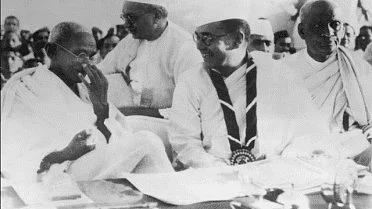
Subhas Chandra Bose, popular as Netaji in his later years and after, was twice President of the Indian National Congress (INC)—in 1938 and 1939.
Born on 23 January 1897, he was 41 when he presided over the 51st session of the INC in Haripura, Gujarat. He succeeded Jawaharlal Nehru, who was one year younger when he became the INC President for the first time at the historic Lahore Session that had passed the resolution for Purna Swaraj (complete independence) in 1929.
When Bose took over from Nehru, the latter had already been INC President thrice—1929, 1936, and 1937.
Besides having similar views on planning, socialism, and religious equality, both had by the decade of 1928-38 become icons of the youth, including revolutionaries like Bhagat Singh, Chandrasekhar Azad, and Khudi Ram Bose.