
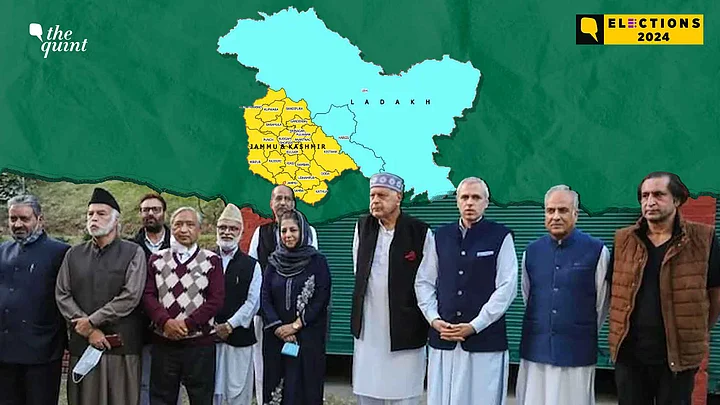
On the night of 4 August 2019, almost all major Kashmir-based political parties closed their ranks and came together to jointly oppose the revocation of Article 370. Representatives from around the seven parties descended on the foothills of Gupkar – an affluent lake-side locality in Srinagar where most former chief ministers are located – and marched together, voicing anger over and rejection of the momentous decisions that were to take place the following day.
Such political posturing was supposed to indicate a broad-based unity that ought to complicate the matters for the Bharatiya Janata Party (BJP) as it moved to scrap the erstwhile state’s autonomous status.
Yet more than four years later, such unity has all but dissipated as the Union Territory (UT) heads into its first major electoral exercise since 2019.
So as the J&K enters election season, its political landscape in the region is marred by far too many dissensions. Political pundits suggest that while this situation was complex, it was not entirely unpredictable.