
ADVERTISEMENTREMOVE AD

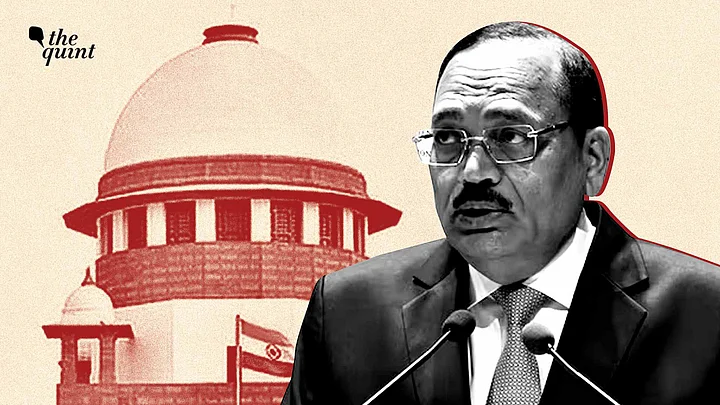
By Rejecting Plea Against Assam CM, CJI Surya Kant Overlooks SC's Own Precedent

Those approaching SC against Assam CM Himanta Biswa Sharma's communal rhetoric were shown the door by CJI.

Published
story-hero-img
i
Aa
Aa
Small
Aa
Medium
Aa
Large

Today, the only conscience keeper is Justice Nagarathna.

Her dissenting voice in Kaushal Kishor case (2023), where a remedy was sought against hate speech by persons in positions of power, it was she who categorically held: “The duty cast upon the State under Article 21 is a negative duty not to deprive a person of his life and personal liberty except in accordance with law. The State has an affirmative duty to carry out obligations cast upon it under statutory and constitutional law, which are based on the fundamental right guaranteed under Article 21 of the Constitution."

"Such obligations may require interference by the State where acts of a private actor may threaten the life or liberty of another individual. Failure to carry out the duties enjoined upon the State under statutory law to protect the rights of a citizen, could have the effect of depriving a citizen of his right to life and personal liberty. When a citizen is so deprived of his right to life and personal liberties, the State would have breached the negative duty cast upon it under Article 21.”
Justice Nagarathna

Her lone voice was dissolved by a four-member majority which held: “A mere statement made by a minister, inconsistent with the rights of a citizen under Part ­III of the Constitution, may not constitute a violation of the constitutional rights and become actionable as a constitutional tort. But, if as a consequence of such a statement, any act of omission or commission is done by the officers resulting in harm or loss to a person/citizen, then the same may be actionable as a constitutional tort”.

When some political parties and public-spirited persons knocked the doors of the Supreme Court (SC) against the statements made by Assam Chief Minister Himanta Biswa Sharma, they were shown the door by the Chief Justice Surya Kant's bench. They were simply told to avail the alternative remedy before the Guwahati High Court—and that those petitions were filed in the SC with a "calculated effort to demoralise high courts".
ADVERTISEMENTREMOVE AD

Article 32 and 'Alternative Remedy'

The SC was conceived for the first time under the new Constitution—and included in its chapter on fundamental rights. Then, Dr Babasaheb Ambedkar said Article 32 was the heart and soul of the Constitution.

He went on to explain that "the fundamental rights provided by the Constitution ought to be protected by the 'social conscience' of the citizens, because 'if the fundamental rights are opposed by the community, no law, no Parliament, no judiciary can guarantee them in the real sense of the word" (Dr Babasaheb Ambedkar: Writings and Speeches, 2019).

Article 32, which empowers the SC with the powers to issue prerogative writs to enforce the fundamental rights of any citizen, does not envisage that the power has to be exercised only after availing all other remedies under law.

In essence, the availability of other remedies is no ground to reject entertaining any petition if it is based on fundamental rights of a citizen.

The theory of alternative remedy evolved by the courts over the period was only a judge made law—and based on stopping the “floodgate” theory of increased litigations in the higher forum.

In the UK, which is the origin of the prerogative writs power to the courts, the discretion of the court was called as 'chancellor's foot' by which the discretion could either expand or shrink depending upon the volition of the judge who hear the matter.

A self-imposed restriction could never be elevated to the level of legal constraint for a judge to entertain a petition even in the highest court if the situation warrants. By entertaining such petitions, the SC does not undermine the dignity of high courts which are also vested with similar powers under Article 226 of the Constitution.

SC's Past Precedents

When Sunil Batra, a death convict in Tihar jail wrote a letter to the SC about his fellow prisoner Premchand being attacked by the jail warden, the court promptly treated the letter as a petition under Article 32 and issued notices to the Delhi Administration. Thus, the case became a milestone in the epistolary jurisdiction of the courts.

Neither the letter remained unnoticed nor the parties were ever told to approach the Delhi High Court, merely 2 km away from Tilak Marg. Justice Krishna Iyer, full of the constitutional spirit, wrote:

“The rule of law meets with its Waterloo when the State's minions become law-breakers and so the court, as the sentinel of the nation and the voice of the Constitution, runs down the violators with its writ and secures compliance with human rights.” (Sunil Batra I, 1979)

The case also had a Part II by which all the state governments were promptly told to undertake prison reforms, thereby leading to changes in the prison rules.

Similarly, when the populace of Delhi were watching the Asian Games in 1982, Gobinda Mukhoty wrote a letter to Justice PN Bhagwati about the plight of migrant labour and children engaged in construction work across various stadiums in the city. That letter was promptly treated as a writ petition filed under Article 32—and the Delhi Administration was hauled up.

Justice Bhagwati, speaking for the court, never thought of relegating the case to the Delhi High Court on the plea that it was a "calculated effort to demoralise the high court". He even posed the question much harsher and said:

“If the sugar barons and the alcohol kings have the fundamental right to carry on their business and to fatten their purses by exploiting the consuming public, have the 'chamars' belonging to the lowest strata of society no fundamental right to earn an honest living through their sweat and toil?”

He further questioned the logic of rejecting such petitions at the instance of people who have no faith in the system.

He exhorted: “...if the fundamental right of the poor and helpless victims of injustice is sought to be enforced by public interest litigation, the so-called champions of human rights frown upon it as waste of time of the highest court in the land, which, according to them, should not engage itself in such small and trifling matters...”

"...Moreover, these self-styled human rights activists forget that civil and political rights, priceless and invaluable as they are for freedom and democracy, simply do not exist for the vast masses of our people."

No doubt the power to issue prerogative writs to enforce the fundamental right also vest with the high courts. But there are circumstances when the SC has hesitated to entertain such cases depending upon the ground reality of the situation.

When Bhim Singh, an MLA from Jammu & Kashmir, was prevented from attending the Assembly after he was suspended from the House, he moved the court in Srinagar which stayed his suspension. But the government was more clever.

He was taken away by the police with a specious FIR. This time, they directly moved the SC.

Entertaining the petition under Article 32, Justice Chinnappa Reddy declared: “Custodians of law and order should not become depredators of civil liberties. Their duty is to protect and not to abduct… We have no doubt that the constitutional rights of Shri Bhim Singh were violated with impunity. Since he is now not in detention, there is no need to make any order to set him at liberty, but suitably and adequately compensated, he must be. That we have the right to award monetary compensation by way of exemplary costs otherwise is now established.” (Bhim Singh, 1985)

A Lesson From History

Perhaps Chief Justice Surya Kant might now have forgotten the SC's past history. During the Emergency, when several thousand leaders were put behind bars under the notorious Maintenance of Internal Security Act (MISA), several high courts issued writs against such detention.

But all those cases were transferred to the SC, and the citizens were told that they cannot move the court due to the Presidential order suspending the fundamental right in the infamous ADM Jabalpur case

At that time, the SC never felt that their action was a "calculated effort to demoralise the high courts".

By virtue of the power under Article 139A, the SC transferred several pending matters before the high court to decide the matter by itself. There were days the SC insisted upon receiving the high court's opinion before they embarked upon a decision-making.

But one must remember that SC is not a court of appeal in respect of civil and criminal matters. On the other hand, the SC holds a unique position where it is also a court of first instance.

These are days when the idea of "floodgate" theory is being considered as a crucial factor for entertaining cases.

There was a time when considering the pendency of too many matters, a judge of the SC said that they must decide to dismiss all certificate petitions as a method of reducing the intake. 

I am sure the present Chief Justice will not keep the "floodgate" theory of resisting new admissions as a method of reducing the pendency—and will keep the majesty of the SC to enforce the cherished fundamental rights of India's 147 crore citizens.

This idea of ours do not flow from any Harvard thinking, but the original idea of Dr Ambedkar who conceived Article 32 as the heart and soul of the Constitution.

(Justice K Chandru is a former judge of the Madras High Court. This is an opinion piece and the views expressed are the author's own. The Quint neither endorses them nor is responsible for them.)

Speaking truth to power requires allies like you.
Become a Member
Monthly
6-Monthly
Annual
Check Member Benefits
×
×