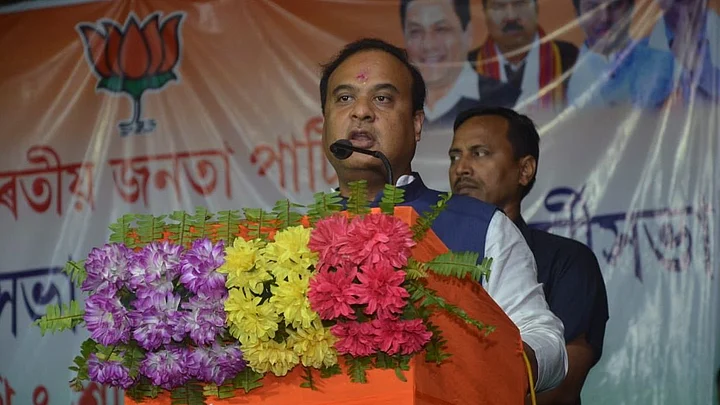
The Supreme Court of India, led by Chief Justice Surya Kant, addressed petitions seeking action against Assam Chief Minister Himanta Biswa Sarma for alleged hate speech. The bench directed petitioners to approach the relevant high court first, emphasising that the Supreme Court should not be the initial forum for such cases. The court noted a recurring trend of direct petitions during election periods and reiterated the constitutional role of high courts in handling these matters.
According to The Indian Express, Chief Justice Surya Kant stated, “Wherever elections come, this court becomes a political battleground,” while instructing the petitioners, including CPI(M) and CPI, to seek remedies from the jurisdictional high court. The petitions alleged that Sarma’s speeches and a video posted online incited hostility and violence against the Muslim community in Assam.
The bench expressed concern that petitioners were bypassing high courts, which are constitutionally empowered to adjudicate such issues. Coverage revealed that the CJI described this as a “calculated move to undermine the authority of the high courts,” stressing that high courts possess significant powers and should be the primary forum for such grievances.
Senior Advocate A M Singhvi, representing one of the petitioners, argued that Article 32 of the Constitution allows individuals to approach the Supreme Court directly for enforcement of fundamental rights. However, the CJI responded that while Article 32 is important, the high courts are fully capable of granting the reliefs sought. The bench stated, “All these issues can be effectively adjudicated by the jurisdictional high court. Consequently, without expressing any opinion on merits, we relegate the petitioners to approach the jurisdictional high court.”
“Go to high court. Have faith in the system… In our anxiety to invoke one jurisdiction, we must not undermine other jurisdictions. We are absolutely confident the high courts will deal with those matters strictly in accordance with law,” the CJI said.
During the hearing, the CJI also addressed concerns about the lack of FIRs being registered in Assam regarding hate speech allegations. Analysis showed that the bench maintained its position, advising petitioners to first exhaust remedies before the high court and only approach the Supreme Court if necessary relief was not granted.
The CJI further remarked that the Supreme Court cannot become unmanageable by entertaining every matter from across the country, especially when high courts are equipped to handle such cases. The bench requested the Chief Justice of the relevant high court to provide an expeditious hearing, given the urgency cited by the petitioners. The proceedings underscored the Supreme Court’s stance on maintaining judicial hierarchy and discouraging the use of the apex court for political purposes, particularly during election cycles as details emerged.
Note: This article is produced using AI-assisted tools and is based on publicly available information. It has been reviewed by The Quint's editorial team before publishing.