
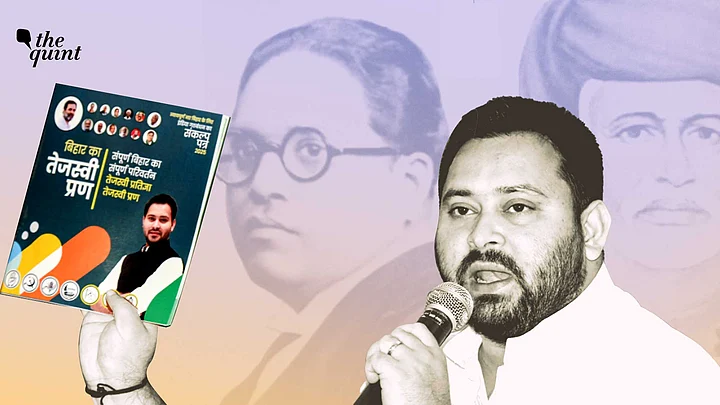
The Assembly Elections manifesto of a political party serves a dual purpose: it reflects its ideological principles and simultaneously outlines the functional agendas the party is promising to fulfil upon being elected. This nature of electoral manifestos has been exemplified by the Bharatiya Janata Party's (BJP) national manifestos since the 1996 Lok Sabha elections, particularly in their evolving commitment to construct the Ram Mandir in Ayodhya.
Through its Ram Mandir agenda and other promises, the BJP manifestos, in essence, have myriad ways promoted a brand of Hindu nationalism that criminalised cultures and nationalisms of heterogeneous Bahujan groups including Scheduled Caste (SC), Scheduled Tribe (ST), Other Backward Class (OBC) community and religious minorities, thus using the manifesto as a means to politicise the Hindutva ideology.
This significant position of the electoral manifesto in shaping political discourse prompts a review of some of the promises extended by the manifesto of the Mahagathbandhan (MGB), the Grand Alliance of Opposition parties including Tejashwi Yadav's Rashtriya Janata Dal (RJD) and Rahul Gandhi's Congress, trying to wrest power in Bihar.
Named 'Bihar ka Tejashwi Prann', MGB's manifesto claims to pose a philosophically and ideologically adversarial position to the BJP in the 2025 Bihar Assembly elections while presenting an electoral challenge to the National Democratic Alliance (NDA) bloc.
Recently, 'Behenji' Mayawati organised a grand rally in Uttar Pradesh, reviving hopes among Bahujan voters and analysts for a future where BSP makes an electoral comeback. However, in Bihar, the party is not seen as a significant part of the electoral ethos.
A Phule-Ambedkarite reading of the MGB manifesto under the format constraints is, therefore, only restricted to some key points.