
ADVERTISEMENTREMOVE AD

If Cricket Moves South, It's Admission of North's Divisive Politics

The row is a great face loss for a country that has been trying to portray itself as 'Vishwa Guru', writes Ashutosh.

Published
story-hero-img
i
Aa
Aa
Small
Aa
Medium
Aa
Large

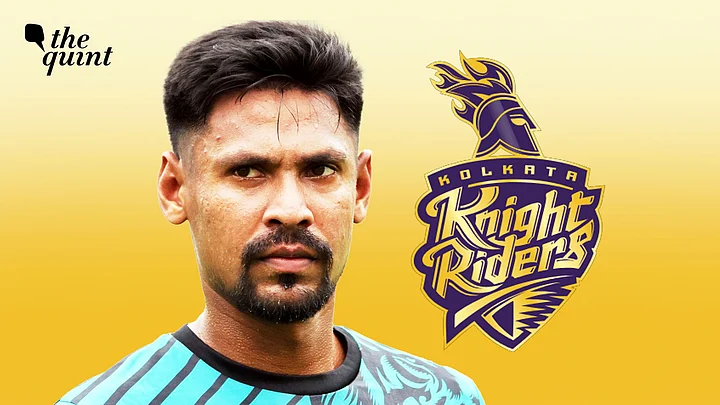
By sending Bangladeshi cricketer Mustafizur Rahman back to his own country, the government has walked into a trap, and now he can’t play in IPL for Kolkata Knight Riders. His only crime was that he belonged to a country that is in turmoil, and a few members of the minority community, Hindu, have been killed by arsonists in Bangladesh. And, as a reaction, right-wing Hindutva-vadis sought revenge and wanted to teach Bangladesh a lesson.

They found Shah Rukh Khan a soft target because he hired a Bangladeshi player for his team. Shah Rukh was accused of treason. His patriotism was questioned, and he was called a 'terrorist' by such bigots. Unfortunately, the Board of Control for Cricket in India (BCCI) crumbled under their pressure and asked Shah Rukh Khan to release Mustafizur, and he did. What option did he have in today’s highly polarised India? 

But now the BCCI is in a bind.
ADVERTISEMENTREMOVE AD

The Cost of Concession

India is the host country for the next T20 World Cup, and Bangladesh is one of the participants. Enraged Bangladesh has now asked that its games not be played in India. Instead, they should be transferred to Sri Lanka, the co-host of the event.

If India acquiesces to this demand, then it would be a great face loss for a country that has been trying to portray itself as 'Vishwa Guru'. Bangladesh has claimed that due to the animosity in a section of the Indian population, their players would not be safe and might face a threat to their physical security.

Bangladesh has to play a few group matches in India, and if it qualifies for the elite round, then it might have a chance to play a few more. 

If India accepts Bangladesh’s request, then it will be an admission that India is not a safe country—a huge embarrassment for the Narendra Modi government.

India is already being portrayed by the global media as a country where minorities are not safe due to the Hindutva bigots. The government can’t afford another global backlash. It is in this context that, as a face-saving option, the BCCI is exploring a via media. It is being debated whether venues could be shifted to South India.

If that were to happen, it would be another admission that territories outside north and east India are safer.

BJP's Modest Gains in South India

There is another angle to the story.

South India is far removed from the impact of Hindutva. Tamil Nadu, Kerala, Telangana, and Andhra Pradesh are states where the Bharatiya Janata Party (BJP) has never formed a government and has a very minuscule presence.

Karnataka is the only South Indian state where the BJP has a substantial social base and has successfully formed governments in the past.

In Kerala, the BJP has recently won local body elections in Thiruvananthapuram and could install its own mayor, a first, and also has an MP.

In Tamil Nadu, the BJP has been trying very hard to make a breakthrough but has failed miserably. Since the demise of Jayalalithaa, the BJP has been trying to control AIADMK politics, but has not succeeded beyond a point. Tamil Nadu is the land of Periyar, who, much before Independence, launched an anti-Brahmanical, anti-Hindi movement.

No wonder, since the Kamraj Days, national parties have not been able to have their government, and politics has become a ping pong game between two Dravidian parties—the DMK and the AIADMK. 

In Telangana and Andhra Pradesh, the BJP has again not been able to make any breakthrough. It has no option but to piggyback on regional parties.

North India Rewarded, South India Penalised

Since 2014, the BJP has played a different game to take control of the politics of these four states. The governors appointed by the Central government have made life miserable for state governments. They are behaving like Opposition leaders—and a power centre unto themselves.

The state governments of Tamil Nadu and Kerala were so upset by the antics of the governors that they knocked on the Supreme Court's door and obtained favourable judgments, but their problems are still not over. Their major complaint is that they have been unfavourably treated by the Centre in the transaction of their legitimate finances through the Goods and Services Tax (GST) regime.

All the South Indian states, except Andhra Pradesh where the BJP is an alliance partner with the Telugu Desam Party (TDP), have another serious complaints that they are being penalised for being states who have been doing a good job on the issue of economic development, and North Indian states are pampered at their cost despite having record of bad progress and economic development, and falling behind south on all the human and social indices. They say that they earn more money, which is then spent on the North Indian states.

North Indian states are being pampered despite being losers. Then, South Indian states are also worried about delimitation, and they are right when they argue that after delimitation, South India will lose its political power too, and the North will relatively gain much more in terms of seats in the national parliament, due to not working on population control. 

Their concerns are genuine, and they should be addressed in time.

These states have become the growth engines of India because they have been much more serious about implementing economic reforms. Their per capita income is many times higher than that of Uttar Pradesh, Bihar, and Madhya Pradesh.

If in Telangana and Tamil Nadu the per capita income is around $4,500, then in Bihar it is less than $900.

In the last three decades, Bengaluru and Hyderabad have emerged as the hubs of the software revolution in India. They are also a major source of software engineers for Western countries, especially the US. North Indian states are nowhere to be seen in this race.

One more thing that needs to be noticed is that in their own way, these states are far away from the Hindu-Muslim binary, which has become the defining creed in North and East India. Hindutva forces are dictating terms to social groups. Minority groups and their institutions are majorly targeted.

Members of the minority communities are facing targeted violence by Hindutva bigots—and earning a bad name for the country. The Central and state governments are directly or indirectly sponsoring such lumpenisation of politics. The Mustafizur Rahman incident is a strong example of how these elements are dictating terms to the government. 

If Bangladesh matches are shifted to the South, then it will be an admission of the fact that divisive and poisonous politics has created an atmosphere in which even a cricket match can become a source of law and order problem; that social cohesion is the first guarantee for the civilised and peaceful life; and that politics around religion is bringing global embarrassment for the country.

And, above all, that Hindutva is no guarantee for bringing back the old Indian glory which it espouses so vociferously. It's only a slogan devoid of any substance.

(The writer is an author and former spokesperson of AAP. He can be reached at @ashutosh83B. This is an opinion piece and the views expressed above are the author’s own. The Quint neither endorses nor is responsible for the same.)

Speaking truth to power requires allies like you.
Become a Member
Monthly
6-Monthly
Annual
Check Member Benefits
×
×