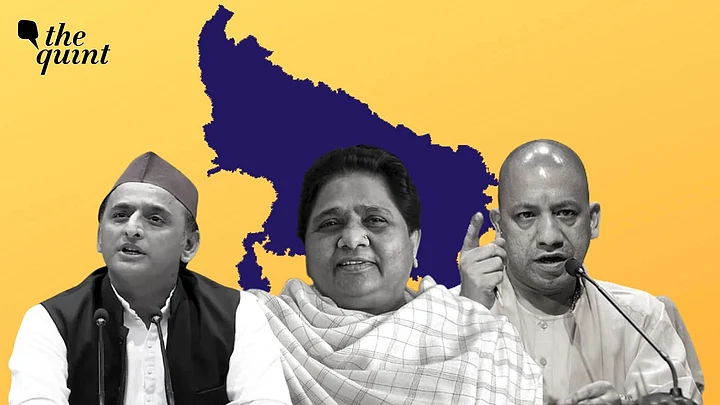
Ahead of the 2027 Assembly elections, Ayodhya is once again at the centre of political discourse. Samajwadi Party (SP) chief Akhilesh Yadav’s proposed visit to the Ram Temple could prove to be a political gamble. It could give the Bharatiya Janata Party (BJP) an opportunity to revive its Hindutva politics.
This comes at a time when the BJP is facing criticism over vote theft, paper leaks, alleged irregularities in Ram Temple donations, student-related issues and other controversies. For Akhilesh, the challenge is to expand his political base without allowing the BJP to dictate the terms of the political debate.
On 7 November, SP leader Pawan Pandey announced that Akhilesh Yadav, along with his family, would visit Ayodhya on 12 December. Akhilesh subsequently endorsed Pandey’s announcement. On 11 November, he said he would visit Ayodhya, Kedareshwar and Vrindavan, without announcing any dates.
The SP has presented the proposed visit under a new political slogan: “Pehle darshan, phir aashirwad.” But the question is whether this move will help Akhilesh expand his political base beyond backward classes, Dalits and Muslims. Can it help him attract upper-caste Hindus? Or will it give the BJP an opportunity to put him on the defensive?
The Ram Temple Allegations
The BJP is facing criticism over issues such as vote theft, paper leaks and the UGC controversy. It was looking for an issue through which it could rebuild its Hindutva narrative and blunt the momentum building against it. Akhilesh’s proposed visit may provide the party with just that opportunity.
Chief Minister Yogi Adityanath, speaking at the Deepotsav event in Ayodhya on 7 November, trained his guns on Akhilesh. He said that those who had ordered the firing on kar sevaks in 1990 should apologise before coming to Ayodhya. His remark was clearly directed at Akhilesh’s father, Mulayam Singh Yadav. Under Mulayam Singh Yadav’s Janata Dal government, firing took place on 30 October and 2 November 1990, to protect the centuries-old Babri Masjid.
The BJP is likely to use this issue to remind voters of the SP’s past position against the Sangh Parivar-led Ram Temple movement in the late 1980s and early 1990s.
However, the SP appears to have a counter-strategy. It wants to blunt the BJP’s likely Hindutva offensive by turning the spotlight on alleged irregularities in donations collected for the Ram Temple. The opposition has popularly described this controversy as 'chanda chori'.
Senior SP leader Rajpal Kashyap said the alleged donation irregularities had become a stigma on the BJP’s image. He also indicated that Akhilesh would raise the issue during his proposed visit. “Chanda Chori is a stigma on the BJP’s face. Definitely, our leader will raise this issue during his Ayodhya visit.”
Akhilesh has previously brought allegations of irregularities in the handling of Ram Temple donations into the political debate. He has questioned the accountability and transparency surrounding public contributions. Following his allegations, a Special Investigation Team was constituted by the Uttar Pradesh government. Its preliminary findings identified instances of theft during the donation-counting process and serious supervisory lapses.
By reviving the issue, the SP could seek to turn the BJP’s religious-political narrative against it. The donation theft controversy could become an important political counter to the BJP’s Hindutva campaign.
Another senior SP leader, Sunil Kumar Sajan, sought to portray the proposed visit as a purely religious exercise. He distanced it from political calculations. He maintained that the party would not play into the BJP’s communal politics. “We will counter the BJP’s Hindutva with our agenda of development. We have decided not to get involved in the BJP’s communal game.”
The Battle for UP
Akhilesh’s PDA strategy—Pichhde, Dalit, and Alpsankhyak (backward classes, Dalits and minorities)—played an important role in the party’s performance in the 2024 Lok Sabha elections. The SP emerged as the largest party in Uttar Pradesh, winning 37 seats. The Congress won six seats, taking the INDIA alliance’s tally to 43. The NDA won 36 seats, including 33 for the BJP, two for the Rashtriya Lok Dal and one for Apna Dal (S).
The BJP lost 29 seats compared with the 2019 elections. Meanwhile, the SP increased its tally by 32 seats. At the national level, the BJP failed to secure a majority on its own for the first time since 2014. It had to depend on its regional allies to form the government.
The results showed that the SP had successfully brought together backward classes, Dalits and minorities against the BJP. However, adopting a soft Hindutva position may not necessarily help Akhilesh expand this support base. This is particularly true among upper-caste Hindus, who have remained loyal to the BJP since the Ayodhya movement of the 1980s.
The BJP has followed Hindutva politics since its formation in 1980. It has built a long political history of using religious identity as an electoral issue. In a contest between Mandal and Kamandal, it is difficult to understand why upper-caste Hindu voters would shift their support to the pro-Mandal SP merely because Akhilesh visits the Ram Temple.
However, this could put socialist leader Akhilesh in a difficult position. Muslims constitute around 19.3 per cent of Uttar Pradesh’s population. They have remained an important support base for the SP since its formation in 1992.
The BJP may also use the visit to target the Congress and the INDIA alliance. It could question why Congress leaders did not visit the Ram Temple. It could also accuse the more than century-old party of being opposed to Sanatan Dharma. If the Congress sends a delegation from Uttar Pradesh, the BJP may demand that its top leadership, including Rahul Gandhi or members of the Gandhi family, also visit Ayodhya.
This could create challenges for the INDIA alliance. The alliance has been attempting to build a movement against the BJP on issues such as the Constitution. Rahul has challenged the Prime Minister to a debate on national and international policies. However, Modi has so far chosen to remain tight-lipped.
After Akhilesh’s visit, the BJP could portray Rahul Gandhi as anti-Hindu. This could divert attention from the demand for a debate. It could put the Congress and other INDIA alliance partners on the defensive. The political discourse could shift from issues such as the protection of the Constitution and vote theft to religious identity. This could prove counterproductive not only for the SP but also undermine the INDIA alliance’s larger narrative.
Balancing Vote Banks
The BJP may also take the debate beyond Ayodhya. It could bring Mathura into the political discussion. By linking Lord Krishna with the Yadav community, it could put pressure on Akhilesh to take a position on the Krishna Janmabhoomi-Eidgah dispute. It could also raise the demand for a temple at the site.
This could put Akhilesh at a political crossroads. If he supports the temple demand, he could alienate Muslim voters. If he maintains a secular position, the BJP could question his commitment to Hindu religious sentiments in general. It could also question his commitment to the religious sentiments of the Yadav community in particular. This dilemma could potentially create an existential crisis for a party whose support base largely rests on Muslim-Yadav votes.
Besides Muslims, Akhilesh’s soft Hindutva approach could create unease among Dalits and OBCs. Sections of these communities supported the SP-Congress alliance despite the BJP’s aggressive Hindutva campaign in the 2024 Lok Sabha elections. The elections were held between 19 April and 1 June, just months after the consecration of the Ram Temple in Ayodhya on 22 January.
The party’s own history also offers a warning. Before the 2009 Lok Sabha elections, Mulayam Singh Yadav developed a political understanding with Kalyan Singh. Kalyan Singh was associated with the Hindutva movement and the demolition of the Babri Masjid on 6 December 1992. The move was aimed at expanding the SP’s vote base by attracting non-Yadav OBCs, especially Lodh voters.
However, it backfired. It angered a section of Muslim supporters. Prominent Muslim face Azam Khan openly opposed the move. The understanding became a major factor behind the SP’s electoral setback in the 2009 elections.
Political commentator Mudit Mathur believes the larger objective of Akhilesh’s proposed visit is to expand the SP’s social base beyond its traditional Muslim-Yadav support. He argues that the Ayodhya issue has gradually lost its political intensity following the construction of the Ram Temple. He said, “Muslims might overlook the issue, just as they have reconciled with the Congress over its role in the unlocking of the Babri Masjid.” However, he cautioned that the BJP could revive the memory of the firing on kar sevaks to target Akhilesh politically.
Political analyst Sunita Aron also believes the 1990 firing could emerge as an uncomfortable question for the SP president during his visit. However, she feels the Ayodhya dispute has largely receded from the political centre stage. Voters are now more concerned about other issues. In her assessment, Akhilesh’s visit is primarily an attempt to make inroads into the BJP’s traditional vote base. His challenge lies in balancing his party’s secular credentials while preventing the BJP from turning the visit into a referendum on the 1990 firing.
Opposing Alliances
At present, the Congress and the SP are together in the INDIA alliance. Therefore, the Congress is not an immediate threat on this issue. However, Asaduddin Owaisi, president of the All India Majlis-e-Ittehadul Muslimeen (AIMIM), is likely to raise the visit among Muslim voters. His party has allied with Chandrashekhar Azad’s Azad Samaj Party (Kanshi Ram). Owaisi could use the issue to fuel dissatisfaction with the SP and gain ground in Uttar Pradesh among Muslims and Dalits who shifted towards the SP-Congress alliance.
The Mayawati-led Bahujan Samaj Party may also try to damage Akhilesh’s electoral prospects. It could do so by giving tickets to a large number of Muslim candidates. The pro-Dalit party has been on the decline since 2012. It may try to hold on to its Dalit vote base and attract Muslims by projecting Akhilesh as a sympathiser of the Hindutva agenda.
Akhilesh should learn from this political history before taking a decision on his proposed visit. Creating doubts among backward classes, Dalits and minorities could weaken the party’s position in the upcoming Assembly elections. In these volatile political circumstances, Akhilesh should at least discuss his proposed visit with other INDIA alliance partners. This is particularly important for the Congress, which claims that the BJP wants to undermine the Constitution.
The real challenge for Akhilesh is not merely to visit the Ram Temple. It is to ensure that the visit does not become an opportunity for the BJP to revive its Hindutva narrative and put the opposition on the defensive.
If his proposed political gamble shifts the debate from the Constitution and vote theft, paper leaks and donation theft (Chanda Chori) to religious identity (Hindutva politics), it could weaken the SP's secular image. It could also raise questions about the secular credentials of the entire INDIA alliance. Ultimately, this could strengthen the very Hindutva narrative the opposition has been trying to challenge.
(Asad Rizvi is a Lucknow-based independent journalist. This is an opinion piece and the views expressed are the author’s own. The Quint neither endorses nor is responsible for them.)