
ADVERTISEMENTREMOVE AD

As Sonam Wangchuk’s Ordeal Ends, Ladakh Eyes Delhi for Real Change

Wangchuk’s release may have eased immediate tensions for now, it has also emboldened the movement.

Published
story-hero-img
i
Aa
Aa
Small
Aa
Medium
Aa
Large

Days after the Central government revoked the detention of activist Sonam Wangchuk, the people in Ladakh upped the ante against the Bharatiya Janata Party (BJP)-led government, with civil society groups intensifying their demands for constitutional safeguards and greater political autonomy in the Union Territory. 

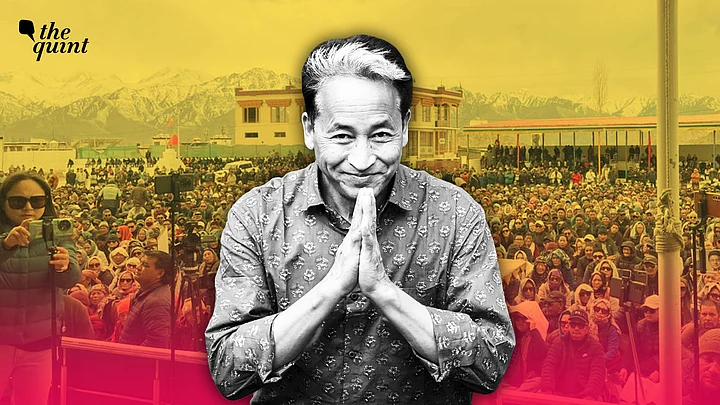
Earlier this week, Ladakh witnessed a complete shutdown with hundreds of locals marching in twin districts—Leh and Kargil—to press their demands.  The call to observe the shutdown was given by the Leh Apex Body (LAB) and the Kargil Democratic Alliance (KDA). Hundreds of locals marched in Leh, carrying banners and chanting slogans: “We Want Statehood”, adding that the UT status was unacceptable to the people.

ADVERTISEMENTREMOVE AD

Ladakh Stands Firm

Notably, this was the first major protest in the cold desert after violence broke out during a protest for statehood and Sixth Schedule status in Leh on 24 September 2025, in which four persons were killed and 80 others injured in alleged police firing. The government had then invoked the National Security Act (NSA) against Sonam Wangchuk for allegedly instigating the violent protests in Ladakh.

Wangchuk was released on 14 March from Jodhpur Central Jail after six months of detention.  

Nordon Shunu, a women’s rights activist from Leh, told The Quint that the rally was organised to show the nation that the people of Ladakh are united, and stressed that the deadlock between the representatives and New Delhi must come to an end. 

“This was a peace rally—a small celebration of sorts to show that the allegations branding Ladakhis as anti-national are baseless,” she said, adding that the gathering was meant to send a message of unity and reaffirm the community’s commitment to democratic and peaceful means of protest. 

Renewed Push for Dialogue

The region has been in talks with the high-powered committee (HPC) headed by Minister of State Nityanand Rai, constituted by the Ministry of Home Affairs (MHA), since 2022. The civil society groups had put forward a four-point agenda before the Central government, which includes full-fledged statehood for Ladakh, constitutional safeguards under the Sixth Schedule of the Indian Constitution, early recruitment process and Public Service Commission for Ladakh, and separate Lok Sabha seats for Leh and Kargil districts. 

No new breakthrough meeting the expectations of the Ladakhis has so far emerged. While the Centre agreed to fulfill two demands last year, leaders have expressed frustration over the Bharatiya Janata Party (BJP)’s unwillingness to budge on Ladakh’s two key demands—granting Sixth Schedule status and statehood. 

The last meeting between Ladakh’s representatives and the MHA was held in the first week of February. However, the meeting ended without any conclusion. Post the September 2025 violence, the anxiety grew further in Ladakh with the detention of dozens of people, including many top leaders who were at the forefront of the agitation.  

Now, Wangchuk's release has injected fresh momentum into Ladakh’s ongoing agitation, with civil society groups of Ladakh, led by the KDA and the LAB, intensifying their demands.  

As Ladakh continues its push for constitutional safeguards, Wangchuk, speaking at a press conference, said that his release was a 'win-win' situation, adding the Centre has opened the door for meaningful dialogue with Ladakh. He said they are satisfied with the government's statements on seeking “meaningful constructive dialogue”.

In its revocation order, the Central government said they remained committed to “fostering an environment of peace, stability, and mutual trust in Ladakh so as to facilitate constructive and meaningful dialogue with all stakeholders”. Many in Ladakh believe that this is the best time to start a fresh dialogue that could see a logical concussion.  

But locals remain wary. Mutasif Ladakhi, a PhD scholar from Leh, told The Quint that while releasing the activist was a “welcome step”, the government should build on it by creating a conducive and trust-building atmosphere so that people can feel it is serious about resolving all the issues. 

“With Sonam Wangchuk’s release, the hope among people has regenerated that if they do anything constitutionally, there is a safeguard,” Ladakhi said.  

He added that the time has come for New Delhi to demonstrate genuine seriousness in pursuing a dialogue that leads to a concrete outcome. “Till then, the people will continue the agitation peacefully,” he added. 

What Comes Next for Ladakh?

The Narendra Modi-led government recently transferred Kavinder Gupta, the Lieutenant Governor of Ladakh, to Himachal Pradesh. In Gupta’s place, it has appointed VK Saxena who was earlier the Lieutenant Governor of Delhi.  

Under Gupta’s tenure, the region—once regarded as one of the most peaceful in the country—witnessed deadly violence on 25 September 2025, following the detention of dozens of people under stringent laws. 

The government also transferred Director General of Police (DGP) Ladakh, Dr Shiv Darshan Singh Jamwal, to Arunachal Pradesh and appointed a new police chief for the region. Ladakh also got a new chief secretary in the first week of January. All the three were from Jammu province.  

Ladakh’s representatives, however, believe these developments don't necessarily indicate that the government is serious about resolving the two main demands.  

Cherring Dorjay Lakruk, co-chairman of the LAB, told The Quint that revoking Wangchuk’s detention does not indicate that the government is serious, claiming:

“The Supreme Court was likely to give the verdict in Sonam Wangchuk’s favour, so the government revoked his detention before that." 

Lakruk added that the shutdown and protest rallies on Monday, 16 March were held in view of the MHA’s non-seriousness towards their demands. 

“In the last meeting, talks were held but there was no conclusion. That's why we are pushing for a meaningful dialogue," he said. As per sources, the HPC had asked the leaders to submit a draft proposal for the talks which they did. 

“This was an informal meeting. The HPC had also assured the leaders that they will come up with the draft proposal on which the dialogue will go forward. But they didn’t.”
Leh Apex Body member

Padma Stanzin, a student activist from Leh, said people are frustrated with the repeated delays in talks. “The government says it will offer an alternative solution, but it has not clarified what that solution is,” he said. “We want to review the proposal so we can decide our future course of action accordingly.” 

As Ladakh ups the ante, it remains to be seen in the coming months whether New Delhi responds with substantive measures or allows the situation to drift. It's response to the current protests may determine the future trajectory of the region. While Wangchuk’s release may have eased immediate tensions for now, it has also emboldened the movement. 

(Auqib Javeed is an independent journalist reporting on news and politics from Kashmir.)

Speaking truth to power requires allies like you.
Become a Member
Monthly
6-Monthly
Annual
Check Member Benefits
×
×