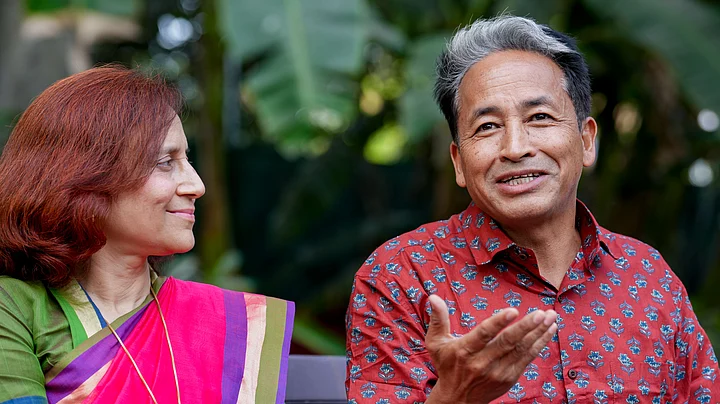
Sonam Wangchuk, recently released from detention under the National Security Act, addressed the media and public on 17 March 2026, expressing a willingness to engage in constructive dialogue with the Centre regarding Ladakh’s demands. He emphasised the importance of a “win-win” outcome and indicated readiness for a “give and take” approach, while regional bodies continue to assert their core demands for statehood and Sixth Schedule status.
According to The Indian Express, Wangchuk stated that while the main issues remain statehood and Sixth Schedule inclusion, he is open to negotiation if the Centre reciprocates. He described the government’s move to revoke his detention as an “extending of hand” to build trust and initiate meaningful dialogue, contrasting his stance with the non-negotiable positions of the Apex Body Leh and Kargil Democratic Alliance.
As reported by Deccan Herald, Wangchuk told the press that the protests in Ladakh were always aimed at starting a constructive dialogue process. He reiterated that he did not seek confrontation, stating, “We were sure of a victory in the court, but a win was not enough. I wanted a win-win.” He also confirmed plans to consult with leaders of the Leh Apex Body and Kargil Democratic Alliance before determining further steps.
As highlighted by The Hindu, Wangchuk emphasised the need for flexibility from both the government and the people of Ladakh. He warned that prolonging the dialogue process could hamper meaningful conversation, and called for both sides to be considerate. He stated, “Talks are a give and take process, both sides have to be flexible and considerate.”
Editorial analysis noted that the Centre’s decision to revoke Wangchuk’s detention came shortly before a scheduled Supreme Court hearing on his habeas corpus petition. This timing has raised questions about the government’s case and its approach to political dissent in Ladakh.
“They have offered for constructive, meaningful dialogue. We had to struggle for it — protests, walk from Ladakh to Delhi. In yesterday’s rally also people were demanding talks. Where will you find such people?” Wangchuk remarked during his press conference.
Legal coverage confirmed that the Centre revoked Wangchuk’s NSA detention, enabling his release from Jodhpur Central Jail after nearly six months. The Supreme Court was set to hear final arguments on the legality of his detention, which had been challenged by his wife.
Wangchuk denied any deal with the government for his release, clarifying that his agitation was not for personal benefit but for the people of Ladakh. He expressed willingness to participate in any high-powered committee representing Ladakh in negotiations with the Centre, if required as further reporting indicated.
During his remarks, Wangchuk also highlighted the socio-economic profile of inmates he encountered during his incarceration, noting that a significant proportion were from poor backgrounds. He called for the withdrawal of “meaningless cases” against Ladakh residents and reiterated his commitment to non-violent protest methods as coverage revealed.
“I have always been saying that I don’t want to do hunger strike. I only do when I am forced to. I am a Gandhian and so cannot say I will never protest,” Wangchuk stated, reaffirming his approach to activism.
Wangchuk’s statements and the Centre’s recent actions have set the stage for renewed dialogue on Ladakh’s future, with both sides indicating a willingness to engage, though key regional groups maintain their core demands as details emerged.
Note: This article is produced using AI-assisted tools and is based on publicly available information. It has been reviewed by The Quint's editorial team before publishing.