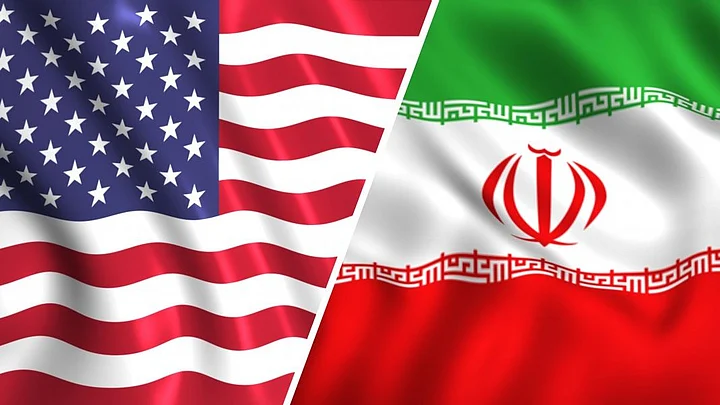
The United States and Iran have agreed to a two-week ceasefire, temporarily halting hostilities in West Asia.
The agreement was reached after the US accepted a 10-point proposal from Iran, which includes conditions such as sanctions relief, military withdrawal, and reopening the Strait of Hormuz.
Diplomatic negotiations are set to continue in Islamabad, with Pakistan and China playing key mediation roles. The ceasefire has led to significant shifts in global financial markets and oil prices.
According to Hindustan Times, the US agreed to Iran’s 10-point proposal, which includes:
A non-aggression pact.
Continued Iranian control over the Strait of Hormuz.
Recognition of Iran’s nuclear enrichment rights.
Lifting of all US sanctions.
Withdrawal of US combat forces from the region.
Further details indicate that the Iranian proposal also requires the lifting of all primary and secondary sanctions, payment of compensation for damages, and recognition of Iran’s uranium enrichment program.
The ceasefire is directly linked to the reopening of the Strait of Hormuz for controlled passage, a critical route for global oil supply.
As reported by Financial Express, the announcement of the ceasefire triggered a rally in global stock markets. The GIFT Nifty surged by 771 points, and major Asian indices, including Japan’s Nikkei and South Korea’s Kospi, posted significant gains. Meanwhile, crude oil prices dropped sharply, with Brent crude falling 13 percent to $95.63 per barrel, reflecting market optimism over reduced geopolitical risk.
As highlighted by The Guardian, US President Donald Trump announced the conditional ceasefire just before a self-imposed deadline, stating that offensive operations would be paused if Iran agreed to reopen the Strait of Hormuz under its military management.
Iran’s Supreme National Security Council confirmed acceptance of the two-week ceasefire, with negotiations scheduled to begin in Islamabad on 10 April.
The talks in Islamabad aim to finalise a broader agreement, but both sides have clarified that the ceasefire does not mark the end of the conflict. Missile alerts continued in the region, including in the United Arab Emirates, Qatar, and Israel, even after the ceasefire was announced.
“Almost all major issues between the two countries have been addressed in principle,” President Trump stated, while Iranian officials warned that any violation of the agreement would be met with force.
Live updates confirmed that Israel agreed to pause its bombing campaign during the ceasefire, and the US stock futures rose sharply following the announcement.
The two-week pause is intended to allow time for formalising a comprehensive agreement between the US and Iran.
Diplomatic analysis revealed that Pakistan’s Prime Minister Shehbaz Sharif and Army Chief Asim Munir played central roles in mediating the ceasefire, with China providing additional diplomatic pressure. The mediation efforts culminated in President Trump’s decision to suspend planned strikes and open negotiations.
“It’s a significant proposal. It’s not good enough. But it’s a very significant step,” President Trump said regarding Iran’s 10-point plan, as cited in multiple briefings.
Coverage revealed that Iran’s proposal includes a $2 million fee per ship passing through the Strait of Hormuz, with revenue shared with Oman and earmarked for rebuilding infrastructure damaged during the conflict. Iran’s state media emphasised that the proposal seeks a permanent end to hostilities, not just a temporary ceasefire, and asserted that Tehran currently holds the upper hand in negotiations.
Note: This article is produced using AI-assisted tools and is based on publicly available information. It has been reviewed by The Quint's editorial team before publishing.