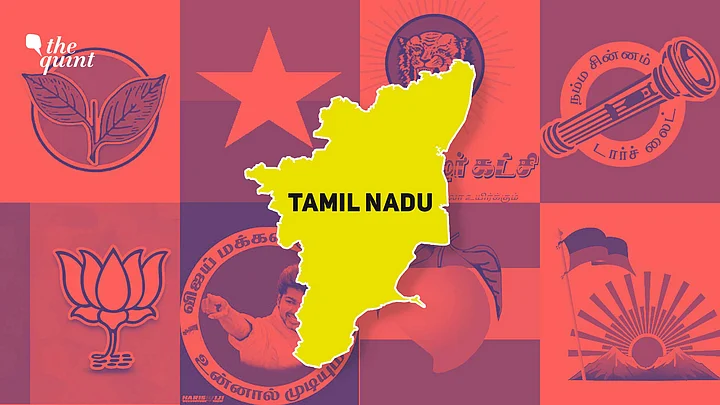
Counting of votes for all 234 constituencies in the Tamil Nadu Assembly elections began at 8 am on 4 May.
The process started with postal ballots, followed by the counting of Electronic Voting Machine (EVM) votes. The majority mark required to form the government is 118 seats. The elections, held in a single phase on 23 April, saw a voter turnout of 85.1 percent, the highest in the state’s history.
According to Hindustan Times, the initial rounds of counting focused on postal ballots, with EVM tallies commencing shortly after.
The Dravida Munnetra Kazhagam (DMK)-Congress alliance, led by chief minister MK Stalin, is seeking a second consecutive term, while the All India Anna Dravida Munnetra Kazhagam (AIADMK)-BJP alliance and the debutant Tamilaga Vettri Kazhagam (TVK) led by actor Vijay are also in contention.
Early trends indicate that the DMK-led alliance is expected to maintain an edge, but the presence of TVK is being closely watched for its potential to influence results in several constituencies. The AIADMK and its allies are focusing on their strongholds, particularly in the western Kongu region and among Vanniyar and Gounder communities.
“We will see DMK leading in election results,” said party MP Kanimozhi NVN Somu, reflecting the party’s confidence as counting commenced.
Trends are expected to become clearer by mid-morning, with final results anticipated by evening.
Analysis showed that exit polls largely predicted a DMK victory, though some agencies suggested a strong debut for TVK. In the previous 2021 elections, the DMK-led alliance won 159 seats, while the AIADMK-led alliance secured 75. The current election features over 5.6 crore registered voters, with more than 14 lakh first-time voters participating.
Key battlegrounds include Kolathur (MK Stalin), Edappadi (Edappadi K Palaniswami), and Perambur (Vijay).
Following reports, the DMK’s performance in Scheduled Caste-reserved constituencies and the AIADMK’s hold in the Kongu belt are seen as decisive factors.
“If any alliance secures 30 or more of these 46 (SC-reserved) seats in 2026, it is likely to form the next government,” noted a source on the significance of these constituencies.
Coverage revealed that TVK’s entry could act as a vote splitter, especially in closely contested seats, potentially impacting the AIADMK-led alliance’s prospects.
The BJP is targeting urban and temple town constituencies, aiming for breakthroughs in areas like Mylapore and Srirangam.
At the end of each counting round, as details emerged, the ECI continued to update party-wise tallies and trends for leading and trailing candidates. The final outcome will depend on the cumulative results across all constituencies, with the majority mark of 118 seats determining the next government.
As highlighted by Deccan Herald, strong rooms containing EVMs were opened under tight security at designated counting centres across the state. Security measures include a three-tier system, with Central Armed Police Forces securing the innermost layer. Over 10,000 personnel and 4,624 micro-observers have been deployed to ensure transparency and order during the counting process.
Note: This article is produced using AI-assisted tools and is based on publicly available information. It has been reviewed by The Quint's editorial team before publishing.