'Bhava, tuka yaad asa otthra Jun?' (Brother, do you remember the 18th of June?)
For many Goans, these are not merely the opening words of a poem by Manohar Rai Sardesai. It is a question passed from one generation to another. A question that grows more important with time. A question that asks whether we remember not only a date, but the courage, conviction, and love for Goa that made 18 June 1946 into one of the defining moments of our history.
This year marks 80 years since the Goi Kranti Dis, or the Goa Revolution Day, when on a rain-soaked Tuesday in Margão, ordinary Goenkars gathered under Portuguese rule to demand something many of us take for granted today: the freedom to speak, assemble, and live with dignity.
Inspired by the call of activists Dr Ram Manohar Lohia and Dr Julião Menezes, the gathering challenged a regime that had governed Goa for centuries. The significance of that day was not that colonial rule ended immediately. It did not. Its significance was that voices rose and fear receded first.
As a Goan, I often reflect on what it truly means to honour the sacrifices of the generation that stood up on 18 June 1946. Remembering them cannot be confined to speeches, wreaths, and social media posts once a year. The greatest tribute we can pay them is to remain vigilant about the future of the land they fought for.
'The Voice of Young Goa'
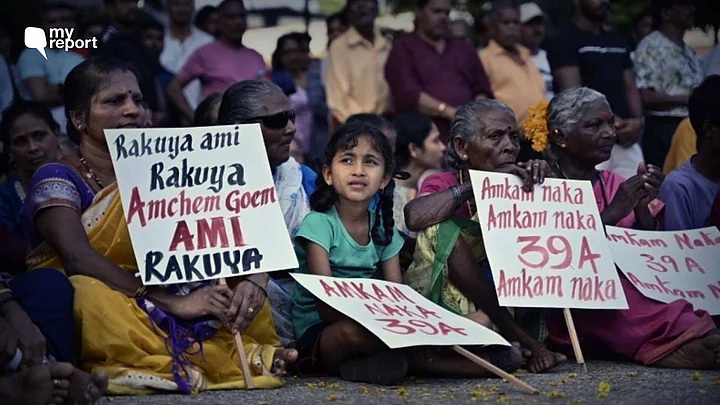
Today, across Goa, young people are raising their voices on issues ranging from Section 39A, which allows authorities to change land-use zones, including converting agricultural or eco-sensitive land for development, to land conversions, environmental degradation, unchecked development, and the shrinking space for critical journalism.
The movement against Section 39A revealed something many had underestimated: Goa's youth are far from indifferent.
When concerns grew over the misuse of provisions affecting land rights and planning processes, thousands of young Goans earlier this year stepped beyond social media commentary and into active citizenship.
The hunger strike led by Viresh Borkar and tribal leader Tushar Gawas became a turning point, drawing unprecedented support from students, professionals, artists, activists, and first-time participants in public movements.
The #Scrap39A campaign united voices across villages and constituencies, creating one of the most visible youth-led mobilisations in recent Goan history.
For many young people, this was not merely about a policy. It was about a growing fear that decisions affecting Goa's land and future were increasingly being made without adequate public participation.
Beneath the celebrations of the Goa Revolution Day lies an uncomfortable reality. Across the state, many people feel they are engaged in an ongoing struggle to protect what generations before them built, nurtured, and passed down. That frustration deserves to be heard, not dismissed.
On 17 June, the same determination was seen in Karapur Sarvan, in North Goa, where villagers continue their fight to protect ancestral land they believe has been wrongfully taken from the community.
The Save Karapur movement will complete 75 days of continuous protest. The images emerging from the site are both inspiring and troubling: tribal women leading from the front, elderly villagers refusing to give up, and children spending their summer vacations holding placards.
'Need To Protest The Environment We Inherit'
The youth of Goa are not protesting because they are anti-development or resistant to change. They are speaking out because they care deeply about what Goa will look like 20 or 50 years from now. They understand that once a hill is levelled, a forest fragmented, a field converted, or a community displaced, the loss is often irreversible.
At the same time, there is growing frustration among Goans with sections of the media that appear more comfortable amplifying official narratives than scrutinising those in power.
A democracy requires an informed citizenry, and a society that stops asking difficult questions risks losing the freedoms that earlier generations struggled to secure.
The freedom fighters of 18 June gifted us more than political freedom; they gifted us the right to participate, question, organise, and defend the public interest. Preserving that legacy requires more than remembrance.
It requires courage, engagement, and an unwavering commitment to ensuring that Goa's future is shaped not by silence and indifference, but by citizens who care enough to stand up when it matters.
This is why I believe the legacy of Goi Kranti Dis extends beyond politics. It is cultural. It is ecological. It is civilisational.
We live in a world that increasingly encourages us to think of identity as something fluid and detached from geography. Yet, every community is shaped by a landscape. We are shaped by the rivers we grow up around, the fields that feed us, the languages spoken in our homes, the stories told by our elders, and the memories attached to our villages.
Goa is not simply where I live. Goa is part of how I understand the world.
'We Are Goans First'
Today, Goa witnesses the coming together of voices from across the state under a shared cause. Beneath the towering Indian National Flag in Panjim, citizens from different villages, movements, communities, and generations are gathering before peacefully marching to Azad Maidan.
Farmers concerned about their fields, villagers fighting for ancestral land, environmental activists, students, tribal communities, cultural organisations, and ordinary citizens will walk shoulder to shoulder.
Beyond differences of age, caste, religion, gender, profession, ideology, or region, they will stand united by a simple truth: we are Goans first. There is a powerful symbolism in this gathering.
The route may be different, but the spirit echoes that of those who once stepped into public spaces to challenge injustice and demand a voice. In doing so, participants pay tribute to Dr Lohia, Dr Menezes, Dr Tristão Braganza Cunha, Mohan Ranade, Bala Raya Mapari, Purushottam Kakodkar, Luís de Menezes Bragança, Prabhakar Vaidya, Nana Kajrekar, Sudhir Phadke, and countless others who carried Goa's freedom movement forward.
Today's concerns may revolve around land, the environment, community rights, and democratic accountability rather than colonial rule, but they emerge from the same conviction: that people must never become spectators when the future of their homeland is being decided.
At the heart of that legacy stands Konkani. Amchi bhas (our language) carries centuries of memory. Within it live our songs, our humour, our traditions, our ways of thinking, and our understanding of community.
Every time a language weakens, a unique way of seeing the world weakens with it. Every time a language survives, a people survive. The generation that fought for dignity in 1946 understood that freedom was not only about political rights. It was also about preserving the identity of a people.
Eighty years ago, ordinary Goenkars found the courage to rise for Goa. The question before us today is whether we have the wisdom to preserve what they fought for, because the true legacy of 18 June is not found in monuments or anniversaries. It is found in every generation that chooses to keep the spirit of Goa alive.
(All 'My Report' branded stories are submitted by citizen journalists to The Quint and the views expressed above are the citizen journalist's own. The Quint neither endorses nor is responsible for the same.)