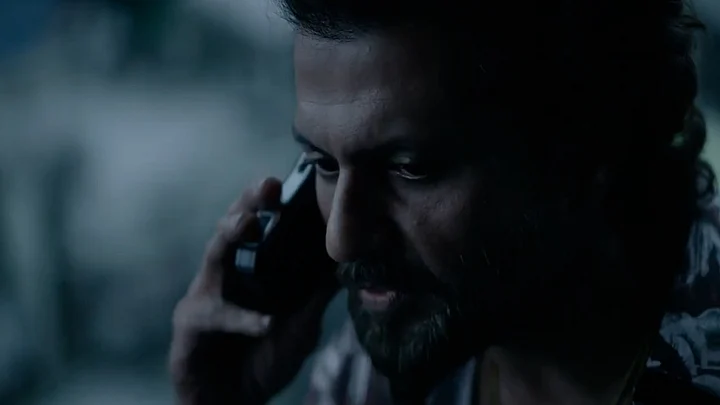
There is something about Kennedy that utterly disarmed—and decisively won over—the anti-establishment critic in me. The audacity of Anurag Kashyap to call out, in not-so-explicit terms, not just the Central government but even the ‘Bade Papa’ of Mumbai is insanely admirable. I was struck by the fact that filmmakers like Kashyap would risk being hounded by government agencies—jeopardising their relatively peaceful lives—simply to speak truth to power.
While most in the Hindi film industry have been, for lack of a better word, cowardly—often lending their star power to propaganda films the likes of Dhurandar, The Kerala Story, and a plethora of films with the word ‘files’ in their titles—Kashyap shows why political art is necessary, perilous, and worth the cost.
‘At least someone in Bollywood has a spine’, I thought to myself as I watched some of this counter-cultural commentary unfold. Kennedy premiered at the 2023 Cannes Film Festival and has since struggled to secure an OTT platform. There is little doubt that its unapologetically anti-establishment stance has made potential buyers wary of associating with it. Which is also the reason why this is the most important film of our times.
Rahul Bhat plays an insomniac ex-cop Uday Shetty who is used by police commissioner Rashid Khan (Mohit Takalkar) to do his dirty work—blackmail, extort, and kill those who are either no longer useful or have become impediments to his ascent.
Political Whispers from the Lockdown Years
While the film’s anti-government stance is mostly admirable, much of it is reduced to gags, cameos, and a parallel arc that never meaningfully intersects with the film’s central conflict. Kennedy (Uday) is all but a witness, observing these events—horse-trading, conspiracy theorists gone rogue, Sanghi men bullying people into lighting diyas and banging utensils while eating egg bhurji—unfold from a distance.
Though compelling, this anti-establishment commentary isn’t integrated into the film’s central plot in a way that feels cohesive. It is brave, undoubtedly, but it is also largely confined to the peripheries of the film’s structural core. I would have loved for these dissident arcs to converge with Uday’s arc, but that never quite happens.
Thinly Veiled Figures, Sharply Drawn
There are some oblique references to real-life figures and incidents that show just how astute and perceptive Kashyap is as a filmmaker. In a scene, we see Mumbai Police Commissioner Rashid Khan speak to what seems like a vaccine manufacturer—even though the identity of this man is never made explicit. “Jab jab beemari faili hai, aapne bahut note chaape hain, maalik (Every time a disease has spread, you have printed a great many notes, sir).”
I wondered if this figure was Adar Poonawalla, and Kashyap, by refusing to give solid identifiers that would allow us to decipher this man’s identity, was avoiding possible legal ramifications.
The cameo by Varun Grover is hilarious and oddly reminiscent of the unhinged, crazy theories we heard around the virus during the COVID lockdown. These little nuggets dating back to the pandemic serve as an unwitting reminder of just how far we have come from the loony times we found ourselves in during 2020, even if the central concerns around power and corruption remain largely relevant.
Pandemic Paranoia, Power and Profit
The rest of the cast is competent, if not brilliant. Sunny Leone plays Charlie, an Indian-origin woman who is often mistaken for a foreigner—quite meta, as this mirrors Leone’s journey as an actor—and she is caught in the crossfire between Rashid Khan and her lover.
Abhilash Thapliyal initially appears as a hallucination in Uday’s mind. He is all but a temperamental opposite of Uday—talkative, colourful, vibrant while the latter is brooding, serious, and speaks only when necessary.
Much of Uday’s paternal ache is mirrored in Kashyap’s own relationship with his daughter, a detail that gives the film an emotional richness usually missing from such narratives. It is admirable, even if imperfect.
When Satire Soars but Suspense Stumbles
Despite Kennedy's many strengths, the film falters in places. It works exceptionally well as an anti-establishment satire, but not quite as effectively as a noir thriller. There are moments when the momentum dips and you don’t feel as invested in Uday’s journey, even if the climax ties up the loose ends. If only the film were as captivating as a thriller, its dissident tones might have soared to even greater heights.
Moreover, Uday’s psychological excavation isn’t quite as nuanced as one would expect. He admits, in one telling scene, that it is easier to let one’s frustration out on chain-snatchers and pick-pockets than holding industrialists and politicians accountable. This moral complexity is addressed but not interrogated deeply.
Where Brutality Bites and Wit Bleeds
There are moments, however, that will leave you slack-jawed, bewildered, and even amused. Spoiler alert: in the penultimate scene, as Uday stabs Saleem (Aamir Dalvi) again and again, the latter could have revealed the culprit—the man responsible for his son’s death—but he teasingly withholds it, the moment played with a disarming, almost comic edge.
Or when Charlie is shot and says, “Auraton ko goli kaun maarta hai? Didn’t your mother teach you manners?” before following it up with, “Give me a whiskey.” It is downright hilarious and supremely entertaining.
The emotional core of the film with Anuradha (Megha Burman)—Uday’s significant other, who distances herself from him—is written and executed well. The conflict between a police officer’s duty and his private life, and the domestic fallout of his violent actions, is rendered with depth.
There are certain visuals in the film which are oddly reminiscent of Sandeep Reddy Vanga’s Animal—think a muscular man with a heavy beard drenched in blood, mindlessly killing people. But the film’s ethos couldn’t be more different, even if Kashyap himself has emerged a Vanga-apologist in some of his recent interviews. One justifies bigotry while the other exposes it entirely.
The Architecture of Absolute Control
The ending of the film is emotionally stirring. It portrays Uday as a man who is painfully aware of his murderous actions, so overwhelmed with guilt that he can barely answer his daughter’s frantic calls. The last thing he sees before he dies is her name flashing before his eyes. Uday has chosen to make aachar (pickle) out of his guilt—letting it linger and consume him instead of making pakodas and eating them in one sitting. Uday is, above all, ashamed of his actions, of having profoundly let down his wife and daughter.
Kennedy is just the film that Bollywood needed. It seems like the industry has, at least momentarily, found its spine.
One can only hope that this moment of speaking truth to power is lasting, not transient. Despite its many strengths and a few pitfalls, the most striking quote from the film—onethat stays with the viewer for a long time—hints at the all-consuming power of an industrialist who runs India.
“Bijli unka, phone unka, paani unka. Sara ka sara media unka. Petrol unka. Hawaijahaz unke. Airport unke (They own the electricity. The phones. The water. The entire media. The petrol. The airplanes. The airports—all of it.)," says a man who is convincing an MP to switch parties.
He ends on a poetic, yet haunting note that echoes long after the final frame dissolves: “Humaare saans unn bade papa ke paas girvi hai (Our breaths are mortgaged to Bade Papa)”.
Kennedy is now streaming on ZEE5.
(Deepansh Duggal is a film critic based out of New Delhi. His work has appeared in Hindustan Times, OPEN, Outlook, Frontline Magazine and The Economic Times. He has a particular interest in anti-capitalist narratives and films that lie at the intersection of power and ideology.)