T20 WC, Ind v Pak: Pakistan Beat Ishan Kishan by 37 Runs on the Day Rivalry Died
T20 World Cup 2026: Zimbabwe have posed more challenges to India than Pakistan in T20Is. Statistics prove it.
advertisement
In the 13th over of the game, Suryakumar Yadav handed the ball to Tilak Varma.
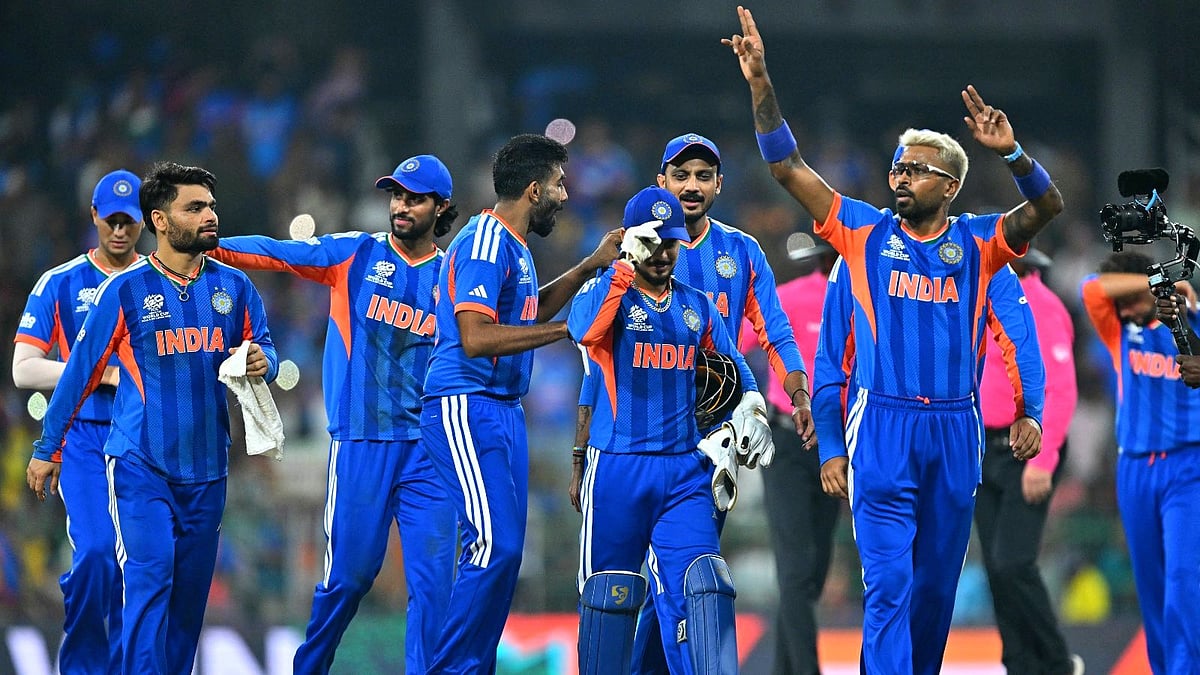
If there was a solitary moment that encapsulated the staggering gulf in quality between India and Pakistan, it was precisely that instant. At the R Premadasa Stadium in Colombo, the fans who turned up to witness an evenly contested encounter were let down by the Pakistani team, yet again, as India secured a 61-run victory in the Group A triumph of the ICC Men’s T20 World Cup 2026.
All the Things That India Did Wrong
To briefly revisit the sequence of events, India scored 175/7 as Ishan Kishan stole the show with a 40-ball 77. In response, Pakistan could barely scamper for 114, losing all of their wickets within 18 overs.
India did a lot of things right to secure this dominating victory. Yet, it was far from the professional performance we associate the number 1 ranked men’s T20I team with.
India take pride in their coaching. But in Colombo, they dropped four catches, three of which should have been straightforward opportunities for a team competing at the highest level.
If that was not enough, throw in the fact that part-timers, if we can even call If that was not sufficient, consider that part-time options — if they can even be labelled as such — were deployed in the form of Tilak Varma and Rinku Singh. There was more: Pakistan had trained in Sri Lanka for weeks, while India had arrived only a few days prior.
Zimbabwe More Competitive Than Pakistan
Despite all these factors seemingly tilting in their favour, Pakistan never appeared genuinely competitive, barring the opening over in which Salman Ali Agha removed Abhishek Sharma.
Prior to the match, Pakistan had confidence in their stride, considering their recent results. In their last 14 T20Is before today, Pakistan had lost only twice, winning 14 of those matches. Many believed a renaissance in Pakistani cricket had ceremonially begun — until that illusion was decisively shattered in this encounter.
Salman Ali Agha Drowns in Gloom...
Salman Ali Agha has many questions to answer — including the decision to chase, when the team batting first won in all three T20 World Cup games prior to this game. His bowling switches can be put under the scanner as well. What can’t, however, is the sheer ineptitude of Pakistani batters against the likes of Jasprit Bumrah and Varun Chakravarthy.
Cutting a helpless figure after the match, he said:
...While Suryakumar Yadav Basks in Glory
In stark contrast stood his Indian counterpart, Suryakumar Yadav, whose emotions radiated pride. Dedicating his win to the nation, he said:
How About That for a Debut T20I Knock vs Pakistan?
Indeed, among the many impressive performance, none was more impressive than Kishan’s 40-ball 77. Not because it was his third-highest score in T20I cricket, or that he won the Player of the Match on his maiden T20I clash against the rivals. That, he scored the fastest half-century in an India-Pakistan clash at the T20 World Cup, deserves accolades, but not as much as the courage he exuded after India were dealt with a significant blow in the form of Sharma’s wicket in the first over.
He said after the game:
Rest in Peace, Rivalry
At the 2025 Asia Cup, where India defeated Pakistan on three consecutive occasions, Suryakumar Yadav claimed that the ‘rivalry’ between the two nations is all but over.
His exact words:
At the time, the Indian captain was mocked for his statement, Yet, considering the recent results between these two teams, wherein India have won all of their last 6 T20Is against Pakistan — and the two-time T20 World Cup champions did not break a sweat in most of these matches — it can be claimed that the rivalry, purely on cricketing terms, does not exist anymore.
For the economic sustenance of the sport, for broadcasters, and for social media engagement, this remains cricket’s most marketable fixture. For the sport itself, however, it may be time to shift focus to more compelling contests in the Super 8. Until Pakistan successfully conduct a soul-searching exercise — if they still have a soul, that is.