Ranji Trophy: Today, Jammu & Kashmir Belongs to Cricket
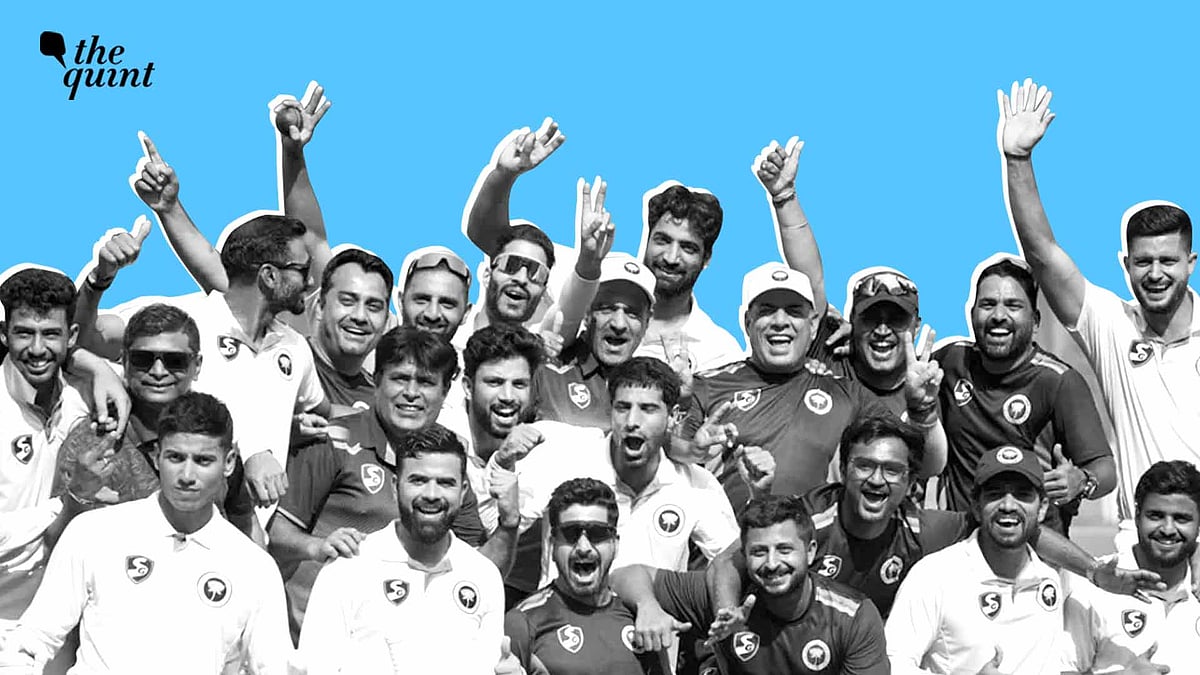
Jammu & Kashmir's Ranji Trophy triumph belongs to the people who have yearned for an identity for years.
advertisement
Sunil Gavaskar could not believe what he was witnessing.
Only four months earlier, India had been crowned world champions — an improbable achievement, beating the West Indies at Lord's in a final that still felt like a dream. Ever since, the team had been eulogised in every corner of the nation they toured. Garlanded, celebrated, adored.
When Cricket Was Held Hostage in Kashmir
India had arrived in Kashmir to face West Indies, in what was the first international game at the Sher-I-Kashmir Stadium. This match was played on the back of victories against Pakistan in Hyderabad and Jaipur, where the team was met with thunderous applauds.
Kashmir, for the umpteenth time, was deemed to be unsafe for cricket.
In the chaos, something was lost: the thousands who had gathered in good faith, yearning to watch their team play. Gavaskar would later acknowledge that while the players were deeply disappointed, it had been only a handful of men who ruined the experience for the countless fans of the game in the valley. The protestors had not merely disrupted a match. They had taken the sport hostage.
Hostage. A word the valley would come to know well.
Or consider Abdul Qayoom Bagaw, who would knock at the door of the selectors after a consistent spree of wickets in the early nineties, but a letter from seperatists warning him about the consequences of serving India would jeopardise his career, only for the letter to turn out to be fake.
In a region struggling for recognition, even cricket could not offer identity.
Until, now.
Triumphant After 66 Years
66 years since AK Raina led a team of 11 at Jalandhar, where they expectedly lost to Eastern Punjab by an innings and 78 runs in what was their debut match in the competition, Jammu & Kashmir have won the Ranji Trophy. They are the champions of India. Cricket, in the valley, does not know any hostages any more. Cricket, in the valley, has come of age.
The opposition was Karnataka — the eight-time Ranji Trophy champions.
The opposition was Karnataka — the team that had five internationals in their ranks, namely, KL Rahul, Mayank Agarwak, Devdutt Padikkal, Karun Nair and Prasidh Krishna.
The winner, though, was Jammu & Kashmir.
In the first innings, Jammu & Kashmir scored 584 runs, making the hosts bowl 173.1 overs. After bowling Karnataka out for 293 runs, they scored 342/4 in the second innings, making the hosts bowl a further 113 overs. A total of 1717 deliveries. A masterclass in attrition, patience, and belief.
But the final, decisive as it was, did not tell the whole story. Throughout the campaign, J&K had been repeatedly cornered — and had found their way out each time.
On every occasion they were cornered, they had an answer.
The Many Players Behind the Victory
Now that the region has tasted success, it will draw new believers to the game. But this victory was shaped by people from all corners — not all of them from Kashmir itself.
Mithun Manhas, the current president of the BCCI, played his domestic cricket for Delhi, though he hails from Bhalessa in Doda. When he was appointed Director of Cricket at the JKCA, he dreamt of this moment and built toward it methodically — including the deliberate acquisition of talent from other states. Neither captain Paras Dogra nor coach Ajay Sharma are from the region. After the victory, Manhas said:
Kashmir Belongs to Cricket
Critics of the current administration may argue that the region's cricketing advancement fits conveniently within a broader political project — an effort to project the image of a thriving, integrated valley. Supporters will counter that the only goal was to level a playing field that had always tilted against J&K cricketers. What cannot be disputed, however, are the concrete developmental steps that contributed to this triumph. For instance, red soil pitches were prepared to ensure the team does not lack experience when they play in away venues.
In this tournament, for instance, the victory is as much for the Kashmir valley players like Auqib Nabi, Yawer Hassan and Qamran Iqbal, as it for Jammu division players like Abdul Samad, Vivrant Sharma and Shubham Khajuria.
More than anyone else, though, this victory is of the players.
Of a Paras Dogra, the eternal journeyman who has been playing in this competition for 25 years, and has scored over 10,000 runs, without much recognition or respect.
Of an Auqib Nabi, who, till not very long ago, was not aware that one needs spikes to become a fast bowler, and used to bowl in Rs 500 knock-off sneakers.
Of a Sunil Kumar, who has only bowled with a Cosco ball till he was in college, when he was scouted by coaches.
Of an injury-plagued Shubham Khajuria, or an Abdul Samad who was written off even before he could get a proper opportunity.
Amid a turbulent geopolitical reality, Kashmir has many claimants. The map is redrawn according to agendas. It may continue to be. There are numerous competing narratives about whom the valley belongs to, and to what.
Today, Jammu & Kashmir belongs to cricket.