
Yuvraj Mehta’s Death Reveals the Cost of Noida’s Negligence
The waterlogged pit where Yuvraj Mehta drowned was not an isolated hazard. The city failed to prevent his death.
advertisement
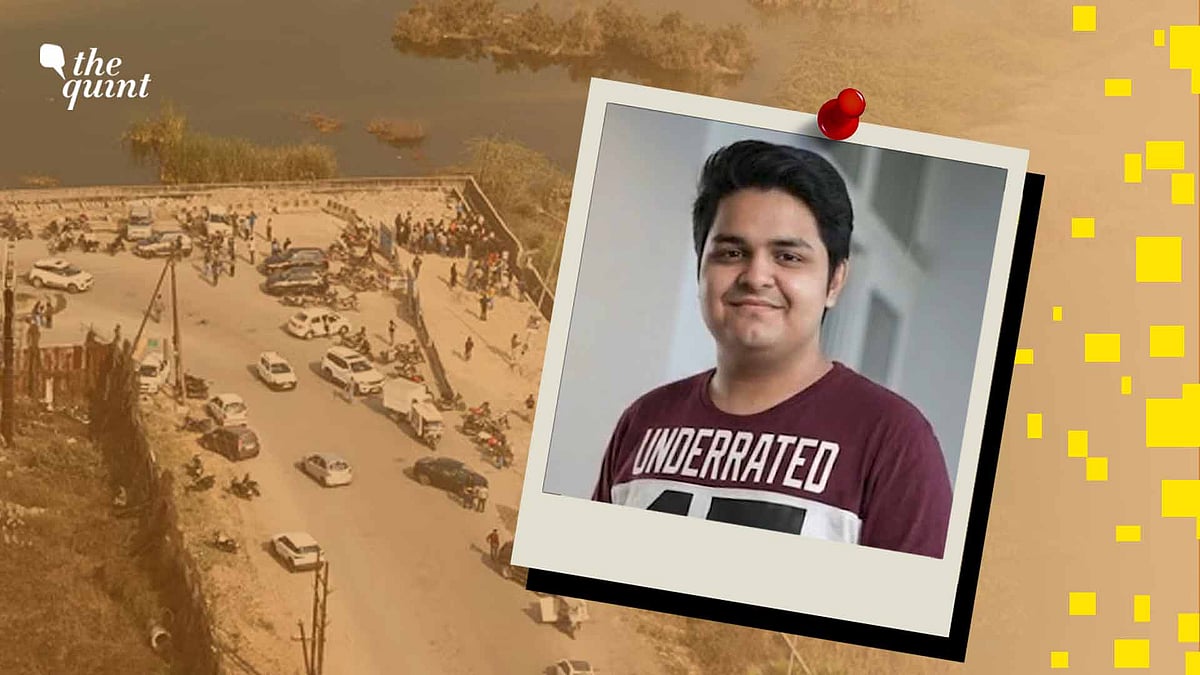
Yuvraj Mehta did not die because he was careless. He died because the city was. His father heard his son screaming for help for almost 90 minutes. His only child drowned in an open area that was meant to be part of the planned urban space and land that had been left exposed, waterlogged, and forgotten.
The facts are stark and deeply unsettling. There were no barricades. No warning signs. No physical barriers to prevent access. The danger was visible, persistent, and entirely preventable. And yet, it remained unattended. Indian cities are littered with such spaces: unfinished plots, leftover greens, retention areas, half-developed parcels stuck between approvals and handovers.
During monsoons, these spaces turn into invisible traps. Every year, children fall into open drains, construction pits, and water-filled depressions. Each time, the response follows a familiar script, a brief public outcry, assurances of inquiry, and then silence. What makes Yuvraj’s death especially disturbing is not only its cruelty, but its ordinariness. Nothing about the conditions that led to it was unusual.
That is precisely the problem.
From a Promised Sports City to a Planning Hellscape
In M/s Lotus Green Constructions Pvt Ltd vs State of Uttar Pradesh & Ors, the Allahabad High Court exposed how the Noida Sports City project was hollowed out through collusion between builders and officials, turning an integrated public project into fragmented, abandoned parcels of land. Eligibility norms were bypassed, dues were not recovered, and land meant for sports infrastructure was broken up, sub-leased, and left unattended.
What the court described as institutional corruption ultimately translated into something brutally tangible: an abandoned excavation, left open for years, becoming a death trap in plain sight.
The scale of institutional failure becomes impossible to ignore once one looks at the findings of the Comptroller and Auditor General of India. Its report described the Noida Sports City project as a textbook case of regulatory misuse, estimating a loss of nearly Rs 9,000 crore to the Noida Authority and the state government due to incorrect pricing of land meant for public sports infrastructure.
Financial bids were not properly scrutinised. Eligibility criteria were ignored. The land was redistributed among companies that could not have qualified independently. Instalment dues were not enforced. Transfer charges were skipped as land changed hands. Revised payment plans were issued as if each transferee were a fresh allottee. Occupancy certificates were granted even where sports facilities were never built. Lease rent, too, remained unpaid. Taking note of these findings, the Allahabad High Court recorded serious lapses in planning and oversight, with the matter now lying before the Public Accounts Committee.
One finding of the High Court cuts through the entire façade: “Consortium Members including the Relevant Members were companies incorporated after the scheme was floated and before the scheme was closed.”
This single line explains how the Sports City was hollowed out from within. Companies were created mid-process, not to build a public sports ecosystem, but to fragment land and sell it for profit. Once the allotment was secured, the project was systematically broken into smaller parcels and monetised at market rates, even though only 20 percent of the allotment premium had been paid, and further dues were deliberately left unpaid.
A Hazard Visible from the Sky, Ignored on the Ground
This could not have happened without institutional complicity. Officials of the Noida Authority chose not to raise demands when instalments fell due, effectively subsidising private profiteering with public land. Planning approvals were then used selectively. While maps were sanctioned, the obligation to develop sports facilities and the very justification for the scheme was retained by just two or three entities. The rest were allowed to build lucrative residential projects. The outcome was predictable. Profits were privatised. Liabilities were isolated.
By 2022, construction had stalled. The pit filled with water and stayed that way for years open, unfenced, unmarked, and untreated as a hazard. No builder secured it. No warning signs were installed. No authority stepped in to drain or barricade it. This was not a hidden danger. It was visible from the sky and ignored at street level.
When Help Comes Too Late
When tragedy finally struck, even the response reflected the same apathy. Help was slow.
As the Allahabad High Court later noted while examining the wider Sports City scam, this was the outcome of a “dirty nexus” between builders and the Noida Authority, one that fragmented public land, extracted profit, and systematically avoided responsibility.
The rot did not stop even after the scam was exposed. As recorded by the High Court, officials of the Noida Authority continued to act in collusion with Sports City developers, openly bending rules to favour them. In March 2023, the Authority issued a notice illegally extending the benefit of a 2020 government order to one of the allottees despite the move being contrary to its own office orders and in violation of binding law laid down by the Supreme Court of India in Bikram Chatterji vs Union of India.
The High Court took serious note of this conduct, observing that officials were determined to keep granting “undue favours” to builders even after the project had been exposed as a massive fraud. This was not administrative confusion.
It was a conscious decision to protect private developers at the cost of public interest, safety, and accountability.
Why This Death Cannot Be Written Off
Yuvraj did not drown because no one knew the danger existed. He drowned because everyone who was supposed to act chose not to. The pit was visible. The water had been collecting for years. The project it belonged to had already been exposed by auditors and courts as a case study in regulatory failure. And yet, nothing moved no barricades, no inspections, no urgency.
If this death is allowed to fade into routine tragedy, the message will be unmistakable: that in our cities, neglect is tolerated until it turns fatal. Accountability cannot stop at reports, court orders, or expressions of regret. It must extend to the people and institutions that allowed public land to become a private hazard and a child’s death to become collateral damage of civic apathy.
(The author is partner at Tatvika Legal, A full-service law firm based in Delhi NCR. This is an opinion piece and the views expressed above are the author’s own. The Quint neither endorses nor is responsible for the same.)
- Access to all paywalled content on site
- Ad-free experience across The Quint
- Early previews of our Special Projects
Published: undefined