Delhi Among World’s Largest Cities in High Water Stress Areas, Finds Report
39 of these cities located in regions where water demand is close to exceeding available supply.
advertisement
Half of the world’s 100 largest cities are currently experiencing high or extremely high water stress, with 39 of these cities located in regions where water demand is close to exceeding available supply.
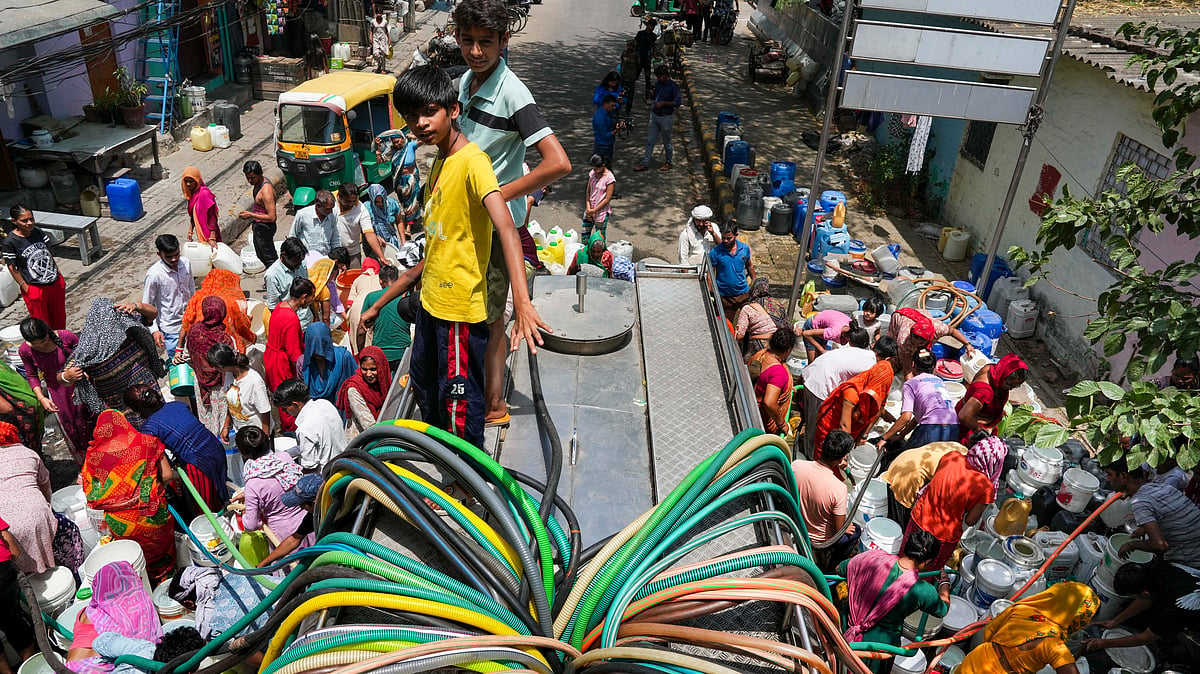
Major metropolitan areas such as Beijing, Delhi, Los Angeles, and Rio de Janeiro are among those most severely affected.
The situation is driven by a combination of poor water management and the intensifying impacts of climate change, resulting in chronic shortages and increasing risks to urban populations.
According to The Guardian, new analysis and mapping efforts have revealed that water withdrawals for public supply and industry in these cities are approaching or surpassing sustainable limits.
The mapping, conducted by Watershed Investigations and supported by satellite data from University College London, shows that cities such as London, Bangkok, and Jakarta are also classified as highly stressed, while others like Chennai and Tehran are experiencing strong long-term drying trends.
Separate satellite data analysis indicated that about 1.1 billion people live in major cities located in regions with significant long-term drying, compared to only 96 million in areas with strong wetting trends.
Most urban centres facing the strongest drying signals are concentrated in Asia, particularly northern India and Pakistan, while wetting trends are mainly observed in sub-Saharan Africa.
On 22 January 2026, the United Nations announced that the world had entered a state of “water bankruptcy,” with some water resources experiencing permanent and irreversible deterioration.
Editorials highlighted that climate change has exacerbated the crisis by disrupting rainfall patterns and river flows, but poor management remains a primary cause.
The UN report emphasised that water bankruptcy in one region can increase pressure and tensions in others due to interconnected trade, migration, and weather systems.
Efforts to address water stress are underway in various regions. Recent initiatives in India, such as the water security project in Gadchiroli, Maharashtra, aim to strengthen water availability and promote sustainable agricultural practices.
The project focuses on soil and water conservation, expanding irrigation, and supporting alternative livelihoods to reduce pressure on local water resources.
“By tracking changes in total water storage from space, [the Nasa project] Grace shows which cities are drying and which are getting wetter, offering an early warning of emerging water insecurity,” said Mohammad Shamsudduha, professor of water crisis and risk reduction at University College London.
In response to the growing crisis, local authorities in India’s Uttarakhand state have implemented seasonal bans on water-intensive crops like paddy to prevent further depletion of groundwater.
Farmers are being encouraged to diversify to less water-intensive crops, though challenges remain in ensuring adequate support and market access for alternative produce.
Global financial trends also contribute to water stress. Analysis showed that investments in nature-positive solutions, such as sustainable water management and ecosystem restoration, remain significantly lower than investments that harm natural resources.
The United Nations Environment Programme has called for a substantial increase in funding for nature-based solutions to reverse environmental degradation and support water security.
Policy experts have called for transparent water accounting, protection of aquifers, and enforceable extraction limits. Coverage revealed that while there is growing awareness of the need for prudent water use, supply-side measures still dominate, and more robust management frameworks are required to ensure equity and sustainability.
“Without sustained monitoring and better management we risk managing it blindly amid intensifying development and climate pressures,” warned Shamsudduha, underscoring the urgency of coordinated action.
Many of the world’s fastest-growing cities are located in regions with strong drying trends, increasing the risk of future shortages. As details emerged, experts stressed that both immediate and long-term strategies are needed to address the complex drivers of urban water stress and to safeguard the future of global cities.
Note: This article is produced using AI-assisted tools and is based on publicly available information. It has been reviewed by The Quint's editorial team before publishing.