
SoO Review to Peace Committee: What the Centre Must Do to Heal Manipur’s Divides
Armed groups continue to target people of rival communities, adding to social unrest in the already volatile state.
advertisement
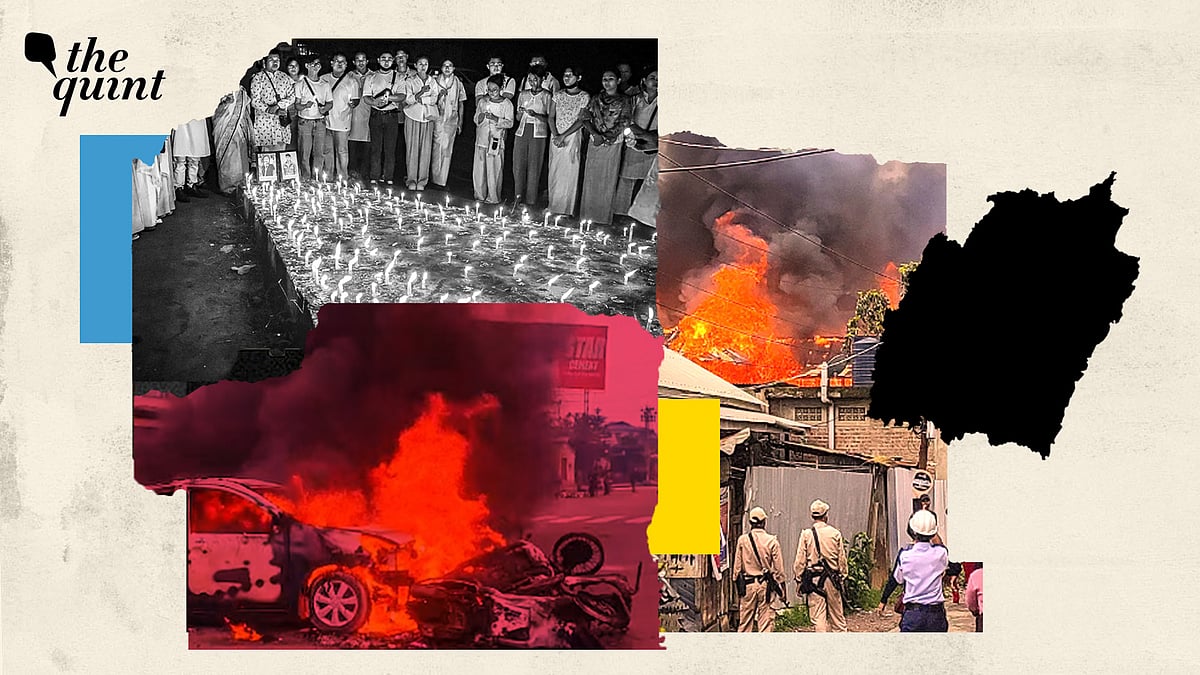
It has been more than three years since ethnic violence between the Meitei and Kuki-Zo communities rocked the northeastern state of Manipur. The violence killed more than 260 people and displaced more than 60,000 people.
The clashes also drew a clear divide between the valley-dwelling Meitei and the hill-dwelling Kuki-Zo people. The violence gradually tapered off despite recurrent disturbances in the buffer areas. But this shouldn’t create a sense of the state turning towards normalcy, as the Centre wants to paint it.
This "reduced" violence was because both the communities avoided contact with each other. Meiteis still avoid going into Kuki-Zo areas, while Kuki-Zo people avoid Meitei areas, highlighting the existence of sharp ethnic divide.
This was seen in April this year, when two Meitei children, along with their mother, were killed in a militant attack, allegedly by Kuki militants, in the Meitei-dominated Bishnupur district. This resulted in massive protests in the Meitei-dominated valley. During one of those protests, an angry mob stormed a CRPF camp, leading to the death of three Meitei civilians as a result of firing by security forces, pouring fire to the already volatile situation.
Re-opening Old Fissures
Amid this backdrop of ethnic strife, the rise in tensions between the Nagas and the Kuki-Zo people has become a serious matter of concern. Both the communities had a history of bitter rivalry resulting in ethnic violence in the 1990s, resulting in the death of around 1,000 people.
During the Meitei and Kuki-Zo conflict, the Nagas, who share the hills of the state with the Kuki-Zo, had remained neutral. However, this year, tensions first appeared in the Ukhrul district. It then widened, culminating into the killing of three Baptist Church leaders belonging to the Thadou community in an ambush in Kangpokpi district, and the subsequent kidnappings of Nagas by Kuki-Zo militants and Kuki-Zo people by Nagas following the ambush.
Kuki-Zo have alleged the Naga militants behind the ambush of three Church leaders, a charge strongly denied by the Nagas. Interestingly, while Kuki-Zo regard Thadou as part of the larger Kuki-Zo umbrella, in recent times, there has been a dispute over this. The Thadou Inpi Manipur, the apex body of the Thadou community, has earlier rejected the Kuki term, and claimed Thadou as a distinct ethnic identity.
The Kuki-Zo Council, a crucial body representing the Kuki-Zo leaders, accepted the killings of six Nagas by Kukis, and even offered an apology. However, Nagas have rejected the apology and have now joined the Meiteis in demanding the abrogation of the Suspension of Operations (SoO) with 24 Kuki-Zo militant groups. The United Naga Council (UNC), Naga’s crucial body, alleges Kuki National Front (P), a signatory of the SoO, behind the killings of the Nagas.
It has also demanded the resignation of the BJP-led Yumnam Khemchand government's co-Deputy Chief Minister, Nemcha Kipgen. Notably, the KNF(P)’s leader is Nemcha's husband. Nemcha, though a Thadou, hasn't identified herself as separate from the broader Kuki identity.
Failure to Facilitate Social Harmony
No doubt, Centre’s security measures have borne results on the ground, with around 70 percent of the looted weapons from police stations being recovered. Along with these looted ones, other weapons have been recovered too.
But these security measures weren’t the necessary anti-dote needed to bridge the gaps that were created by the riots. A peace committee is required to facilitate dialogue between the rival communities. In fact, a month after the ethnic riots broke out in May 2023, the Centre, following the visit of union home minister Amit Shah to the strife-torn state, had formed a 51-member peace committee to facilitate dialogue among conflicting ethnic groups. But that peace committee failed to take off, and the Centre didn’t bother to make it effective or form a new one in the last three years.
The Centre needs to accept that its failure to bridge the gap between Meiteis and Kuki-Zo people has kept the state on the boil, and now this has reopened an old fault line. This ethnic divide allowed the Kuki-Zo people, who since the riots haven't stepped the capital city of Imphal, to demand for a separate adminitration—meaning mostly a separate state or a union territory. This demand isn't feasible as dividing the state isn't a solution. Meiteis are strictly opposed to this division.
In fact, some areas within the proposed “Kukiland” are considered ancestral lands by Nagas. These overlapping claims are contributing to the present tensions between Kuki-Zo and Nagas.
Despite an open statement by Amit Shah against the division of the state, the Kuki-Zo organisations have continued their demand of a separate administration. It is not that the Centre has made no efforts to mediate with different stakeholders of the state.
Accepting the Reality
However, the Centre needs to realise that the situation is complicated. It should avoid presenting an overly optimistic picture. This similar attitude was seen when Prime Minister Narendra Modi visited—his first visit after the ethnic riots—the state last year. The fact is, the BJP-led union government needs to accept what went wrong that led the state to this situation, from which returning to normalcy looks like a distant prospect.
Even then, the BJP’s central leadership didn’t bother to give any official explanations regarding Biren’s sudden resignation. This approach—avoiding accountability—of central BJP leadership reflects the party's hesitation in accepting the bitter reality of the state, which now stands divided for three years, and this division, instead of reducing, is growing as the latest tensions between Nagas and Kuki-Zos indicate.
Centre Must Act
The present tensions have created pressure on the new Yumnam government, formed by the Centre keeping in mind the state’s ethnic diversity. The government includes two deputy chief ministers—Nemcha Kipgen from the Kuki community and Losii Dikho from the Naga community. With the Nagas now demanding the resignation of Nemcha, the Centre’s formula of diverse cabinet itself has come under pressure.
Secondly, it should give powers to the six toothless Autonomous District Councils of the state by bringing them under the Sixth Schedule, and provide direct funding of the bodies. In this way, the grievances of the hill people, including Kuki-Zo people, can be addressed. Through such steps, it can blunt the demand of "Kukiland".
Thirdly, the Centre should form another peace committee, which should be effective and ensure dialogue among the communities. It would be better if Amit Shah himself leads the committee. Lastly, the Centre should ensure that perpetrators get punishment, and the homeless are relocated.
After all, people of the state, fed up of ethnic tensions, are eager to know from Modi what the plans the Centre has. His silence is only sending a negative message to the people of the strife-torn state.
(Sagarneel Sinha is a political commentator and tweets @SagarneelSinha. This is an opinion piece and the views expressed above are the author’s own. The Quint neither endorses nor is responsible for them.)
- Access to all paywalled content on site
- Ad-free experience across The Quint
- Early previews of our Special Projects
Published: undefined