
Trump’s Budget Cuts May Save Money, But Cost America Influence
The potential savings for the US by exiting 31 UN agencies are marginal, writes Sanjeev Ahluwalia.
advertisement
The world is getting used to America’s whimsical approach to international commitments. The armed Maduro heist in Venezuela on 3 January by the American military was dramatic, but may have been be in breach of the United Nations (UN) charter.
Five days later, the US withdrew from financial commitments to the UN and other international organisations, made in more “woke” times where the US was the fulcrum of global partnerships.
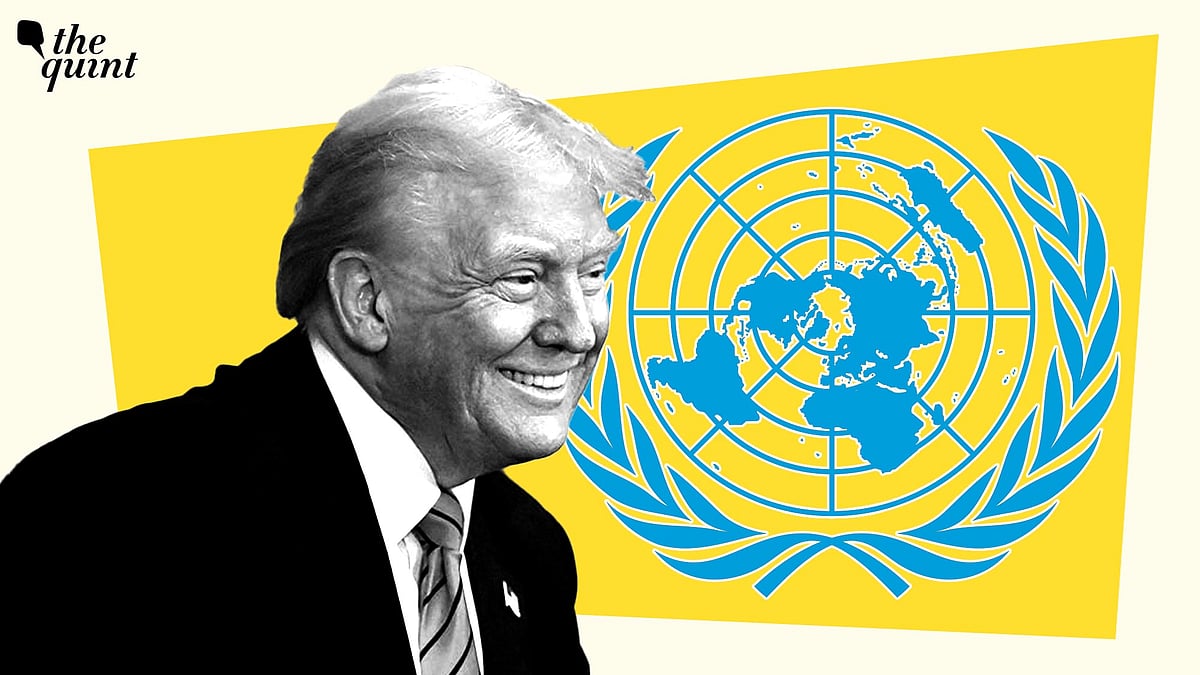
On 8 January, President Donald Trump formalised this shift through a directive ordering the US to exit 31 UN agencies and 36 other international bodies, and to halt funding, where legally possible, on the grounds that their activities were “contrary to the interests of the United States”.
Reform, But Not Retreat
To be fair, if put to a General Assembly vote as a generic proposition, most member states would agree that structural reform and budget discipline in the UN are overdue.
Consider that there are four separate Economic and Social Commissions—one each for Africa, Latin America and the Caribbean, Asia and the Pacific, and another one for Western Asia. Separate, but closely associated with the UN system, there are also multilateral development banks active in Africa, Asia, and Latin America, alongside the World Bank. United Nations Conference on Trade and Development (UNCTAD) and the International Trade Centre—both UN agencies—and the now moribund World Trade Organisation, all operate out of Geneva.
Trump’s instincts are sound, as are his business smarts for rooting out bureaucratic lard. Sadly, his preference for going for the jugular, coupled with his impatience with process, torches the good along with the bad—even from a US perspective.
The Dollar’s Privilege
Trump’s drive to reduce the US fiscal deficit ignores America’s unique privilege of seigniorage—printing money out of thin air—with the consequences left for the rest of the world to manage, as John Connoly, the US Treasury Secretary, famously remarked in 1971.
The US dollar is unchallenged because of the US institutional compact of transparency and predictability that underpins it. The US attracts 70 percent of private investment and about 40 percent of all financial transactions—larger than the next 10 markets, including the EU and China. This, in turn, ensures global demand for the US dollar, including for US Treasuries that help fund the deficit.
Contrary to the rhetoric, the United States has walked the talk on climate change. Since 1980, it reduced per capita carbon emissions by 31 percent, second only to the EU, which reduced by 46 percent. However, both significantly exceed the global average per capita emissions. Meanwhile, India is still 53 percent below the global average, much like Brazil, while China and South Africa exceed it by 83 percent and 45 percent respectively.
Actions speak louder than words. Since 2023, US federal grants to strengthen transmission grids—to manage more variable renewable power—have totalled $3.5 billion. Projected outlay includes another $6.5 trillion by 2030.
More generally, it is counterintuitive to expect American business to forego the ongoing global rush to innovate, manage, and market green energy—from green hydrogen and its derivative fuels to cellulosic options for bioenergy. America remains a font of innovation and technology, albeit with China snapping at its heels.
Costs Beyond Cash
The potential savings for the US by exiting 31 UN agencies are marginal. The UN's annual budget for core activities is $3.4 billion, shared across members based on the GDP. The US’ legally binding assessed contribution is a modest $760 million. Additionally, members make voluntary commitments for specific agencies or programmes.
As of 9 October 2025, the Congressional Research Service estimated unpaid US assessments of $1.5 billion for the UN's regular budget and $2.4 billion for UN's peacekeeping operations.
In May 2025, Trump, pursuing a reduction in the US deficit of $1.1 trillion, proposed $7.9 billion in rescissions from previously enacted outlays for the UN. Only about $1 billion was ultimately rescinded, illustrating the cleft view, within Congress, which is up for elections in November this year, over whether abandoning past commitments would invite China to displace US global influence.
Naysayers for a larger rescissions cited the negative impact on specific programs in friendly countries, the harm to the global poor, and the risk of eroding US credibility as a trustworthy partner.
The ISO is well funded and the absence of American financial support will not set it adrift. What will be missed, however, are the productive, professional, and business partnerships that flourish when like-minded nations come together. There is always the possibility that America may yet rethink its position.
(The author is a distinguished fellow Chintan Research Foundation and was previously in the IAS and the World Bank. This is an opinion piece and the views expressed are the author's own. The Quint neither endorses them nor is responsible for them.)
- Access to all paywalled content on site
- Ad-free experience across The Quint
- Early previews of our Special Projects
Published: undefined