
ECI’s Power to Freeze Party Symbols Comes With an Obligation to Act Quickly
An interim freeze may disproportionately affect the one historically associated with the name and symbol.
advertisement
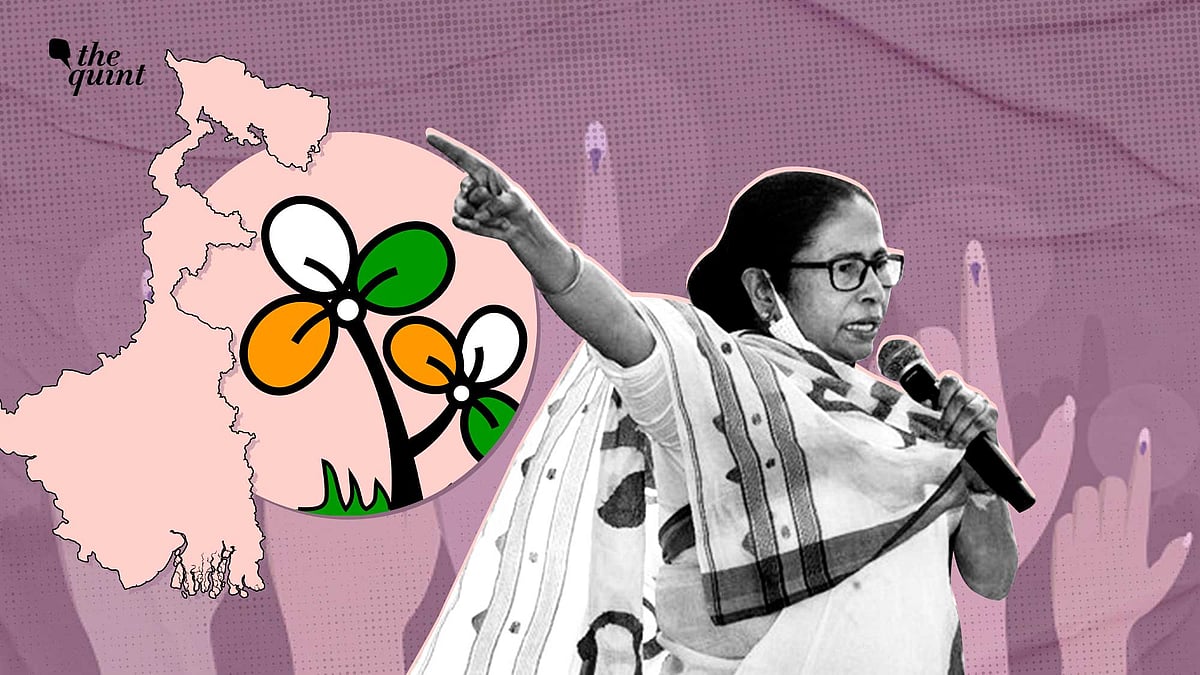
Last week, the Election Commission of India (ECI) passed an interim order freezing the name and election symbol of the All India Trinamool Congress (TMC), following competing claims by two factions of the party, each claiming to be the real TMC.
This means that until the dispute is finally decided, neither faction can use the party's name or its familiar 'flowers and grass' symbol. For the upcoming bye-elections in West Bengal, each of them has been allotted separate name and symbols.
Political reactions aside, the power exercised by the ECI is neither new nor unprecedented.
For decades, issuing an interim freeze until the dispute is conclusively resolved has been the normal course of action adopted by the ECI, and courts have generally upheld this power.
The ECI's Power
Article 324 of the Constitution vests the “superintendence, direction, and control” of elections in the ECI. In exercising these powers, the election body must act in conformity with laws enacted by Parliament governing elections.
This approach was reiterated in the recent Bihar SIR judgment, where the Supreme Court emphasised the election body's “institutional expertise” and “constitutional authority”, to observe that courts should not supplant the judgment in matters it is uniquely suited to undertake.
The Election Symbols (Reservation and Allotment) Order, 1968 specifically empowers the ECI to allot symbols and recognise political parties for that purpose, as well as resolve disputes involving splinter or rival groups of recognised political parties.
Paragraph 15, in particular, provides that where the ECI is satisfied that there are rival groups of a recognised political party, each claiming to be the original party, it must determine which group, or whether neither, should be recognised as the political party. This determination must be made after considering all available facts and circumstances and hearing the representatives of each group, as well as any other persons who desire to be heard.
In deciding such disputes, the ECI has traditionally considered the relative strength of the competing factions within the organisational and legislative wings of the political party.
The ECI has the power to adopt a different test that is suitable to the particular facts and circumstances before it.
History of Frozen Symbols
Splits in political parties and contests over the party name and symbol have been a recurring feature of Indian politics. Two examples are particularly relevant, as they highlight the usual course of action in these disputes and, incidentally, also involve two strong women leaders, much like the present TMC dispute.
The first is the split in the Congress in 1969, following the death of President Zakir Hussain, when there was disagreement within the party over the choice of his successor. The party establishment, then led by Congress President S Nijalingappa, supported Neelam Sanjiva Reddy.
However, Prime Minister Indira Gandhi supported VV Giri, an independent candidate, and called upon Congress legislators to vote according to their “conscience”. The confrontation culminated in Indira Gandhi’s expulsion from the Congress in November 1969, and the party splitting into two rival groups—one led by Jagjivan Ram and supported by Indira Gandhi (Congress ‘J’), and the other by Nijalingappa (Congress ‘O’)—each claiming to represent the original Congress.
The second example is from the All-India Anna Dravida Munnetra Kazhagam (AIADMK), whose party symbol (‘two leaves’) has twice been at the centre of disputes following the death of its leader. After the death of MG Ramachandran in 1987, the party split into two factions, one led by his wife Janaki Ramachandran and the other by Jayalalithaa.
Both claimed to represent the AIADMK and sought the party symbol. However, the ECI declined to recognise either faction as the original AIADMK and froze the party symbol for the 1989 Tamil Nadu Assembly elections. Instead, the Jayalalithaa faction was allotted the ‘rooster’ symbol, while the Janaki faction contested on the ‘two doves’ symbol. Following the election, the two factions reunited and the AIADMK eventually regained its party symbol of ‘two leaves’.
Almost three decades later, history repeated itself following Jayalalithaa’s death in December 2016. Rival factions, one led by O Panneerselvam and the other by VK Sasikala and TTV Dhinakaran, claimed to represent the AIADMK and sought the party symbol. The dispute was time-sensitive, as a bye-election was scheduled for 12 April 2017, with 23 March being the last date for filing nominations.
The petition before the ECI was filed on 16 March and, hence, the ECI had barely a week to reach a decision. It concluded that it was practically impossible to examine the material submitted before it (over 20,000 pages) and finally determine the dispute within such a short period. Therefore, the ECI passed an interim order freezing the party symbol and temporarily allotted different names and symbols to the two factions. The dispute was ultimately decided in November 2017, when the ECI recognised the faction led by O Panneerselvam as the real AIADMK.
Safeguards to Consider
A party’s election symbol performs an important electoral function, enabling voters to identify candidates with a particular political party. Political parties also invest considerable time and resources in building an association with their symbols.
This does not mean that the ECI should refrain from freezing a symbol where a genuine dispute arises. In some cases, it may be the only neutral interim solution, since allowing either faction to use the symbol while the dispute remains pending could itself prejudice its determination.
Second, once a symbol is frozen, the dispute must be decided expeditiously and with a “certain measure of promptitude”, as held by the Supreme Court. In the past, the ECI has demonstrated that this is possible. For instance, in 2017, when rival factions of the Samajwadi Party approached the ECI shortly before the Uttar Pradesh Assembly elections, it decided the dispute within 14 days. The Madras High Court subsequently cited this as an example of the urgency with which such disputes should be resolved.
This urgency matters because an interim freeze, while formally treating both factions equally, may disproportionately affect the one historically associated with the name and symbol. Hence, the longer such an arrangement continues, the greater its consequences for that faction and, importantly, for voters accustomed to identifying a political party through its symbol. An interim arrangement intended to preserve neutrality must therefore remain precisely that—interim.
(The writer leads Charkha, the Constitutional Law Centre at the Vidhi Centre for Legal Policy. He specialises in constitutional law and administrative law, with a particular focus on constitutional interpretation and judicial review. This is an opinion piece and the views expressed above are the author’s own. The Quint neither endorses nor is responsible for them.)
- Access to all paywalled content on site
- Ad-free experience across The Quint
- Early previews of our Special Projects
Published: undefined