
An Ode to the Indomitable Spirit of Kerala's Comedy King Sreenivasan
Sreenivasan was a rare artist who dared to look within himself and laugh the loudest.
advertisement
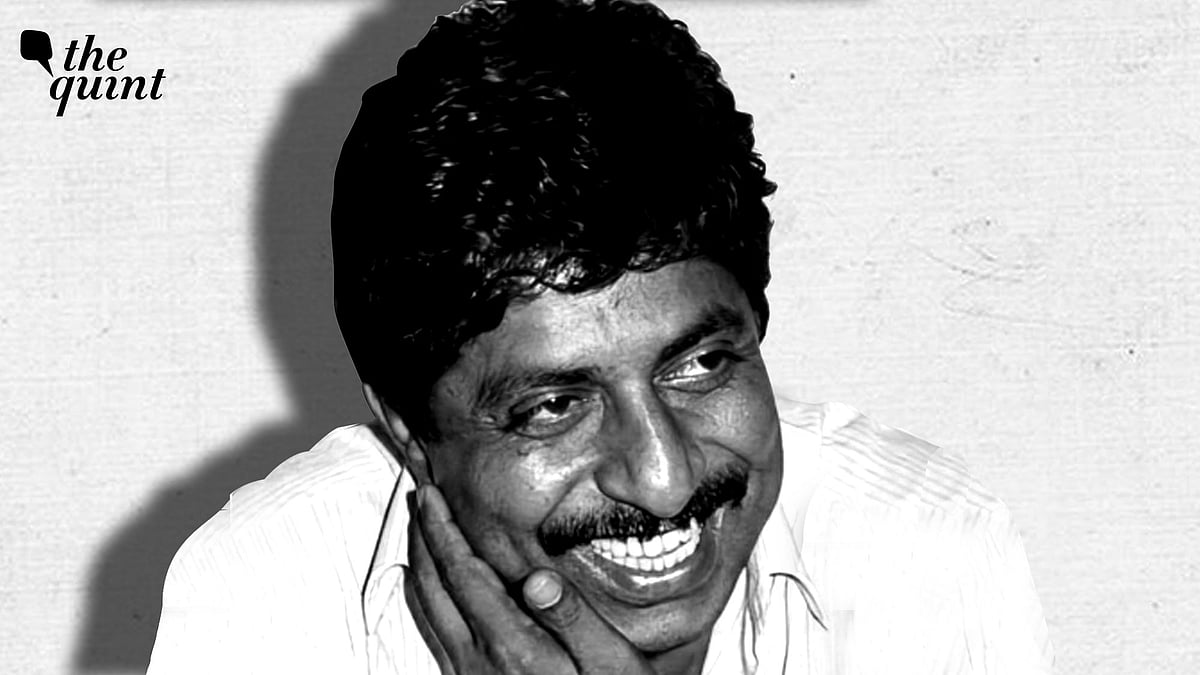
As the veteran director–scenarist–actor Sreenivasan, 69, bid his final farewell on 20 December, Kerala lost more than a multi-faceted talent; Kerala has lost its most honest, reliable and humorous critic—and a true friend. If someone were to study Malayalees as a whole, Sreenivasan’s body of work would serve as an unfiltered social archive of a society negotiating tradition, progress, and self-image.
The late actor-director-writer hailed from the village of Patyam in Kannur, and was an alumnus of the Madras Film Institute, where Rajinikanth was a fellow student. Sreenivasan entered Malayalam cinema as an actor in PA Backer’s Manimuzhakkam (1976), and went on to appear in critically acclaimed films such as Mela and Kolangal, directed by KG George, and Vilkanundu Swapnangal written by the stalwart of Indian literature, MT Vasudevan Nair, in the 1980s.
Sreenivasan, the Director
His foray into commercial cinema—which made him a common household name, not just as an actor but also through his legendary one-liners that he wrote for himself and his contemporaries—came by the mid-80s, when director Priyadarshan entrusted him with the screenplay of Poochakkoru Mookuthi in 1984. From then on, he became an unavoidable presence in some of the most successful creative partnerships Malayalam cinema has seen—be it Mohanlal–Priyadarshan–Sreenivasan or Sreenivasan–Sathyan Anthikkad–Mohanlal.
In his illustrious career, he has directed two films—Vadakkunokkiyantram and Chinthavishtayaaya Shyamala—which won the state and national awards respectively. While Vadakkunokkiyantram deals with the themes of insecurity, mental health and paranoia and Chinthavishtayaaya Shyamala explores the trope of a middle-class man’s escapism using faith as an excuse. Both these films strongly etch out the plight and voice of women trapped in dysfunctional marriages.
Sreenivasan repeatedly situated women inside marriages that are not overtly abusive, but structurally suffocating. The woman’s suffering is not sensationalised. Nor is it resolved through melodrama or martyrdom.
Sreenivasan with Mohanlal.
A question Sreenivasan was often asked was why, despite his long career in Malayalam cinema and his association with it in many capacities, he had directed only two films. To this, he would respond in his inimitable style—“My greatest contribution to Malayalam cinema is the 500 movies I did not direct,” and punctuate with his iconic hearty laugh.
A Political Lens, A Satirical Take
He was an artist who dared to look within himself and laugh the loudest. His penchant for taking on characters with ridiculous idiosyncrasies in his own scripts stands a testimony to this—be it MA Dhavaan from Aram + Aram Kinnaram or Rajappan Thengumoodu aka Super Star Saroj Kumar from Udayanaanu Thaaram. He made light of harsh realities, implored us in his many whacky ways to not take ourselves too seriously and most importantly to call out in the most unserious ways when emperors have no clothes.
In the 1991 film Sandesham, written by Sreenivasan and directed by Sathyan Anthikkad, Sreenivasan portrays Prabhakaran—a young politician and an active member of the left-leaning RDP, modelled after Kerala’s LDF. As pressure mounts from his family for him to get married, Prabhakaran—whose primary allegiance and commitment lies with the party—seeks permission from a senior leader he holds in deep reverence.
When Prabhakaran broaches the topic, the leader outrightly refuses, declaring, “Never! Ideologically, our party is against all kinds of establishments—and that includes marriage too.” He goes on to preach that one must learn to love and empathise with the human race, especially the working class at large, beyond the constraints of marriage and family.
At this, Prabhakaran questions him: “But you are married!” The leader simply responds, “I regret that decision”. Prabhakaran immediately asks, “Then why don’t you leave her?” to which the leader retorts—“We are discussing your problem here!” and moves on.
This particular film, is widely discussed to this day for its hilarious and satirical criticism of politics at both ends of the spectrum. It is so engrained in the socio-political milieu that rarely does a day pass in an average Malayali household without referencing to its dialogues while discussing politics.
Capturing the Angst of Youth
While all this establishes Sreenivasan’s relevance as a writer and actor, what makes him deeply relatable and loved across generations are the films that etched out the angst and aspirations of young men and women—those far removed from the echelons of power—struggling to find their footing in an ever-changing world.
Sreenivasan’s Dasan and Vijayan, portrayed by Mohanlal and himself in the trilogy Nadodikkattu, Pattanapravesham, and Akkare Akkare Akkare, remain—nearly four decades on—the enduring poster boys of youthful aspiration. Their struggles are still strikingly relevant, and their dialogues remain firmly ingrained in the cultural lexicon.
A few other films of his, namely Sanmanassullavarkku Samadhanam, which is said to have been inspired from the bank’s seizure of his own house, TP Balagopalan MA, Varavelppu, Thalayanamanthram, Midhunam explored tropes of a common man’s struggles against the system and the constant fight to escape the entanglements of red-tape—all distilled through humour.
In many ways, Sreenivasan helped make life bearable to many by lending us his ability to look at the dire realities through the lens of humour and to laugh out loud in the face of adversities as one navigates them and more importantly, to hold onto hope with his most iconic dialogue “Ellathinum athintethaaya samayamundu, Daasa”—There is a time for everything and everyone, my friend!
And every time the Malayali audience call out the sleaze that is packaged as comedy, it is Sreenivasan’s win—because not only has he taught us better, but he has reiterated every common man's agency to call out hooliganism when we see it—wherever it comes from. His greatest legacy is that he will forever remain the sarcastic transcript of an average Malayali’s mind-voice.
(Meenakshi Sajeev is a writer, published poet, and corporate communications consultant based out of Bengaluru. She has worked with the UN Environment and is currently with IBM. This is an opinion piece and the views expressed are the author's own. The Quint neither endorses nor is responsible for them.)
- Access to all paywalled content on site
- Ad-free experience across The Quint
- Early previews of our Special Projects
Published: undefined