Delhi Keeps Shutting Metro Stations to Curb Protests, but Who Pays the Price?
The Supreme Court has long treated commuter inconvenience as a serious harm when protesters cause it.
advertisement
On 10 September, a bench headed by Chief Justice Surya Kant issued notice to the Union government, the Delhi Police, the Delhi government, and the Delhi Metro Rail Corporation (DMRC) on a petition challenging the closure of 17 metro stations during the July student protests.
The petitioner says the Metro Railways (Operation and Maintenance) Act has no provision that lets a public utility be shut to manage a protest. He also points out that the closures were announced through posts on X and not through a formal order, and that the authorities gave only generic “security reasons”. The matter will be heard further once the respondents file their replies.
On 25 September, a Jantar Mantar protest demanding the resignation of Chief Election Commissioner Gyanesh Kumar and a rollback of the Special Intensive Revision of electoral rolls met a Section 163 order, barricades, and detentions, among them activists Yogendra Yadav and Anjali Bharadwaj. On 2 October, police imposed Section 163 of the Bharatiya Nagarik Suraksha Sanhita across the New Delhi district. Entry and exit were closed at 12 metro stations, according to Scroll, which lists Lok Kalyan Marg, Rajiv Chowk, Patel Chowk, and Janpath among them.
Mobile internet was reportedly suspended within a 1.5-kilometre radius of Jantar Mantar until midnight, and more than 700 people were detained. The Cockroach Janta Party (CJP) has now said it will march to Delhi on 10 October if Kumar does not resign.
The pending case asks whether the closures were lawful and proportionate. I want to add a question that sits underneath both: who pays for them, and who decides that they should?
A Closure Moves the Cost Onto Someone Else
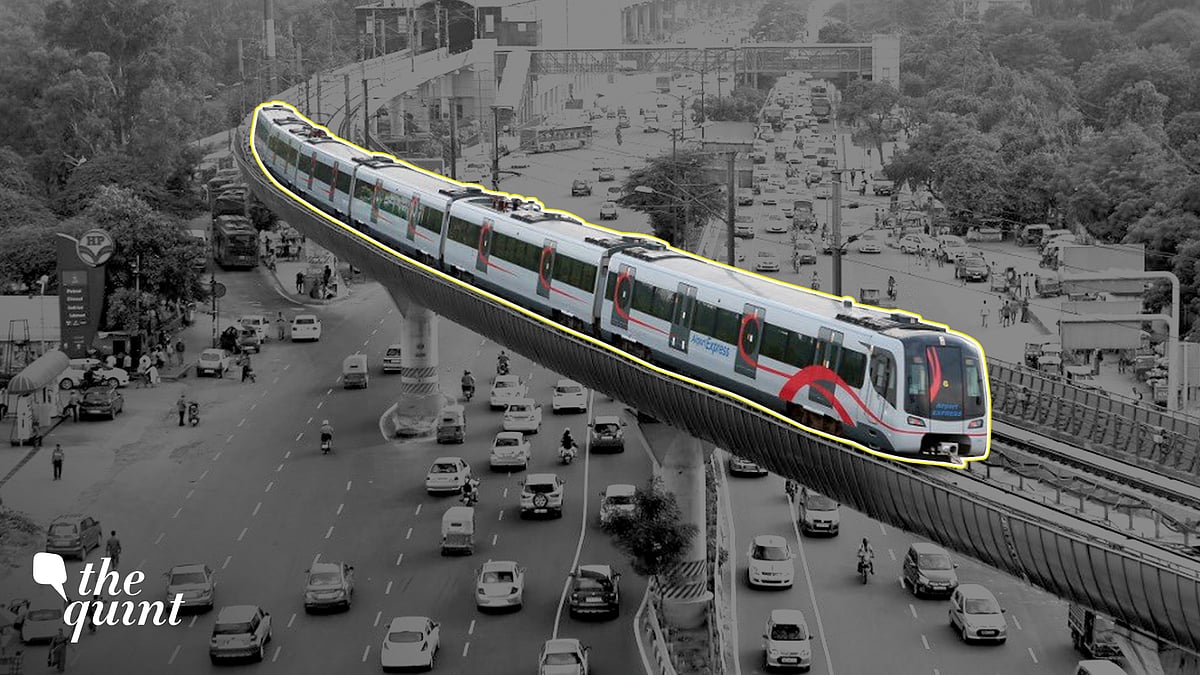
Closing a station appeals to the police because it thins a crowd without posting more personnel at more gates. The effort does not vanish. It is transferred. In July, with entry and exit suspended at the affected stations, trains kept running through them, and passengers had to ride past their destinations and return by road.
On 22 July, the stations reopened only after nearly eight hours, leaving thousands of office-goers, students and other commuters stranded.12 The next day, commuters reported longer and costlier journeys. The restrictions lasted several days, covered 18 stations by The Statesman’s count, and came with a suspension of mobile internet in the area. I found no reporting yet on how commuters fared on 2 October, and that gap is part of the problem. The people who bear the cost appear in the press as a crowd, and nobody in authority has been asked to count them.
On 2 October the measures also stacked up: a prohibitory order, barricades, closed stations and, reportedly, no mobile internet within a 1.5-kilometre radius. A commuter inside that circle lost the train and also the easiest way to tell an employer or a family member about the delay. Each measure may be defensible alone. Nobody seems to have asked what they add up to for a person who is trying to get home.
Access to a closed station also turned out to be negotiable for some people. On 23 July the Supreme Court Bar Association told the Chief Justice that lawyers and staff could not reach the court because the Supreme Court station was shut, and proposed that people with valid passes be allowed to exit after screening. The Chief Justice said he would intervene if the matter was not resolved by lunchtime, and directed that no adverse orders be passed in any case solely because a lawyer could not attend. The solution was sensible and shows that a middle path between open and shut was available. It was available to people with a proximity card and a bar association president to speak for them. Ordinary commuters had no equivalent way of being heard by lunchtime.
The Court Has Counted Inconvenience Before
The Supreme Court has long treated commuter inconvenience as a serious harm when protesters cause it. In Amit Sahni vs Commissioner of Police, decided on 7 October 2020, a three-judge bench ruled that public ways cannot be occupied indefinitely for protest and that the administration should keep them clear without waiting for a court order. The same judgment recorded that for a considerable period there had been neither negotiation nor action by the administration, and it hoped for “some sympathy and dialogue” in future.
The farmers’ agitation showed how these ideas collide. In 2021 the Court heard a Noida resident who said her trip to Delhi was taking two hours instead of 20 minutes. The bench asked how highways could be blocked perpetually and added that while it could lay down the law, implementing it was the executive’s business.
The farmers’ union replied that the barricades at the protest site had been put up by Delhi Police. I cannot settle that dispute here, and the argument does not depend on settling it. Blocking a road is what the state says protesters may not do to commuters, and it is also what the state does to commuters when it manages a protest. The two-hour journey looks the same from the pavement whoever caused it.
If inconvenience is serious enough to justify restricting protesters, it is serious enough to need a justification when the state inflicts it. A standard that counts the cost only when protesters impose it protects the state’s convenience more than the commuter’s.
A Routine Tool with Little Paperwork
These closures are routine, which is a reason for scrutiny. The DMRC closed more than 50 stations at various intervals on 26 January 2021, when a farmers’ rally turned violent, and most reopened after nearly five hours.
In 2019 the police cited Section 144 of the old Code of Criminal Procedure, and this month it was Section 163 of the new Sanhita. The instrument changes its name and the pattern stays the same: a closure announced online, an open-ended duration, and, as far as I could find, no published account afterwards of who was inconvenienced and for how long.
Whether closures work as security measures is something only the police can say, and nobody appears to have asked them. The public record shows that protests carry on regardless. In July the agitation ended after the government gave assurances on the CJP’s demands, and media reports said it led to the then Education Minister’s resignation. In 2019, the protest had simply relocated.
Internet Shutdowns Show What Conditions Look Like
Internet suspensions are the same instrument applied to a different utility. Access Now counted 65 shutdowns in India in 2025, the second highest in the world after Myanmar’s 95. A summary of the report notes that this was India’s lowest total since 2017, spread over 12 states and territories and imposed during protests, communal violence, conflicts and religious holidays. The law is further along here than for the Metro.
In Anuradha Bhasin vs Union of India, the Court held that an indefinite suspension is impermissible and that shutdown orders must meet the tests of necessity and proportionality and be made public and open to judicial review. It also said that orders must not extend beyond the necessary duration. The 2 October suspension, as reported, was limited in area and ended at midnight, which is closer to those conditions than an open-ended one would be.
In July, officials reportedly cited only security concerns for a suspension that lasted several days. The Court has set conditions for shutting off the internet. The petition says nothing comparable governs shutting a Metro station.
What Could Reasonably be Asked
The bench may be right that a rigid SOP does not suit fast-moving situations. What can reasonably be asked is narrower.
First, a written order from a named authority, published when it is issued and not only posted on social media, because a decision that reroutes lakhs of people needs someone accountable for it.
Second, a graded approach, in which lighter options such as closing individual gates, screening exits or shutting only the stations nearest the site are tried or ruled out first, as the 2024 gate closures suggest is possible.
Third, a stated duration and a review, so that “until further instructions” stops being the default.
A short record afterwards of how many stations were closed, for how many hours and with what alternatives, so that the next bench does not have to weigh the cost from newspaper accounts.
The timing matters. With a march announced for 10 October, the question the Court has agreed to examine about July is about to become a question about next week. The bench could reasonably ask the Delhi Police and the DMRC to say, in writing and soon, what authority they rely on to close stations and for how long.
Some will say a capital cannot be expected to run trains past a large crowd near Parliament and that security officials know things courts do not. There is truth in that, and the executive needs room. Room is different from an absence of accountability. No commuter voted to fund the security of a protest with their morning.
If the state decides that it must, it should say so in writing, say for how long, and say why a lighter tool would not do. The protesters at Jantar Mantar and the commuters at Barakhamba Road are both members of the public, and too often the state has settled its dealings with one by drawing on the other.
(The author is a data analyst working in the corporate sector in Bengaluru and a graduate of the National Institute of Technology Karnataka (NITK), Surathkal. The views expressed above are the author’s own. The Quint neither endorses nor is responsible for them.)