
The Supreme Court's Deliberate Balancing Act on the Protest Crackdown
Does the SC order truly help the protesters? In part, yes. But the order does not stop the investigation.
advertisement
The Chief Justice’s court in Delhi does not need to shout. Lawyers rise, bow, and speak in the cadence of men and women who have learned that the law rewards patience over passion. On 28 July 2026, the lawyers’ voices carried the weight of a nation's anger.
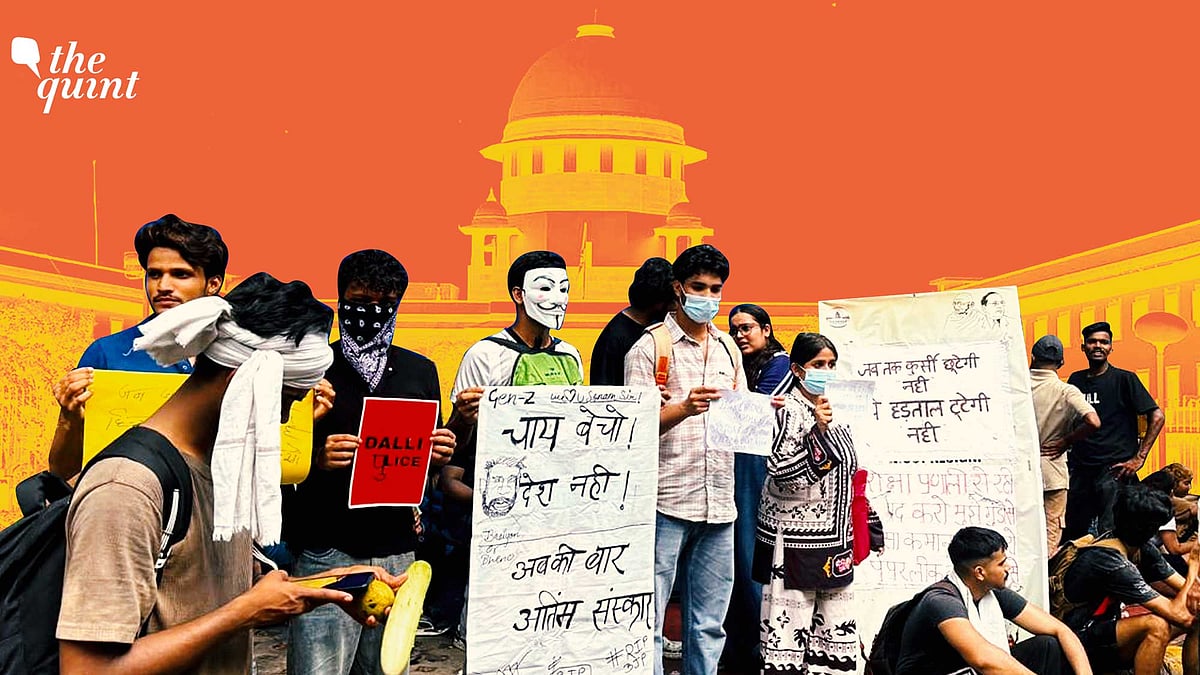
A bench led by the Chief Justice, sitting with Justices Joymalya Bagchi and V Mohana, heard five writ petitions about the violence that had convulsed Jantar Mantar and spread, like a grass fire in a dry season, to Maharashtra, Bihar, Assam, Uttar Pradesh, Madhya Pradesh, West Bengal, and Kerala. The students had gathered over a leaked NEET question paper.
Out of this came an order that reads less like a verdict and more like a held breath.
Reading Down SC Order on Protest Action
The Court did not rush to judgment. It noted that the petitioners had, prima facie, made out a case for an independent probe. But instead of ordering one outright, it chose to hear the states first. It issued notice to the seven Chief Secretaries and asked their Advocates General to appear online. Only after that hearing, on 3 August, will the Court decide on the shape of the investigation. This is a bench that wants every side's affidavit on record before it acts.
Second, it protected the protesters' privacy. Their personal data, collected during the crackdown, may not be made public. A state that gathers information on dissenters must not be allowed to weaponise it later.
Third, and most significant for the students themselves, the Court permitted investigations to continue but barred coercive steps against protesting students, so long as they carry no criminal antecedents. Children under eighteen, similarly clean of any such record, must be released, if need be on a simple bond.
Fourth, it kept the door open. The matter returns on 3 August. This is not a final settlement. It is a holding pattern.
"Criminal Antecedent" Remains Vague on Purpose
What, then, does the term "criminal antecedents" mean? It is a term of art, not a synonym for conviction.
It ordinarily refers to a person's prior record with the police: past FIRs, past arrests, a known history of violent conduct, whether or not any of it ended in a conviction. Courts use the phrase loosely, and that looseness cuts both ways.
I read this order as an act of balance. When a court passes an interim order, it strives to strike that balance so that no injustice is meted out. Possibly, the apex court did not want to pass a blanket order protecting everyone from punitive action, including those with criminal antecedents. Somebody with a history of violence, pretending to be a protester, should not be granted interim relief.
That is the logic of the order, stated plainly. The Court was not prepared to hand out a general amnesty.
The order trusts the police to make that distinction in good faith. History gives limited reason for such trust.
Walking the Middle Ground on Protecting Protesters
Does the order truly help the protesters? In part, yes. It stops the immediate threat of arrest for students without a prior record. It protects their data from public exposure. It keeps a public record of the violence intact, so that no evidence can quietly disappear before the Court sits again. These are real, if modest, protections.
But the order does not stop the investigation. FIRs remain registered. Chargesheets may still follow. On this point I want to be direct. The investigating agencies can continue the investigation without arresting the suspects.
So the order is neither victory nor defeat for the students. It is a pause, carefully worded, that keeps every option open for the Court in August. It protects the vulnerable without excusing the violent. It preserves evidence without prejudging fault. It is, in short, exactly the kind of order a court hands down when it does not yet know the whole story, and is wise enough to say so.
The next hearing, on 3 August, will tell us whether this caution hardens into a lasting principle, or whether it was only the deep breath before the harder questions begin.
(Sanjay Hegde is a senior advocate at the Supreme Court of India. This is an opinion piece and the views expressed are the author’s own. The Quint neither endorses nor is responsible for them.)
- Access to all paywalled content on site
- Ad-free experience across The Quint
- Early previews of our Special Projects
Published: undefined