
India's FCRA Changes May Make India-US Ties Worse
Amid growing influence of Christian groups in US politics, the issue could become another flashpoint for India.
advertisement
The Government of India has announced amendments to the Foreign Contribution (Regulations) Act of 2010. Independent of FCRA’s merits and demerits, these amendments have invariably impacted several organisations in India. This has also garnered attention in United States politics, emerging as a bipartisan area of interest.
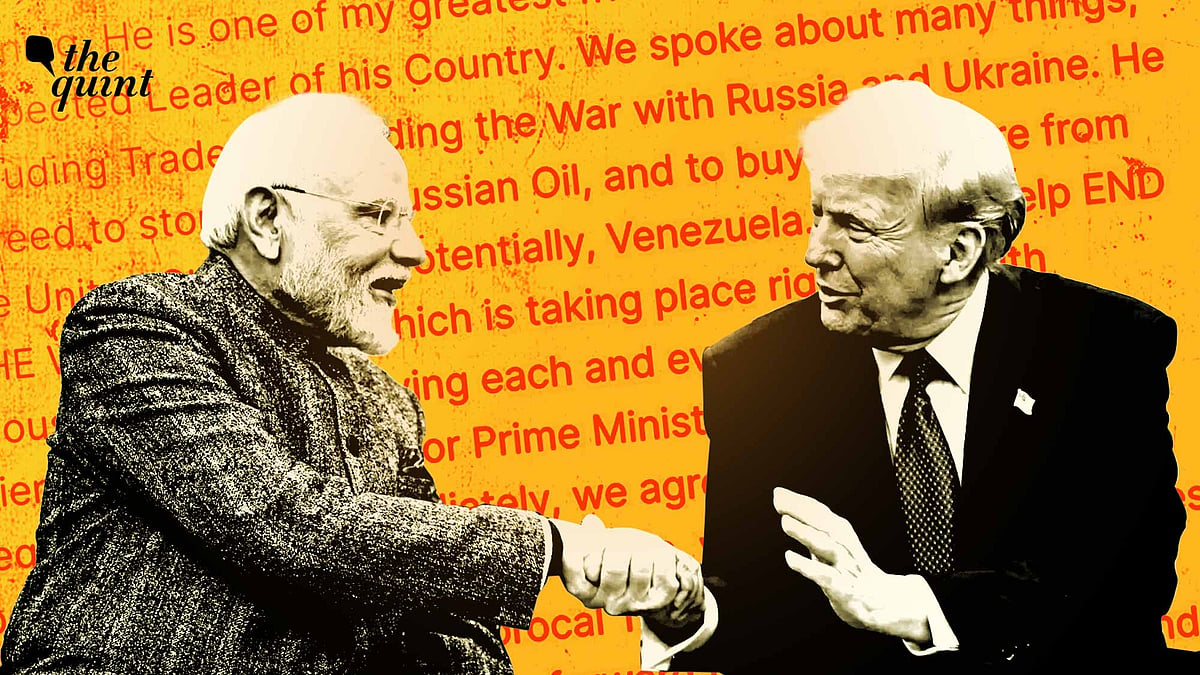
While its impact on broader civil society remains the primary concern, the discourse in the US has been dominated by the act’s impact on religious freedom, mainly in relation to Christians. Given the growing influence of Christian groups in US domestic politics, this issue has the potential to become an additional irritant amid already turbulent India-US ties.
Why FCRA Could Draw Attention in Washington
The FCRA Amendment Bill 2026 limits the utilisation of foreign funding and assets for organisations whose FCRA certificates are lapsed, while also creating a designated authority to manage foreign assets. These changes have sparked concern within India, especially among Christian organisations that have extensively relied on foreign funding coming from the US. While Christian organisations are fewer in number than organisations operating across social or education verticals, their financial footprint is disproportionately large.
Organisations like World Vision of India and Believers Church India are the top recipients of foreign donations at Rs 233.38 and 190.05 crore respectively.
In contemporary US politics, the foreign operations of Christian organisations have developed bipartisan support. For the Democrats, these organisations have represented religious freedom for minorities and the broader secular-democratic values associated with it.
This focus has only intensified as Democrats seek to win back the Christian conservative middle class in key battleground states. For the Republicans, a vast majority of their base and financial contribution comes from the traditional Christian and evangelical base. Therefore, any actions in India that impact the interests of these organisations, as in the case of FCRA, have the potential to worsen India-US ties.
The Christian Lobby and American Politics
In recent years, a growing consensus has emerged across US political leadership and levels of government that Christians are the most persecuted religious group in the world. This theory is based on a 2021 Pew study that highlighted that Christians are subjected to government harassment in 160 countries.
This was less than that of the Muslims, who are subjected to government harassment in about 141 countries as per the Survey data. While this data does not represent the severity of government harassment and its impact, it is being used as a key talking point by politicians, particularly those from Christian-conservative constituencies, to demand diplomatic and, in some cases, even military action.
For the Democrats who have been strong proponents of religious freedoms globally, this presents a dual opportunity: aligning with liberal values while chipping away at the Republicans' Christian voter and donor base.
In terms of their financial contribution, direct donations to campaigns through PACs has been limited. Instead, a majority of these groups have reportedly been funding campaigns using shell companies and Section 501(c)(3)/(c)(4) of the US Tax Code, used to maximise both untraceable, tax-deductible fundraising.
In terms of party affiliations, nearly 80 percent of Republicans came from the Christian coalition in the last Presidential elections. Christian group presence is also high within the Democratic party ranging within 40-50 percent of their voters. Among Republicans though, Christian coalition dominated by evangelists was a fringe element in 2016, but has since evolved into the party's ideological core. This shift can also be observed with the selection of JD Vance as the Vice President who has been endorsed by Christian groups.
An Irritant Worth Watching
However, in terms of political will, the administration has only paid limited attention to the issue. The International Christian Concern's 2025 Global Persecution Index has identified 20 persecution zones of Christians globally. The list includes countries in Africa like DR Congo and Nigeria among others, while also consisting of countries like India, China and Vietnam in Asia. Among these, the US, under the current administration, has only taken tangible action against Nigeria, launching airstrikes in December 2025.
The latest indication of this was seen in May as part of the US Commission on International Religious Freedom (USCIRF) congressional hearings on religious freedom. As part of this, USCIRF recommended sanctioning key political leaders.
A Democrat-majority Congress has a history of invoking this issue to pressurise India consistently over the past decade. Given the Congressional interest in FCRA amendments and the opportunity it offers with the Christian voters in the coming mid-terms, there is a possibility that this issue could become active in the immediate political discourse.
(Abhishek Kadiyala is a Research Analyst with the Geostrategy Programme at the Takshashila Institution. This is an opinion piece and the views expressed are the author’s own. The Quint neither endorses nor is responsible for them.)
- Access to all paywalled content on site
- Ad-free experience across The Quint
- Early previews of our Special Projects
Published: undefined