
Kerala Poll Heat: Why Modi Govt Backtracked on FCRA Bill For Now
The Kerala backlash mattered because Kerala matters to the BJP, writes John Dayal.
advertisement
The Narendra Modi government blinked, but the Church in India also learnt a grim lesson in this Holy Week season leading up to Good Friday and Easter—that it cannot trust a regime which is hell-bent on executing its agenda, despite all the soft kisses they figuratively plant on the hands of the Bishops in Kerala.
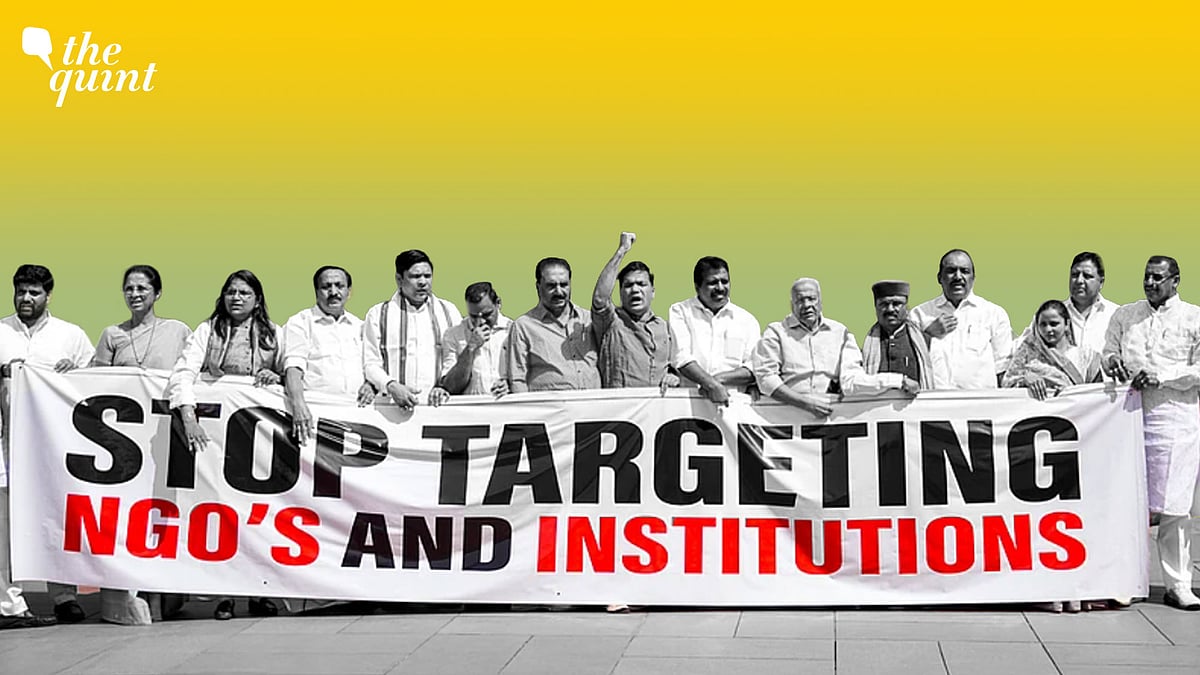
The Foreign Contribution (Regulation) Amendment Bill, 2026 (FCRA), introduced in the Lok Sabha on 25 March by Minister of State for Home Affairs Nityanand Rai, was pulled from the House agenda on 1 April after a fast-rising backlash from Christian church bodies, Opposition parties, and political actors, especially in election-bound Kerala.
Ministers called it a question of legislative priorities. Governments usually reach for that explanation when they retreat but do not wish to admit defeat.
Church Doubles Down
The Church, led by the Catholic Bishops Conference of India, including all denominations, mobilised its biggest guns and political friends, including the Congress party. Even those it sees as its foes, the Kerala government and Chief Minister Pinarayi Vijayan among them, rose to the occasion, with MP John Brittas and others writing to the government to drop the FCRA amendments.
That contrast is telling. The community has endured insult and violence with pain, but often without unified institutional response. A threat to its legal and institutional foundations, however, generated immediate cohesion. Perhaps that too is a lesson, for the further weaponising of the FCRA and the dog whistle that moved he goons to assault effigies of Santa Claus and Jesus Christ, came from the same quarters.
It also lies in what this episode reveals about the governing style of the current State—the steady expansion of executive discretion dressed up as reform; the deep suspicion of independent institutions; the belief that a legal draft, however intrusive, can be normalised if wrapped in the vocabulary of order and accountability.
The wider political climate makes the apprehension sharper. India has seen the spread of anti-conversion laws across states, and rights groups have repeatedly warned that these laws are drafted and enforced in ways that invite harassment of pastors, prayer meetings, charitable workers and ordinary believers. They convert religious freedom into a matter of police procedure and majoritarian suspicion.
History of FCRA: A Record of State Control
The FCRA was called the spawn of the devil, conceived in the Emergency of 1975 to control and contain Gandhian and socialist groups rallying against the extraconstitutional centre of power of the then Prime Minister Indira Gandhi and her son Sanjay Gandhi.
After her defeat in 1977, Gandhian Prime Minister Morarji Desai chose to retain it, and sharpened it a little more against Christian groups and others. Pranab Mukherji, as a minister with the United Progressive Alliance (UPA), gave it more teeth, making government permission limited to five years at a time and making a review obligatory.
Over time, thousands of FCRA registrations have been cancelled by the Modi government. The burden has not been politically neutral, however neutral the law may appear on paper.
The new amendments were also not innocuous. At the centre of it was a new structure of control over assets and institutions created through foreign donations and grants.
If an organisation’s FCRA registration was cancelled, surrendered, or simply “ceased” because renewal was not sought, not granted, or not obtained before expiry, then such assets could vest provisionally in a government-notified and controlled “Designated Authority”.
The net was wide. It was not limited to the institutions funded wholly by foreign contributions. It extended to assets created partly from such funds. If the registration was not restored or renewed within the prescribed time, the control on such property could become permanent.
Majoritarian BJP's Kerala-Christians Conundrum
The Modi government was claiming the right to stand over institutions which it did not build, does not trust, and increasingly wishes to discipline.
Christian institutions in India are not abstract names on a government database. They are schools in villages and towns, colleges in cities, hospitals in districts, hostels for students, homes for children, centres for the elderly, parish relief structures, dispensaries in remote regions, and networks of care that often reach the poor faster than the state does.
The government said this is alarmist, and accused the Congress and the Marxists of making political capital at election time. They say the law is about accountability, national interest, and only those who violate the law, misuse donations, or engage in coercive or fraudulent practices need worry.
The Church said it is not about whether there should be regulation. The question is whether the executive should have the power to deny renewal, suspend operations, and then move towards control over the assets built with those funds. That is a different order of power altogether. A government that licenses, investigates, suspends and cancels cannot also be trusted with near-total leverage over the institutional remains.
The Catholic Bishops’ Conference of India called the provisions dangerous and alarming, undemocratic, unconstitutional and contrary to natural justice. The Kerala-based Syro-Malabar Church head, Major Archbishop Mar Raphael Thattil, said the amendments must not hinder the autonomy of legitimate charitable and educational institutions and must not destroy legally functioning Christian organisations.
The Kerala backlash mattered because Kerala matters to the Bharatiya Janata Party (BJP). It has spent years trying to prise open political space among Christians in the state. It has courted church leaders, cultivated local intermediaries, pursued symbolic outreach and tried to persuade Christian voters that they could deal pragmatically with the party despite its wider Hindutva record.
Christians Are Not Just a Vote Bank
Christians in Kerala are not merely another voting bloc to be counted and forgotten. They are woven into the state’s educational, medical and civic fabric. They retain influence in public life out of all proportion to any simplistic numerical measurement.
But the issue cannot be reduced to a Christian grievance alone. Christian institutions are not marginal ornaments in India’s public life. They are part of the country’s educational, medical and social infrastructure. They serve Christians, certainly, but also Hindus, Muslims, Sikhs, Buddhists, Jains and those who profess no religion at all. In many regions they do work that the state either cannot do or does badly.
BJP leaders in Kerala understood the hazard even if North Block had been slower to recognise it. Rajeev Chandrasekhar said the Bill would not be passed until apprehensions were addressed. But the assurance es came too late.
It repeatedly claims to be only streamlining systems while quietly enlarging state discretion over people and institutions it mistrusts. This method often works because the affected groups are weak, fragmented or frightened. This time it ran into an institution with memory, hierarchy, networks and reach.
(John Dayal is a writer and activist. He is a former President of the All India Catholic Union. This is an opinion piece and the views expressed above are the author’s own. The Quint neither endorses nor is responsible for the same.)
- Access to all paywalled content on site
- Ad-free experience across The Quint
- Early previews of our Special Projects
Published: undefined