
Following Venezuela, Is Cuba Next in Line for a US-Orchestrated Regime Change?
Amid Cuba's economic crisis, the US' actions are an attempt to dislodge its leadership, writes Krishnan Srinivasan.
advertisement
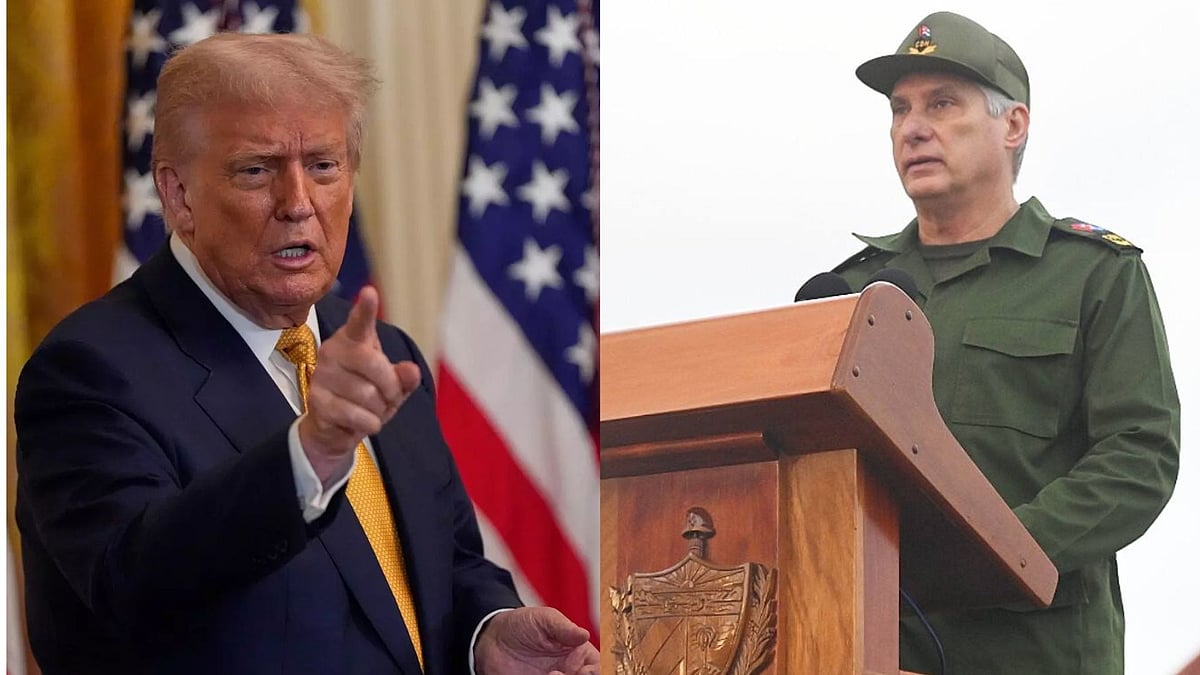
In the aftermath of the illegal US operation that removed President Nicolas Maduro of Venezuela, the basic issue is whether increased US pressure will lead to regime change in Cuba, a long-term adversary of the US. Donald Trump has urged Cuba "to make a deal before it is too late", terminated Venezuelan oil supplies to Cuba, and forced Mexico to follow suit.
Subsequent reports suggest Trump may consider more drastic measures, such as a naval blockade to halt Cuba’s oil imports. The US seeks to recruit Cuban turncoats to betray the Havana regime, and on 29 January, Trump signed an executive order declaring Cuba ‘a national emergency’.
Lessons From History
However, a path to regime change is not certain. Cuba’s economic predicament has left the Cuban authorities exposed, but history offers limited evidence that external pressure alone can reliably engineer political transformation.
In order to determine if a transition is likely, it is necessary to examine the origins of Cuba’s crisis, situate Trump’s new approach within the longer arc of US policy, and assess the possible scenarios confronting the island, from economic meltdown to popular protests, renewed repression and elite fracture, while considering the consequences and limits of coercive statecraft in the Western Hemisphere.
Cuba's Economic Crisis
Although official statistics are difficult to verify, Cuba’s economic contraction is believed to have exceeded 11 percent in recent years. Industrial production is in long-term decline, inflation has surged over 30 percent, and the Cuban peso has depreciated by almost 90 percent. These economic shocks have exacerbated the country’s energy crisis, with devastating effects on all aspects of daily life, including the basics of food preservation, sanitation, and public health.
Cuba’s energy shortages have existed for years, but the situation became acute in 2022 after a fire destroyed key infrastructure at an oil storage facility in Matanzas province. Since then, the country has endured repeated nationwide blackouts; during peak demand times, as much as 40 percent of the electrical grid is routinely offline for hours at a time.
These disruptions stem from decades of underinvestment in Cuba’s electrical system, compounded by the steady erosion of supplies of subsidised Venezuelan oil. Following Maduro’s illegal ouster, oil imports have fallen to catastrophic levels. Some suggest that Cuba may be only weeks away from a near-total energy failure, which could trigger devastating social and political consequences.
The causes of Cuba’s broader economic breakdown are multiple and mainly domestic. Cuban leaders attribute the crisis to external factors, notably the US embargo, but the roots of the collapse are self-inflicted, a rigid socialist, centralized economic model marked by extensive nationalization, a bloated public sector and deep resistance to reform. The leadership’s reluctance to liberalise stems from concerns that meaningful market reforms could create independent centres of power that could erode the regime’s control.
In a seeming effort to protect against such developments, Cuba’s military, through the conglomerate GAESA (Grupo de Administración Empresarial SA), exerts ownership and influence over key sectors of Cuba’s economy, including tourism. Once a critical source of revenue for the regime, tourism now struggles to recover after the COVID-19 pandemic.
Trump's Regime Change Hopes Mark a Sharp Departure From the Past
Trump and Secretary of State Rubio appear intent on regime change in Cuba, an approach of sharp departure from US-Cuba policy since the Cold War. With notable exceptions that include Kennedy’s failed Bay of Pigs invasion of 1961, Carter’s opening of the US Interests Section in 1977, and Obama’s normalisation effort begun in 2014, US policy has been remarkably consistent, resting on the embargo, codified into law under the Helms-Burton Act, and a strategy of pressure aimed at constraining the Cuban government.
Adjustments have typically occurred at the margins of executive authority rather than through fundamental strategic rethinking. Democratic administrations have generally tended to expand engagement, loosening rules on allowable travel, increasing remittance caps, and encouraging people-to-people exchanges, while Republican administrations have typically reversed or narrowed these openings by tightening travel categories, limiting remittances, and expanding sanctions enforcement on the grounds that the Cuban authorities, and not the population, reap the benefits.
During Trump’s first term, the administration adopted a ‘maximum pressure’ approach, rolling back most Obama-era initiatives, emphasising human rights concessions as a prerequisite for engagement, and reasserting economic isolation to precipitate change. The current strategy builds on that framework while placing Cuba policy within the administration’s recent National Security Strategy that calls for the use of pressure to deter adversarial regimes in the Western Hemisphere.
Ultimately Cuba’s future will depend less on Washington’s intentions and more on how Cuban society and elites respond to the escalating crisis. The 2021 protests demonstrated a willingness among ordinary Cubans to challenge the regime even at personal risk. Although on that occasion the government restored control through harsh repression, the episode exposed the system’s potential fragility.
Another possible outcome of Cuba’s sustained economic decline is elite fracture. Members of Cuba’s political and military establishment have long benefited from the status quo, but these benefits may erode as the economy continues to deteriorate. Should that occur, defections or internal realignments may become conceivable. Economic coercion alone cannot deliver democratic transformation in Cuba, yet the island’s current predicament is unlike any it has faced. Whether the coming months produce renewed repression, mass protests or negotiated change will hinge less on US policy than on the calculations of Cuban elites and the resilience of Cuban society.
If Trump’s pressures lead to the collapse of the regime in Cuba, will the Global South remain as reticent as it was in the abduction of Maduro, or will it find its voice to oppose Trump’s policies of intimidation and threat?
(Krishnan Srinivasan is a former Foreign Secretary of India. This is an opinion piece. The views expressed above are the author’s own. The Quint neither endorses nor is responsible for them.)
- Access to all paywalled content on site
- Ad-free experience across The Quint
- Early previews of our Special Projects
Published: undefined