
Dhurandhar 2’s Biggest Fiction: Demonetisation as a ‘Masterstroke’
Even apologists of notebandi had so far described it as a well-intentioned “gamble” or “experiment” that failed.
advertisement
Can you possibly fact-check a fantasy? That is a question I asked myself as I heard critical remarks about the hot new sequel from Bollywood’s movie factory. But ‘Dhurandhar: The Revenge’ or simply Dhurandhar 2, is a smart Alec opus that takes the wind out of critics' sails by beginning with a long, well-read out disclaimer that reads like a red herring prospectus of a pre-IPO company, oozing legal alibi. It then gets down to its thriller tale, that merrily twists real news to build an unreal narrative.
From interpretations of the 26/11 attacks to latter-day killings of terrorists on Pakistani soil, Dhurandhar 2 bends and airbrushes hard facts on a number of issues, but none more brazenly than it does on the demonetisation of high-value currency notes by Prime Minister Narendra Modi in 2016.
Alas, there is no evidence to confirm such a fantastic thought but we live in what they call a post-truth world where a trust deficit is a bigger problem than the country’s fiscal deficit. What we have then is Jaskirat turned Hamza, an undercover RAW agent played with dash by Ranveer Singh, who is used to spin a 229-minute-long yarn that is told with the masterly storytelling skills of a well-crafted 30-second TV commercial.
The Lived Reality of a Cash-Starved Nation
If reality check is anything, there is plenty of evidence from lived experiences and video shots all over YouTube and news channels that show the pain Indians and the economy went through after Modi’s slapdash midnight move took 500 and 1,000-rupee notes out of circulation in an economy of 132 crore people, in which cash was everyday fuel.
Jaitley, bless his soul, is no more in this world to take our questions. He did, however, talk of how demonetisation helped a crackdown on terror financing as he called the 7 November decision a “watershed moment”—a catchphrase that could mean any milestone. He had pointed to 2.24 lakh shell companies being de-registered in the law enforcement linked to demonetisation. An estimated 9 million new taxpayers were added to Indian rolls in the aftermath of the demonetisation and is counted as a side gain.
WhatsApp Myths and Cinematic Propaganda
Jaitley’s fig-leaf mention seems to be the only recallable bit that somewhat fits the Dhurandhar narrative. We could describe the blockbuster movie’s attempt to portray demonetisation as a “masterstroke” (a word often used by Modi fans to laud his moves) or a feelgood fantasy.
Ifs and buts are used by narrative builders as a substitute for what journalists call the 5 Ws to check facts: what, where, when, why, and which. The H they add to that list (How) now has a new version: How to spread counterfactual fantasies as if they were facts. The biggest agency that does this is usually called the WhatsApp University.
I had heard through a WhatsApp tale in the thick of the demonetisation gamble that a shipload of currency notes was parked close to the port of Kochi before the Notebandi stunned the enemy agents on their track. Later, after Dhurandhar became a hit and the sequel was not yet here, another story floated with the counterfeit-buster tale. For all we know, director Aditya Dhar may well have picked up his fictional idea from there. If we assume that the movie plot itself is part of a well-crafted political propaganda effort, we would be having two conspiracy theories to deal with, not just one.
Hard Data vs Feel-Good Fiction
Now, let us look at the hard facts as shown by that old-fashioned thing we call hard evidence. No counterfactuals here.
In fact, interest rate cuts were part of the government package of measures both after the global financial crisis of 2008 and the Covid-19 pandemic. Rate cuts as well as bond purchases by central banks are part of a policy toolkit to boost economic growth during slumps that hurt jobs and livelihoods. The US Fed’s QE3 (Quantitative Easing) was in the same league.
You could thus argue, with the same counterfactual conviction as writer-director (Dhuran) Dhar, that had more fake currency notes entered India, as his story speaks of, they might well have helped the poor who were thrown out of jobs and livelihoods that squeezed the informal economy.
The Human Cost of a Policy Gamble
You don’t play poker with an economy of 132 crore people just crawling out of poverty. That’s what the currency squeeze did in 2016. In a look-back article I wrote in 2018 on lessons from the “demon” experiment, the caption read: “Avoid Bollywood-style holdups”
When banks freeze, the poor get a kick on their stomachs.
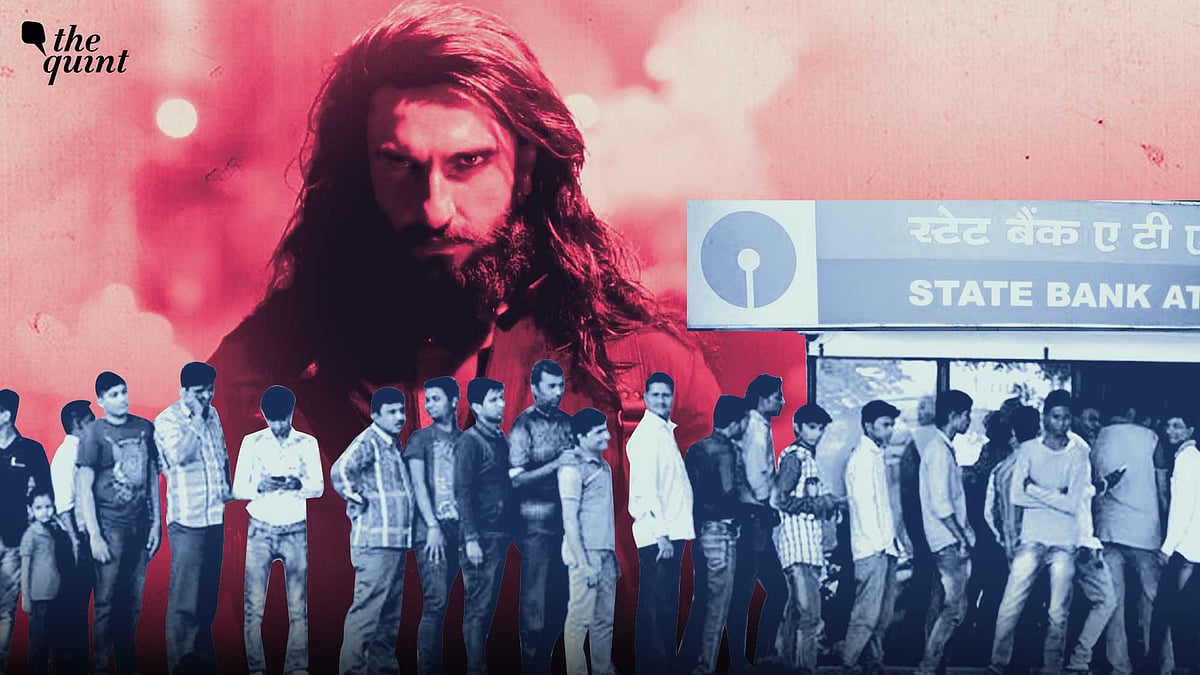
Long queues at ATMs in the winter of 2016 are now part of the semi-nostalgic folklore. Some who stood in those queues were there to launder black cash for their masters for a commission or wage, in lieu of regular work. Mental stress was an undercurrent in the clearly visible crisis. The unorganised sector accounting for an estimated 45 percent of India’s GDP suffered most.
Thorough academic papers later studied the long-term impact of demonetisation on the economy to reveal such insights—with data to show that the cash that was meant to be squeezed out from the black economy actually came back into the banking system, thus statistically proving demonetisation to be an abject failure.
India’s GDP growth decelerated to 5.7 percent in the hard-hit January-March quarter of 2017, down from 7 percent in the previous quarter and 7.3 percent in the quarter before demonetisation took effect. The squeeze took out 86.4 percent of the currency in circulation. The independent and respected Centre for Monitoring Indian Economy estimated 1.5 million jobs were lost in the January-March quarter alone.
The Verdict: When Almost All Cash Returned
The Reserve Bank of India said in 2018 that about 99.3 percent of the so-called “specified bank notes” of Rs 500 and Rs 1,000 value returned to the banking system—with Rs 15.31 lakh crore worth of notes in circulation counted back out of Rs 15.41 lakh crore. In other words, nearly all the cash intended to be rendered worthless came back.
An economist who understands cost-benefit analysis is bound to ask: how do losses from Rs 15 lakh crore being squeezed out of the system compare with the dubious benefits of Rs 60,000 crore of counterfeit currency rendered useless?
While it is true that black money is common in real estate—one of the intended targets of the Notebandi move—it is equally true that its core activity, construction, is a job spinner for the poor who were hurt badly. Small businesses and agricultural activity were among other job-spinners that were hurt by demonetisation. How does one measure the pain of small workers in a lived experience with the imagined pleasure of a national security goal being achieved on a sepia-tinted screen that shows a Dhurandhar burning piles of fake notes in a warehouse?
No, there are no secret dossiers or confidential files that we could access through a Right to Information (RTI) application or news leak to even remotely confirm the Dhurandhar fantasy. But academic papers with rigorous research show us the ugly side. The Institute for Social and Economic Change, a highly-respected government-backed think-tank and private sector chambers of commerce, were both among those who said how the economy and the poor were squeezed.
Now, the New Bollywood throws at us a counter-question: who needs data when you have a counterfactual fantasy? Whether this fetches votes or not depends on the nuances of the human mind, its ability to sift fact from fiction, and the momentary lapses of reason citizens are prone to. We might as well give a wry smile and say: if there is any counterfeit currency in this Dhurandhar tale, it is the tale itself.
(The author is a senior journalist and commentator who has worked for Reuters, Economic Times, Business Standard, and Hindustan Times. He can be reached on Twitter @madversity. This is an opinion piece and the views expressed above are the author’s own. The Quint neither endorses nor is responsible for the same.)
- Access to all paywalled content on site
- Ad-free experience across The Quint
- Early previews of our Special Projects
Published: undefined