
Did Social Media Merely Reflect 2025, Or Did It Quietly Run It?
Everyone thought they understood the internet. But 2025 was social media saying, loudly: “No. Sit down.”
advertisement
Pre-script: My very young and talented Producer, Lipi, suggested I take a break from dull & drab subjects like geo-economic rivalries and political jostling to do something more Gen-Z and fun for the year-ender. I turned the gun on her and said, “Lipi, your opening Shark Tank-like segment on the GHOOSE video became a tad viral. You know the lingo of Gen-Zs, while I am a doddering has-been. Why don’t you write this one?”. She agreed! So here it is—written by Lipi, enacted by me.
A few years ago, I was debating a screaming TV News Anchor about the future efficacy of digital media versus linear broadcast. Back then, the question really was: who will win, TV or Social Media?
In 2025, that question sounded like asking whether gravity is optional.
Social media did not just influence the year. Social media ran the year.
It hired the judges. It decided the punishments. And it handed out consequences at scale.
Everyone thought they understood the internet. Media houses thought they had cracked it. Creators thought they had mastered it. Politicians thought they could manage it.
2025 was social media saying, loudly: “No. Sit down.”
Let us start with comedy.
Just for Laughs
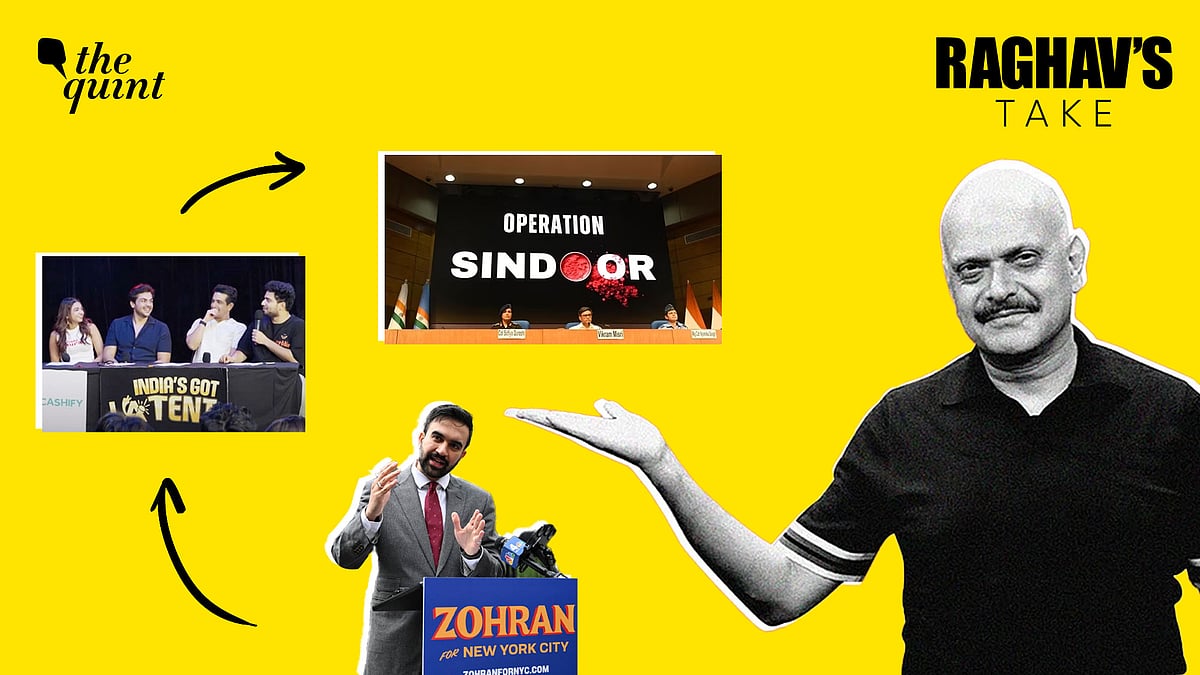
On India’s Got Latent, Ranveer Allahbadia asked a “would you rather” question. You remember it. It was awful, inappropriate, perhaps an unintended, unthinking, reflexive remark by a sensation-seeking smart aleck. I will not repeat it. My lawyer is currently having palpitations.
But this wasn’t just a horrible joke. This was a National Emergency. Forget inflation. Forget unemployment. The nation’s priority was a YouTube clip. Police cases were filed. Death threats were issued. Primetime anchors screamed so loud their microphones filed for divorce. The Supreme Court of India, the highest body of justice had to weigh in with language usually reserved for that one cousin who gets drunk at a family wedding. Dirty. Perverted. Disgusting.
These are now legal adjectives for a YouTube video.
As interim relief, Ranveer Allahbadia was told he could not post on social media. Which is like telling a YouTuber: “You’re free. Just don’t exist.” One year you receive a National Creators Award from the Prime Minister. The next year you explain a podcast format to the justice system!
Officials said the line they always say. “We support satire, but there should be a limit.”
Ah, yes. The "limit." It appears the limit is located somewhere between a microphone and a bulldozer.
Kamra was asked to apologise. The people who vandalised the venue were described as emotional.
Social media loved this episode. Comedy gets punished. Concrete gets sympathy.
War Rooms to War Reels
Then came Operation Sindoor. A real military operation in which India inflicted heavy military damage on the enemy – at terror camps, airfields, and other ordnance infrastructure. All of this was documented. But it was followed by the greatest fan fiction the internet has ever written. Jets were shot down. Pilots were captured. Karachi was taken. Breakfast was planned in Rawalpindi. None of it happened.
Old videos became breaking news. Nobody asked whether it was true. They asked whether it was shareable. Fact checkers arrived later to an audience that had already emotionally won the war. Two nuclear-armed countries. And social media treated it like live commentary.
And then, just when the internet was done punishing comedians and starting imaginary wars, it decided to do something new.
It elected someone. Enter Zohran Mamdani. Mamdani didn’t run a campaign. He ran a Vibe Check. This wasn’t "Vote for Me." This was "Have you SEEN this man?" Suddenly, politics looked like K-pop. There were fancams. There were slow-mo edits. There was background music that made municipal policy feel like a Karan Johar movie trailer.
Jay-Z. Hamilton. Charli XCX, which I still don’t know if it is an artist or a WiFi password.
At this point, all that was missing was a fandom name. And to be fair, it worked. Mamdani won. Which officially means democracy is now powered by values, community, and very good video editing. Inspiring? Sure. Unhinged? 100 percent.
Hearts and Trumps
And just when you thought social media had peaked, it revealed the final boss. Donald Trump. Trump is not on X. Trump does not need X. X exists to trend Trump. Comedy? He trends. War? He trends. Elections? He trends. Someone else’s election? Even better.
In 2025, Trump soft-launched his crush on Mamdani by simply being polite. The internet reacted like this was a Marvel crossover. Was it an endorsement? Was it a strategy? Was it love? Nobody knew. Everyone posted. Trump is no longer a politician. He is a format. Drop him anywhere and content appears. He does not chase virality. Virality chases him. Undefeated. Unavoidable. Algorithmically immortal. The algorithm wakes up and asks, “What are we doing today, sir?”.
So yes, that old digital versus TV debate? It’s over. TV shaped opinions. Digital shapes consequences.
And in 2025, the internet reminded us of one thing very clearly:
You don’t need to be right.
You don’t need to be funny.
You don’t even need to be real.
You just need to be content.
And the internet will take it from there.
- Access to all paywalled content on site
- Ad-free experience across The Quint
- Early previews of our Special Projects
Published: undefined