
From Ban to ‘Passive Participation’: Inside the Army’s New Social Media Policy
The new policy now allows Army personnel to access social media platforms for “viewing and monitoring" only.
advertisement
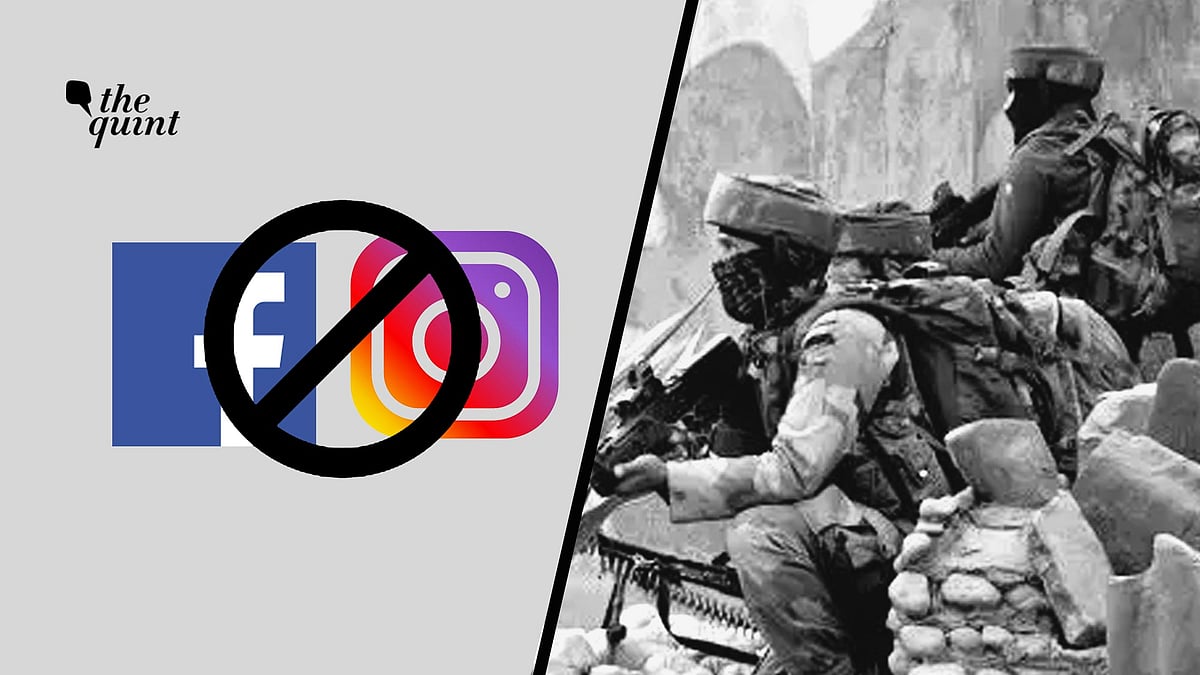
Last week, the Indian Army amended its social media policy of July 2020, thereby allowing ‘passive participation’. Back then, in wake of cases of Pakistani Intelligence Operatives eliciting information by impersonating officers of the Indian Armed Forces or bureaucracy, and of ‘honey-trapping’, the Indian Army, citing the need to thwart security breaches and data leaks, had directed all personnel to delete their Facebook and Instagram accounts, and prohibited the use of 89 mobile applications, including 59 with links to China.
It also authorised officers to ensure compliance while stipulating disciplinary actions for violations. The Ministry of Defence (MoD) empowered the Army to directly issue notices to social media platforms for redacting content that was deemed sensitive or in violation of the policy. This policy was challenged, but the Delhi High Court, cognising the potential security risks, had upheld the Army’s ban. Incidentally, in 2015, the Indian Army had engaged IBM to carry out a sentiment analysis, and the MoD had recommended against a ban on social media.
Why the Army Banned Social Media in 2020
The revised policy comes days after Army Chief General Upendra Dwivedi stated that today’s generation is “socially conscious, digitally fluent and globally connected”, and emphasised the need for smartphones for soldiers to keep in touch with family, and educate and entertain themselves even when stationed in remote places.
The policy warns against use of chat rooms, cloud-based data storage, file-sharing platforms, websites offering free entertainment, pirated software, VPN services, and imposters in social media groups.
How Intelligence Agencies Weaponise Innocuous Online Data
Before dwelling on this policy per se, it would be pertinent to note two aspects:
The adage, "the internet is forever", is by and large true—whatever we post on social media often remains available on some server somewhere and could be accessed even years after the person posting ‘deletes’ it.
Many western intelligence agencies, such as the US’s National Security Agency (NSA) and the National Geospatial-Intelligence Agency (NGIA), access social media to build comprehensive intelligence estimates and forecasts. Interestingly, China uses the mosaic intelligence model. In this model, large number of cyber-trawlers collect bits of information, some of which may seem harmless. The Chinese also recruit as many low-level operatives as possible, who are charged with providing whatever information they can collect. ‘Motivated’ tourists, students, workers, etc, travelling in third countries are also used for gathering what may appear to be innocuous pieces of information. All the pieces are then collated and analysed to assemble the complete intelligence “mosaic.”
The situation in the armed forces is thus both tenuous and momentous—its members, even at the lowest level, deal with matters related to national security and operational aspects, including location of military units and formations, equipment of various types, operational plans, troop movements, codes, etc. Thus, an information breach can result in a battle being lost, devastation of a military formation and/or civilian area, and even loss of territory.
Information Warfare
In counter-insurgency and counter-terrorism theatres (like in J&K and parts of northeast), two types of war are fought: one is kinetic, and the other is the war of ideas, ideology, and narratives. Since terrorist entities invariably weaponise social media to magnify propaganda and intimidate civilian population, the latter holds significance for influencing and winning the populace.
Although deception in warfare and influencing a country’s politics has a long history, the scale of deception and use of digital technology seen now, along with platform diversification to evade detection, is dramatically more effective and drastically harder to control. The problem is that IO now have many forms, ranging from covert campaigns which rely on fake identities, to overt, state-controlled media efforts that use authentic and influential voices to promote messages that may be wholly or partly false.
Such disinformation doesn’t merely get people to believe a false thing is true—it also convinces them to perceive a true thing as false. And after that infection of disinformation spreads, it erodes collective knowledge and trust, with everything seeming like one big, elaborate conspiracy.
A typical example is the rumour in June 1984 about Harmandir Sahib (Golden Temple) being devastated, which prompted few Sikh units to mutiny and desert. And that happened in an era bereft of social media, which could now be amped and leveraged manifold with existing communication technologies. Then there is “retail” IO, which pivot from widespread, raucous, “wholesale” IO to pinpoint operations which target specific officials.
Why the Army Wants One Voice, Not Many
Besides, as can be evinced from hundreds of media discussions and social media posts, not every military personnel is a ‘defence expert’. In fact, many end up obfuscating the picture. Hence, in an era of ‘breaking news’, ‘sabse tez’, X, and Facebook, a post by a soldier who is neither strategically sagacious nor well-versed in IO, could virtually create a crisis or a rumour, which once spread, is difficult to un-spread.
Therefore, it’s important that well-thought-out messaging be conducted by the Army through authorised, well-trained-and-briefed spokespersons. Additionally, social media also drives public opinion, which in turn brings to fore that maxim, viz, “wars are started by politicians, fought by soldiers, but sustained by public opinion.”
While social media regulation militates against freedom of expression, the fact is that many large companies also espouse social media policies for their respective employees. Their broad aim is not to stop employees from using social media, but to ensure they use it responsibly while balancing their freedom vis-s-vis the company's legal, security, proprietary and reputational needs.
When a person joins the military, given the nature of their job, he/she surrenders some freedoms in exchange for a commitment to serve the nation, service norms, discipline, unit cohesion, and operational effectiveness. The Indian Army’s social media guidelines are, thus, a policy whose time has come.
(Kuldip Singh is a retired Brigadier from the Indian Army. This is an opinion piece and the views expressed above are the author’s own. The Quint neither endorses nor is responsible for the same.)
- Access to all paywalled content on site
- Ad-free experience across The Quint
- Early previews of our Special Projects
Published: undefined