
Between Murder and Mob Lynching: An MP Court's Unusual Verdict
In convicting 7 men in a 2022 case, the judge wrote that the accused were proved to have committed “mob lynching”.
advertisement
Eight years ago, the Supreme Court warned that mob violence must not be allowed to become “the new normal”. In Tehseen S Poonawalla v Union of India, it treated lynching not as ordinary disorder, but as an assault on the rule of law.
It told governments to prevent such violence, register complaints promptly, protect witnesses, compensate victims, and try these cases quickly. It also said that, on conviction, courts should ordinarily award the maximum sentence the law allows.
A sessions court in Madhya Pradesh has now convicted seven men for a 2022 mob killing near Seoni Malwa town in the state's Narmadapuram district.
What Happened?
Around 12:30 am on 3 August 2022, three men were travelling in an Eicher truck on the Nandarwada road near Barakhad village in the Seoni Malwa police area. All three came from Amravati in Maharashtra. The driver was Sheikh Lala. With him were Sayyad alias Sheikh Mushtaq and Nazeer Ahmad, a man of about 50.
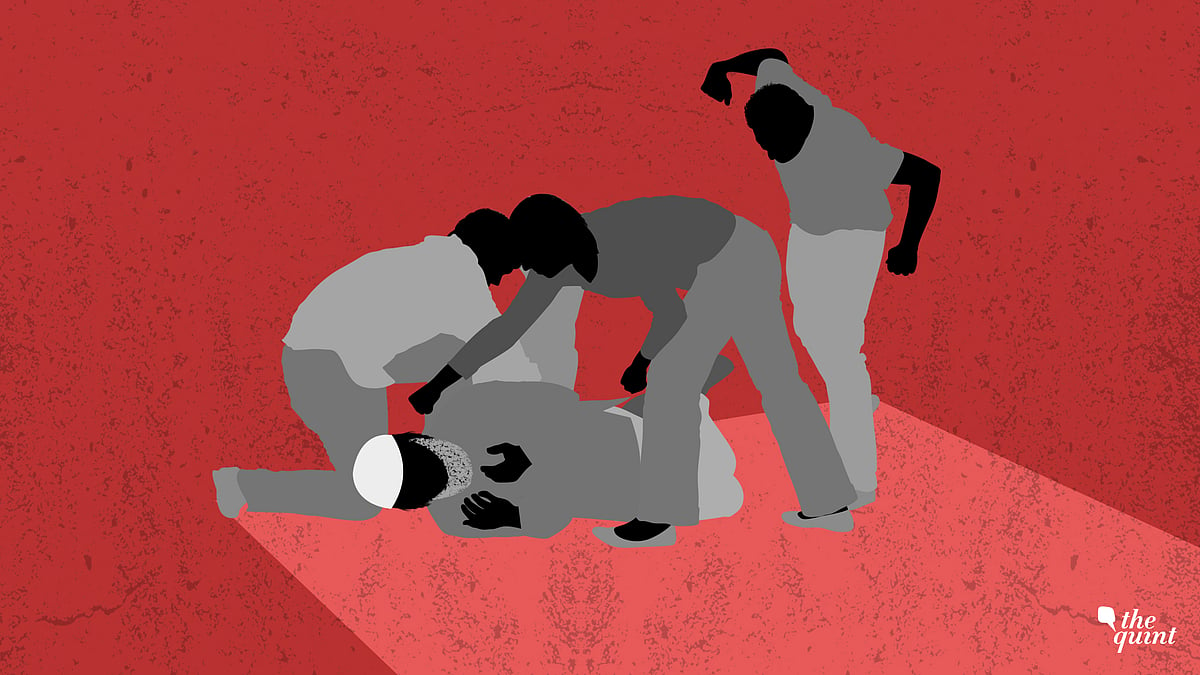
The truck was carrying cattle—loaded at Nandarwada and bound for Maharashtra. Near Barakhad, a group of villagers stopped the truck. They beat the three occupants with sticks and wooden staves. Nazeer Ahmad died. The other two survived with injuries.
Seven men from Seoni Malwa—described by the media as "cow vigilantes"—were tried for the killing. They were Deepak alias Baba Kewat, Ajay alias Ajju Rathore, Prakash Kaushal, Pawan Bathav, Amar alias Bhola Bathav, Kanhaiya Bathav, and Ballu alias Anuj Raghuvanshi. The men had absconded but were arrested later.
Tabassum Khan, the additional sessions judge at Seoni Malwa, convicted all seven on 12 June 2026 in State of Madhya Pradesh v Deepak alias Baba Kewat.
Where The Prosecution Broke Down
Almost every witness meant to prove the attack abandoned the prosecution in court. In legal usage, they turned hostile. They gave evidence that no longer supported the side that called them.
The complainant Sheikh Lala and the injured Sayyad Mushtaq told a different story on the stand. They said a pickup vehicle had nearly hit their truck. Eight to 10 people in the pickup beat them, they said. They then ran into the village, where about a 100 villagers mistook them for thieves and attacked them. They said they could not see faces in the dark, and could not identify any accused.
One witness mattered most. The police had presented Yagnesh Tiwari as the eyewitness who, on the day itself, named all the attackers before a magistrate. In court, he denied seeing anything. He said he was in Uttar Pradesh at the time and did not know the accused.
Five other supposed eyewitnesses also denied all knowledge. The independent witnesses to the seizures and the identification parade likewise resiled. They admitted only that they had signed papers.
So, the prosecution reached the verdict stage with no surviving eyewitness. That included both the survivors of the attack.
How The Court Convicted Anyway
The judge built the conviction on circumstantial evidence. This is a chain of proved facts pointing to guilt, rather than a witness who saw the act. In law the chain must be complete enough to rule out a reasonable innocent explanation. Several links carried the weight.
First, the early records. One was the dehati nalishi, an initial complaint taken at the scene or the hospital before a formal report is registered at the station. It recorded that 10-12 villagers stopped the truck and beat the three men. The station diary entry for the same day, and a statement Yagnesh Tiwari then gave before a magistrate, named all the attackers.
Second, the medical evidence. The post-mortem recorded a fractured skull and several injuries from a hard, blunt object, inflicted before death. The stated cause of death was asphyxia from vomit lodged in the throat. The defence argued the injuries, therefore, did not kill. The judge rejected this. The doctor never said the injuries were too slight to kill, and Nazeer Ahmad had arrived unconscious; his oxygen level and blood pressure not recordable.
Third, the recoveries. The investigating officer, Inspector Jitendra Singh Yadav, said each accused, while in custody, disclosed where his bloodstained clothes and sticks were hidden. These were then seized from the accused’s own homes. Such a disclosure that leads to a recovery is admissible, even though the rest of a custodial statement is not. The independent witnesses to these seizures, the panch witnesses, did not support the prosecution; they admitted their signatures but denied being present. The court still relied on the officer, holding that police evidence is not to be rejected merely because it comes from the police.
Fourth, the forensic report. The state laboratory found human blood on most of the seized clothes and sticks.
There was also a test identification parade, in which an executive magistrate had the survivors pick the accused from a line-up.
Relying on Mukesh v State (NCT of Delhi), the court treated such a parade as only corroborative. The real identification is the one made in court. Here the survivors made none. So, the parade corroborated nothing, and the court used it merely as a supporting circumstance.
On the law of common object, it held that once five or more people gather with weapons and use violence, the prosecution need not prove the precise blow each one struck.
The Final Charges
Attempt to murder does not require a fatal wound. The court asks whether the accused acted with the intention or knowledge that, had death followed, it would have been murder. The weapon used, the part of the body struck, and the force used all matter.
Sheikh Lala had injuries to the cheek, neck, and chest. Sayyad Mushtaq had injuries to the head, arm, and hand. Neither suffered a fracture, but both were beaten with sticks in the same assault that killed Nazeer Ahmad. On that footing the court held attempt to murder made out.
The court acquitted all seven of wrongful restraint. No witness said a vehicle was placed across the road to stop the truck, and the dying declarations did not say so. The acquittal matters because it shows the court did not accept every strand of the prosecution case.
On the rest, it convicted. The sentences were three years for armed rioting, 10 years for each of the two attempt-to-murder counts, and life imprisonment for murder, with fines. The sentences run concurrently, that is, together rather than one after another.
It then turned to the victims. It awarded Rs 15,000 each to the two survivors from the fines. Finding the fines too small for the family of the deceased man, it recommended that the District Legal Services Authority grant compensation to Nazeer Ahmad’s widow, children, and parents. It treated compensation as a duty of the court, not a favour, relying on Supreme Court’s judgment in Ankush Shivaji Gaikwad v State of Maharashtra (2013). This tracks one of the directions in Tehseen Poonawalla, even though the judgment never names it.
In the sentencing section, listing the factors that made the crime grave, the judge wrote, in English, that the accused were proved to have committed “mob lynching”.
The Old Law and the New
When this attack happened, in August 2022, the Indian Penal Code (IPC) had no offence called mob lynching. People killed by mobs were prosecuted under ordinary murder law, usually murder read with common object. That is exactly what happened here.
The court used Section 148 for armed rioting, Section 307 with Section 149 for attempt to murder, and Section 302 with Section 149 for murder. Section 149 is the bridge between the individual and the crowd. It fixes each member of an unlawful assembly with an offence committed to further the group’s common object, without proof of who struck which blow.
A companion provision, Section 117(4), covers grievous hurt by such a group, with up to seven years. The Union Home Ministry has called Section 103(2) the first statutory provision to make mob lynching punishable, though the text never uses the phrase.
The incident predates the new code. A person cannot be punished under a law made after the Act. So, the seven were tried under the old murder law, and the judge reached for the words “mob lynching” only in sentencing. The label changed nothing in the result. The sentence flows from the murder conviction, not from the description. It is, at most, a sign of how trial courts now read such facts.
The Context The Old Laws Ignored
The victims were Muslim cattle transporters from Maharashtra. The truck carried cows. The attack began when villagers saw the animals at midnight. On motive, the judgment holds that motive need not be proved where circumstantial evidence establishes guilt. It does not ask why a village rose against a cattle truck in the dark.
A trial court convicts on proof of the act, and the prosecution led no evidence of communal motive. Reading such intent into a silent record would itself be wrong. That is a fair defence of the court’s reticence.
There is a related thread. The defence argued the cattle were being moved unlawfully, and that the truck owner and the loader were not investigated. The court answered correctly. Any illegality in transporting cattle is a separate matter, and never excuses a killing. Whether the cattle moved with a permit or without one, beating men to death on a public road is murder.
The phrase “personal belief or any other similar ground” will carry the weight. Read narrowly, many vigilante killings will still be charged as ordinary murder by an unlawful assembly, as here. Read broadly, Section 103(2) becomes the central charge for identity-driven and belief-driven mob killings. Courts have not yet settled where the line falls.
The Unfinished Task
The conviction will almost certainly be appealed. The appellate court will test whether circumstantial evidence can carry a murder conviction when every eyewitness has turned hostile, when the recoveries are vouched for by the investigator alone, when no blood group or genetic test links the blood to the dead man, and when the medical cause of death is asphyxia rather than the injuries.
The shifting crowd size, 10-12 in the first record, 50-60 later, a 100 or more in court, will also be argued. The court called the variation natural in a sudden night assault. The mob-lynching label will play no part in that contest. It lives only in the sentencing.
The absence of Tehseen Poonawalla in the judgment is itself telling. The court did not need it to convict under the old code. But its silence shows that, even after a landmark anti-lynching ruling, trial courts may still handle these as ordinary murder trials, and bring the language of lynching only to the sentence.
Whether it reaches cases like this will turn on how courts read a single phrase, and on the same unglamorous work Tehseen Poonawalla demanded: prompt investigation, protected witnesses, forensic discipline, and the patience to fix guilt within a crowd.
(V Venkatesan has covered Indian politics, Parliament, and the Supreme Court of India for over three decades. He was Senior Associate Editor with Frontline and later Editor of The Leaflet. He is currently Contributing Editor at Supreme Court Observer. This is an opinion piece and the views expressed above are the author’s own. The Quint neither endorses nor is responsible for them.)
- Access to all paywalled content on site
- Ad-free experience across The Quint
- Early previews of our Special Projects
Published: undefined