SC Refuses to Pass Interim Order to Suspend Gyanesh Kumar, Seek's ECI's Response
Supreme Court hears pleas challenging CEC Gyanesh Kumar’s decisions and SIR process.
advertisement
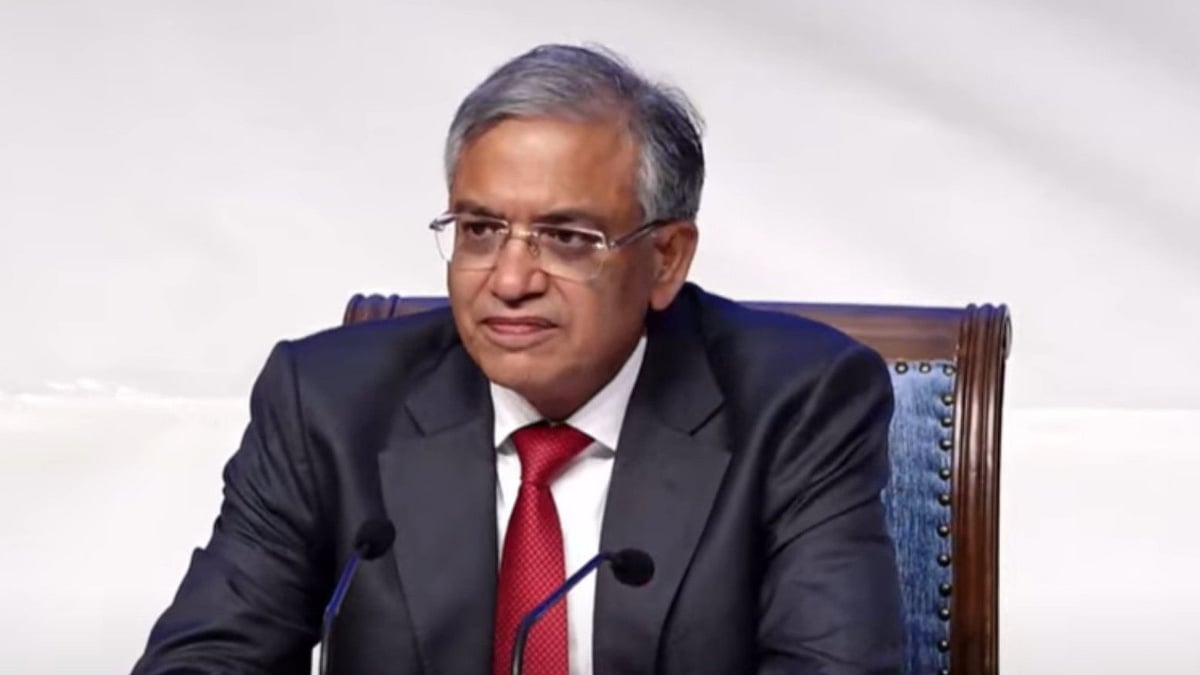
The Supreme Court of India heard multiple petitions on 5 October 2026 challenging the functioning of Chief Election Commissioner Gyanesh Kumar. The petitions allege that Kumar took unilateral decisions regarding the Special Intensive Revision (SIR) of electoral rolls without the concurrence of the other two Election Commissioners. The bench, led by Chief Justice Surya Kant and comprising Justices Joymalya Bagchi and V Mohana, issued notices to the Election Commission of India, the Union government, and other officials, seeking their responses.
According to Live Law, the Supreme Court declined to grant an ex-parte interim order to suspend CEC Gyanesh Kumar, stating that responses from all relevant parties must be obtained before any such action. The bench emphasized that suspending the CEC without hearing the respondents could disrupt the functioning of the Election Commission, particularly during ongoing electoral processes.
As reported by Bar and Bench, the Court sought replies from the Central government, the Election Commission, CEC Gyanesh Kumar, and other senior officials. The petitions allege that Kumar exercised powers individually, bypassing the statutory requirement for majority or unanimous decisions within the multi-member Commission. The bench stated, “After notice, if they come and the reports show that an Election Commission decision was neither by majority nor by unanimity, they will have to explain those decisions.”
Coverage revealed that the petitions were prompted by reports of at least 14 objections recorded by Election Commissioners Sukhbir Singh Sandhu and Vivek Joshi over the past 10 months regarding SIR-related decisions. The petitioners requested the Court to determine whether Kumar had exercised powers that legally belong to the Commission as a whole, and to annul any decisions found to be in violation of statutory procedures.
As highlighted by The Indian Express, one petition called for a Special Investigation Team (SIT) probe into the alleged irregularities and sought to declare the SIR process and all related actions invalid. The petitioners argued that the SIR was conducted without proper statutory or constitutional authority, and that the CEC’s actions fell outside the scope of official immunity, potentially constituting personal criminal liability.
“Article 324(1) of the Constitution does not vest the superintendence, direction and control of elections in an individual Chief Election Commissioner. It vests those powers in a Commission,” the plea stated, as cited in the proceedings.
Live updates indicated that the petitioners also sought the suspension and prosecution of Gyanesh Kumar, as well as a declaration that all decisions taken without the concurrence of the majority of Election Commissioners are illegal and void. The pleas further requested the examination of primary records to verify whether the disputed actions adhered to constitutional and statutory frameworks.
The bench reiterated that any Election Commission decision found not to comply with legal requirements could be annulled as proceedings continued. The Court also tagged related petitions together for further hearing and clarified that it expects the Election Commission to follow the law mandating majority or unanimous decisions for official actions.
“If records show some decision was not unanimous etc., we will injunct those decisions and say they are ultra-vires. We expect them to respond in a clear, transparent manner,” Justice Bagchi remarked during the hearing.
At the start of the hearing, further details emerged regarding the Court’s approach to urgent election-related matters, with the bench emphasizing the need for accountability and adherence to statutory procedures in all electoral processes.
Note: This article is produced using AI-assisted tools and is based on publicly available information. It has been reviewed by The Quint's editorial team before publishing.