Presidential Assent Granted To Transgender Amendment Bill 2026
President Murmu grants assent to controversial Transgender Amendment Bill, narrowing legal definition.
advertisement
The Transgender Persons (Protection of Rights) Amendment Bill, 2026, received presidential assent on 30 March 2026, officially enacting changes to the legal framework for transgender persons in India. The Bill, passed by both houses of Parliament the previous week, narrows the definition of transgender persons, introduces a medical certification process for legal recognition, and enhances penalties for offences such as forced identity and exploitation.
According to Bar and Bench, the new Act amends the Transgender Persons (Protection of Rights) Act, 2019, by redefining who qualifies as a transgender person. The revised definition recognises specific socio-cultural identities such as kinner, hijra, aravani, and jogta, as well as persons with intersex variations determined by biological characteristics. The law now excludes individuals with different sexual orientations and self-perceived sexual identities from its scope.
As reported by The Hindu, the Act introduces a structured process for legal recognition, requiring certification by a medical board headed by a Chief Medical Officer or Deputy Chief Medical Officer. District magistrates will issue identity certificates based on recommendations from these boards, and revised certificates may be issued following gender-affirming surgery upon submission of medical documentation.
Judicial observations from the Rajasthan High Court noted that the amendment risks turning “an inviolable aspect of personhood” into a state-mediated entitlement, departing from the constitutional baseline established by the Supreme Court’s 2014 NALSA judgment.
The Rajasthan High Court stated, “What was recognised by the Supreme Court as an inviolable aspect of personhood now risks being reduced to a contingent, state-mediated entitlement.”
Further coverage revealed that the Bill was passed in the Rajya Sabha on 25 March 2026, following clearance by the Lok Sabha. Opposition members had called for the Bill to be referred to a select committee for further scrutiny, expressing concerns about its impact on the dignity and rights of third-gender individuals.
Medical certification is now mandatory for legal gender recognition, and the law enables transgender individuals to change their first name in official documents upon certification. Analysis showed that the amendment introduces graded punishments for offences, with abduction and grievous harm to force a person into a transgender identity punishable by a minimum of 10 years’ imprisonment, extendable to life imprisonment. Offences involving children attract life imprisonment, while coercion for exploitation carries 5 to 10 years’ imprisonment.
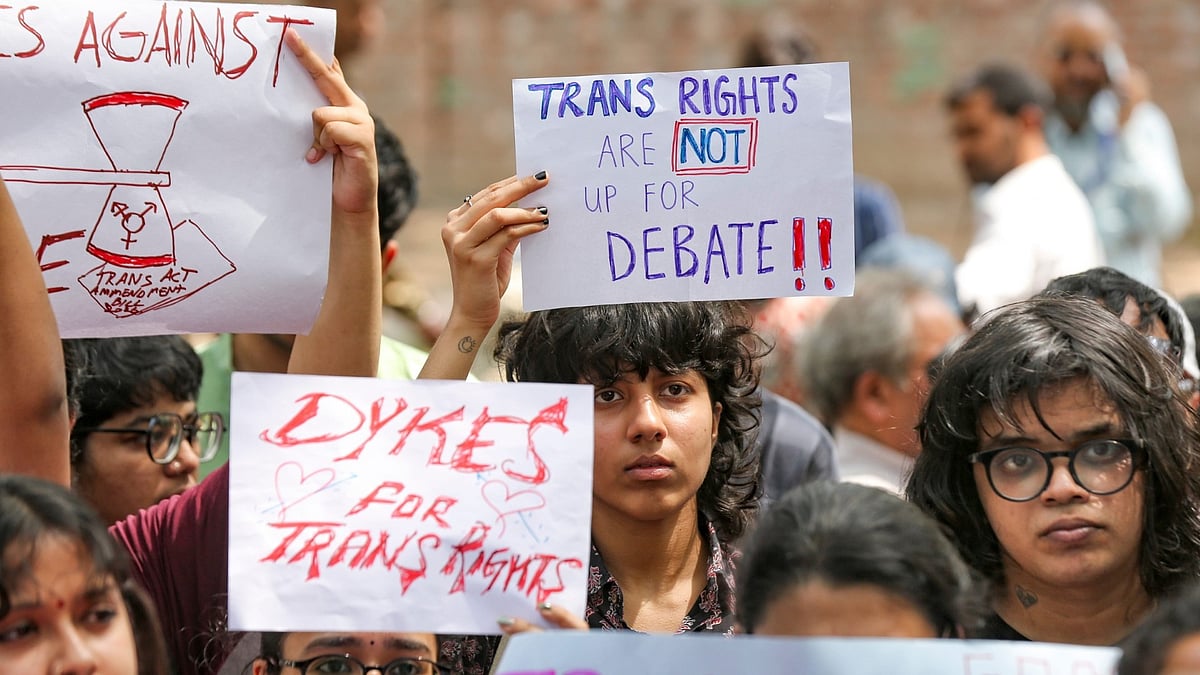
Stakeholders, including members of the National Council of Transgender Persons, resigned in protest, and a Supreme Court-appointed committee requested the withdrawal of the Bill. Reporting indicated that critics argue the law’s narrowed definition and medical certification requirements conflict with the principles of dignity, autonomy, and self-identification previously upheld by the judiciary.
One committee communication stated, “The legislative policy was and is intended to protect only those who face severe social exclusion due to biological reasons for no fault of their own and no choice of their own.”
Activists and legal professionals wrote to President Droupadi Murmu urging her not to grant assent, citing constitutional violations and procedural concerns. Details emerged that the law’s stated intent is to protect a specified class of persons facing severe social exclusion, rather than all gender identities, and that the previous definition was considered too broad for effective implementation.
During parliamentary discussions, the government maintained that the amendments would ensure protection for those facing discrimination due to biological issues, while critics maintained that the removal of self-identification undermines the rights and dignity of transgender persons. Further information confirmed that the Act is now in force following the President’s assent, despite ongoing protests and legal challenges from stakeholders and advocacy groups.
Activists stated, “The community fought to ensure that the right to self-identification was codified into law when the Act was drafted in 2019.”
Note: This article is produced using AI-assisted tools and is based on publicly available information. It has been reviewed by The Quint's editorial team before publishing.