Gates Sealed, Canteen Shut: Jamia Fortified as Admin, Govt Say Talks Underway
Jamia campus saw heightened tensions as students protest for union elections; gates damaged and Section 163 imposed.
advertisement
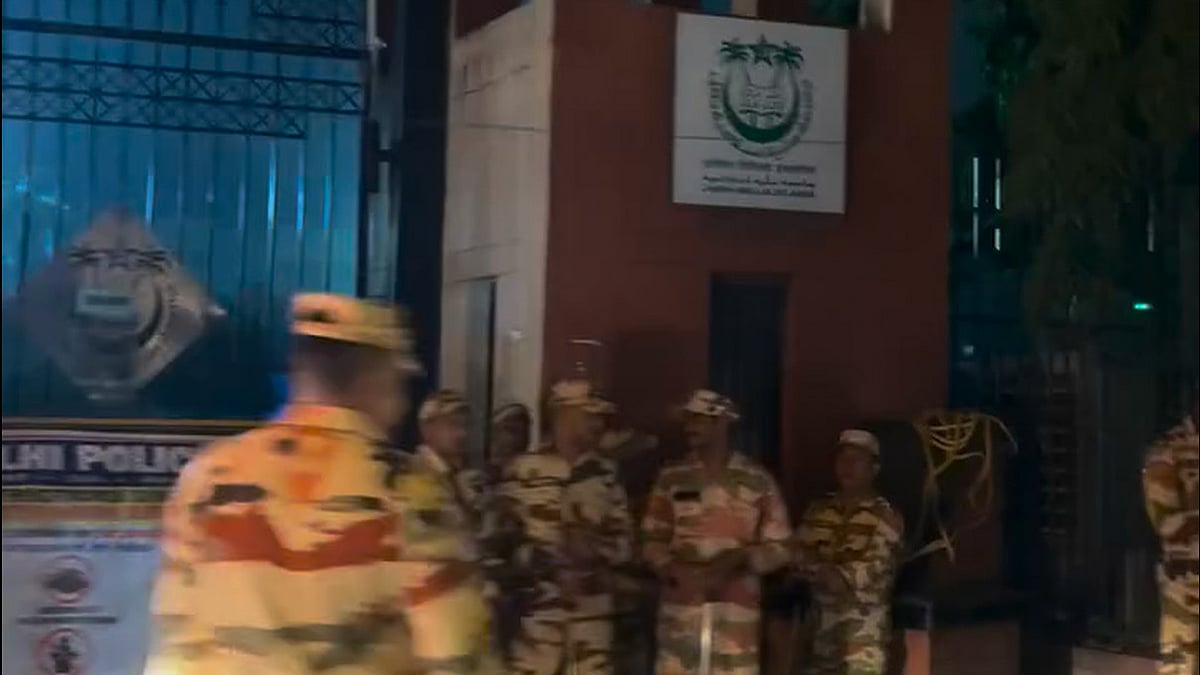
On 28 October 2026, the protest at Jamia Millia Islamia demanding the restoration of the Students’ Union and a fixed election schedule entered its sixteenth day. The university campus was cordoned off, major gates were closed, and prohibitory orders under Section 163 of the Bharatiya Nagarik Suraksha Sanhita were enforced. Security personnel, including police buses and riot-control vehicles, were stationed outside, and students reported restricted access to basic facilities inside the campus.
According to The Indian Express, Union Education Minister Pralhad Joshi stated that negotiations with the protesting students were ongoing and appealed for calm, urging students not to create a law-and-order situation. Despite the administration’s announcement to hold elections within 15 days of the Students’ Union constitution’s approval, students refused to end their protest, citing the absence of a concrete timeline and continued closure of essential campus facilities.
As reported by Hindustan Times, Section 163 was imposed outside the university, prohibiting assemblies and gatherings. All alternative entries were shut, and students occupying the Gulistan-e-Ghalib building continued their sit-in despite warnings from the administration. Security guards dispersed a group of students who briefly managed to reach Gate No. 7, and loudspeaker announcements reiterated the restrictions throughout the day.
Coverage revealed that police erected barricades and welded shut certain gates, such as Gate 4C, to prevent movement. Over 20 detention buses and riot-control vehicles were deployed, and banners announced the enforcement of Section 163. Students reported that university officials visited the protest site, checked identity cards, and issued show-cause notices to some participants.
In the evening, a scuffle reportedly broke out between students and police when doctors were not allowed to enter the campus to check on hunger strikers. Students maintained that their demands included a date-wise schedule for union elections, representation in the constitution-making committee, reopening of canteens and the library, and the resignation of the chief proctor. The administration cited concerns about lawlessness and the safety of women students as reasons for the restrictions.
“The campus is completely cordoned off. They have closed the canteen. They have sealed the gates. They have imposed (BNSS) Section 163 outside. There are riot-control vehicles, tear gas vehicles. Announcements are being made,” said Haneena, one of the protest organisers.
Reporting indicated that several students were detained outside the campus as police presence intensified. The Chief Proctor issued a final notice to hunger-striking students, warning of disciplinary and legal action if they did not vacate the protest site. Protesters alleged that students with valid identity cards were prevented from entering and detained, and that basic amenities such as electricity and water were disrupted during the protest.
Students also criticised the administration’s response, stating that the Registrar’s notification did not provide a binding timeline for the Students’ Union constitution or elections. They demanded withdrawal of all disciplinary actions related to the protest and called for transparent dialogue with a time-bound plan for restoring democratic representation. Analysis showed that the hunger strike and protest would continue until all demands were addressed, with students rejecting what they described as half-measures and indefinite assurances.
At the protest site, students displayed a whiteboard tracking weight loss among hunger strikers and staged symbolic demonstrations, including mock dead bodies and posters criticising the administration’s actions. Details emerged that women students faced limited access to washrooms, which had not been cleaned for two weeks, raising concerns about health and hygiene. Protesters reiterated that their movement would persist until the university administration provided a clear, time-bound commitment to restoring the Students’ Union.
Note: This article is produced using AI-assisted tools and is based on publicly available information. It has been reviewed by The Quint's editorial team before publishing.