
'Who Do We Turn to When Our Parents' Marriages Fail': A Teen Student Writes
'Thousands of children in India grow up in broken homes. But where do they seek mental help?'
advertisement
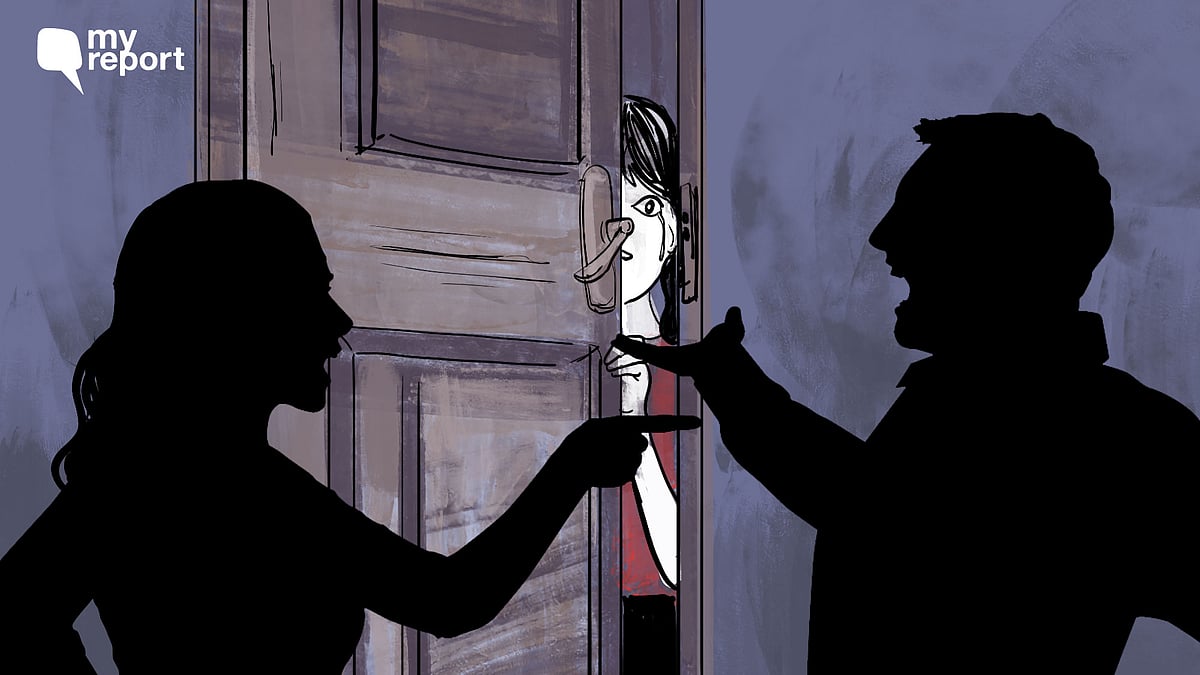
It was 10 at night. The shouting had finally stopped.
My friend Aditi's parents had been fighting again. She was well aware just how emotionally distant they had become. As their marriage deteriorated, their arguments only grew more frequent.
Aditi (name changed to protect identity) lay in bed counting her breaths, trying to steady the frantic rhythm of her anxious heart. She was twitching her cold feet, perhaps trying to remind them that they were still a part of her body.
This isn't the first time Aditi had experienced anxiety. She had experienced these erratic fights for the past 15 years of her life, and yet her body hadn’t got used to it.
Mornings didn’t feel like a new beginning either. She found it hard to differentiate between the present day and the previous day. Both just felt as dull and lonely as the other.
Aditi tried talking to the school counsellor, but apparently, she was more apt at giving career counselling than emotional understanding.
'Seeking Help in the Digital World'
Aditi and I are both class 12 students from Mohali, Punjab. Social media is not something new to our generation. It's something we have grown up with. We often try to look for solutions there. Aditi did the same.
There were many people like her in the world of Reddit and Quora, many trying to find a light in the neverending tunnel of their lives.
Someone there suggested she try online counselling. A small warm feeling in her chest rose. Perhaps she would finally find someone who could help her.
She opened the website, filled in her email ID, entered her name, and the page loaded with a message: “Pay Rs 300 to continue.”
She couldn’t pay because the payment could only be made using a credit card, and that meant asking her parents for help. Over the years, she had become too hesitant to even speak to them. She closed the page.
At least once every week, the counselling website would send her a reminder: “Dear Aditi, pay the Rs 300 fee to book a session with our top therapists”, reminding her that digital help is available, but only for those with a credit card.
'Time To Change'
Here’s the truth: Aditi isn’t alone. There are thousands of children in India growing up in homes where their parents’ relationship is falling apart. Where do they seek help?
Data suggests approximately 7.3 percent of Indian youth (18-29 years) face mental morbidity, with 20-22 percent of adolescents experiencing anxiety or depression, according to UNICEF India. The youth that are the future are struggling to build their own self, and sadly, many of them are alone in this endeavour.
The government hasn’t been entirely silent on this issue. With the launch of Tele-MANAS and the National Mental Health Programme, there has been official recognition that mental health deserves the same care and attention as physical health.
The real challenge lies in ensuring that when she does reach out, she is met with adequate support and a system ready to listen.
When she calls, she should not be met with delays or rushed responses. This requires expanding helpline capacity and staffing, so that every call is answered with time and care.
Not just that, people with mental health challenges need school counsellors who understand their heartbreak and anxiety, not just their board exam percentage.
They need a government portal that doesn’t time out when someone finally gathers the courage to click help, and they need a place where they can feel vulnerable without their financial constraints getting in the way.
If not, Aditi could become one more statistic, a number, a percentage, a published reminder of how an entire country and community failed its youth.
(The author is a Class 12 student from Mohali.)
(All 'My Report' branded stories are submitted by citizen journalists to The Quint. Though The Quint inquires into the claims/allegations from all parties before publishing, the report and the views expressed above are the citizen journalist's own. The Quint neither endorses nor is responsible for the same.)
- Access to all paywalled content on site
- Ad-free experience across The Quint
- Early previews of our Special Projects
Published: undefined