
Goa Protest: 'Our Hunger Strike is to Protect Our Lake, Not Oppose Development'
What makes the Chimbel protest significant is not its scale, but its symbolism, writes a Goa local.
advertisement
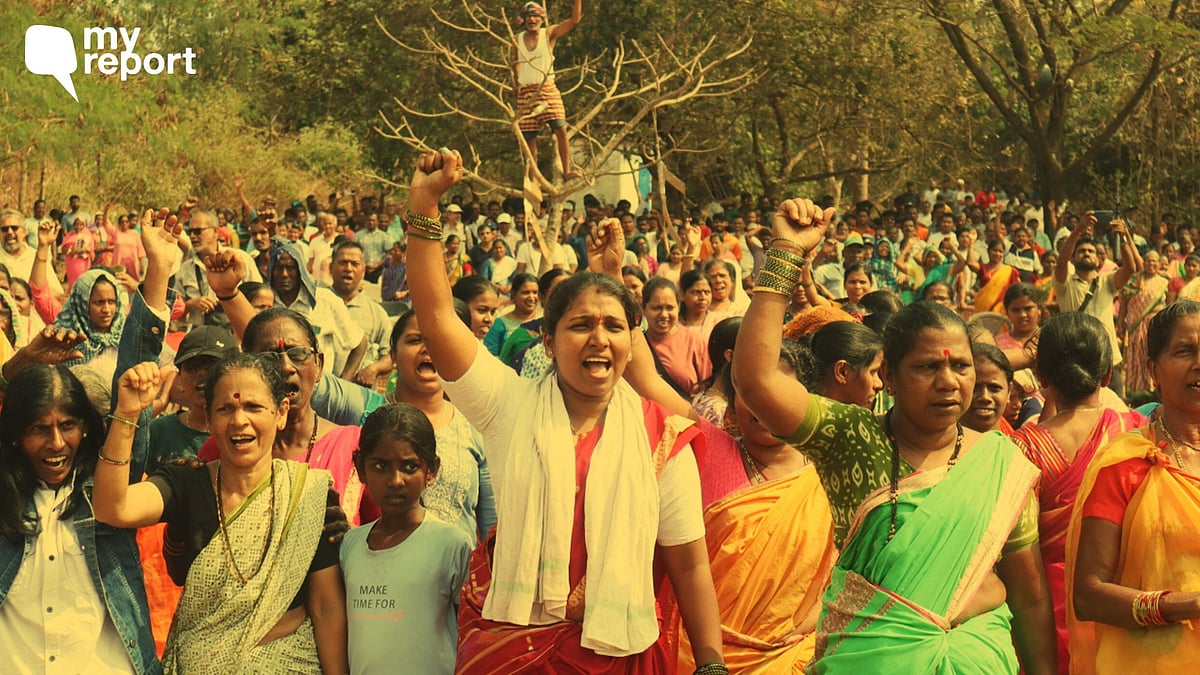
For the past one month, residents of Chimbel village on the outskirts of Panaji in Goa have been on a hunger strike, opposing the proposed construction of the Unity Mall and a 17-storey administrative structure, the Prashasan Stambh.
The proposed projects pose serious ecological threats to the wetland area around Toyyar Lake, Chimbel's lifeline. Beyond Chimbel, the projects threaten the natural drainage systems and water bodies that regulate flooding and groundwater recharge in and around Panaji.
After weeks of sustained protest, the Goa government has now acknowledged our 'sentiments and emotions'. In a press note, they have announced the projects will be relocated away from Chimbel.
As a person of Goan origin, such concretisation pains me because they can create serious ecological imbalance.
The proposed site lies close to Toyyar Lake, a water body that plays a crucial role in local drainage and groundwater recharge. Environmental experts have warned that any construction in this zone could worsen flooding in Panaji and surrounding areas.
‘A Protest to Save Our Roots’
Among the most prominent voices in the Chimbel agitation is Govind Shirodkar, Chairman of the Chimbel Biodiversity Management Committee. Shirodkar has repeatedly stated that the project violates environmental norms and undermines local decision-making. He has alleged that biodiversity committees and gram sabhas were treated as procedural hurdles rather than stakeholders.
Another local leader, Ajay Kholkar, has emerged as a key organiser on the ground, coordinating protests and public meetings.
The identities of those leading the protest matter, residents say, because this is not an anonymous movement. It is being led by villagers who can trace their relationship with the land across generations.
In Chimbel, protestors appearing in traditional attire or invoking tribal histories are not performing culture for attention. They are asserting continuity—a reminder that they existed before these plans, and will live with their consequences long after official files are closed.
‘Unsatisfactory Government Response’
After weeks of protest, Chief Minister Pramod Sawant met with protestors, assuring them that their concerns would be examined, and that no hasty decisions would be taken. Protestors, however, remain dissatisfied. They say the assurances did not meet their core demand: the formal withdrawal and relocation of the projects through documented commitments.
Government statements have continued to frame the Unity Mall as a development initiative with economic benefits, asserting that statutory clearances were followed. The gap between official claims and residents’ concerns remains wide.
What makes the Chimbel protest significant is not its scale, but its symbolism.
Despite the duration and intensity of the protest, the national media coverage has been limited. Activists argue that when struggles from smaller states fail to cross regional boundaries, they are easier to dismiss as local disturbances rather than structural concerns.
'Why This Story Needs National Attention'
Goa’s identity is not disappearing overnight. Residents say it is being diluted gradually, through cumulative decisions that treat land as vacant space and communities as obstacles. Chimbel offers a clear example of how identity is tied to ecology, governance, and participation.
This is not an anti-development protest, residents insist. It is a demand for development that recognises place. For national audiences, Chimbel is not just another local agitation—it is a case study in how small states negotiate survival within a centralised planning framework.
The Unity Mall protest in Chimbel is ultimately about belonging. It is about a community asserting that development cannot come at the cost of identity, and that progress cannot mean erasing relationships between people and land.
When villagers like Shirodkar and Kholkar sit on a hunger strike, they are not asking to be heard louder. They are asking to remain visible in a system that increasingly overlooks small places.
In a state as small as Goa, identity is not an abstract idea. It is land, water, memory, and the right to decide what the future should look like. Chimbel’s protest serves as a reminder that once these are lost, they cannot be rebuilt.
(The Quint has reached out to the Chief Minister’s Office and the Ministry of Tourism, Government of Goa, on the issues raised by this author. Their responses are awaited. The story will be updated when they revert.)
(All 'My Report' branded stories are submitted by citizen journalists to The Quint. Though The Quint inquires into the claims/allegations from all parties before publishing, the report and the views expressed above are the citizen journalist's own. The Quint neither endorses, nor is responsible for the same.)
- Access to all paywalled content on site
- Ad-free experience across The Quint
- Early previews of our Special Projects
Published: undefined