'Years Without AMU Student Union Polls, I'm Still Waiting to Cast My First Vote'
'For two weeks, the campus has been abuzz with talk of a hunger strike demanding AMU student union elections.'
advertisement
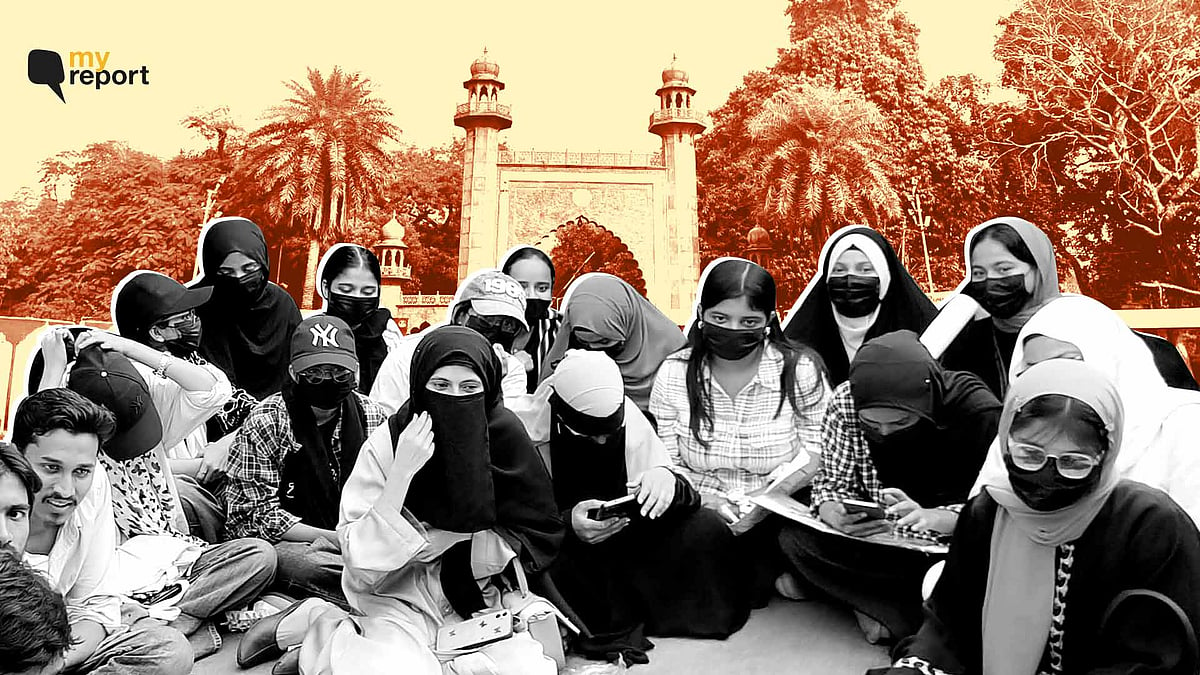
I am a student at Aligarh Muslim University (AMU). For the past two weeks, the campus has been abuzz with talk of a hunger strike to reinstate AMU Student Union Elections.
Yasir Fahad, a postgraduate student of Urdu, has been sitting on the said strike since 21 September, along with several others, demanding the restoration of the Student Union, the appointment of an election authority, and a date for elections.
'The Generation That Never Voted'
The last Student Union election at AMU was held in the 2018-19 session. Since then, several batches have entered and left the university without taking part in one.
I am part of that generation. I know the Union mostly from seniors and from stories about earlier years, not from experience. I notice its absence most when everyday campus issues come up.
Md Rashid Salim, a Mass Communication student, sees the Union as important for both student welfare and political awareness. "University life is not only about attending classes and preparing for exams," he told me.
Students also learn by discussing issues, taking part in activities and speaking for others, he said, adding that an elected Union could give them that experience while raising issues that affect them.
Javed Akhtar, a research scholar, spoke about the need for a common platform.
For him, the Union could be a channel through which students present their concerns collectively.
Abdur Rahman, an alumnus, spoke about AMU's tradition of student participation. "Elections give students an opportunity to take part in university affairs and learn what representation and responsibility involve," he told me.
He feels the question is also tied to the student culture that has grown at AMU over the years.
'It Is Not Only About an Election'
For me, this is not just about whether an election happens. It is also about students having a body that can speak for them when there is a problem.
Of course, having a Student Union does not mean the administration has to agree with every demand students make. There will be disagreements. But at least there will be an elected body where students can raise their concerns and take them to the administration.
What I really want from the university is a clear answer.
If there is a legal or administrative problem that prevents elections, tell us what it is. If an election authority has to be appointed first, tell us what is stopping that from happening. And if the university plans to hold elections, students should at least be told when they can expect them.
Right now, that clarity is missing. We keep hearing different things, but nobody seems to know what is actually going to happen.
For students like me, that is frustrating. We are not asking the university to give us an answer we want to hear. We are asking them to tell us where things stand.
Yasir's hunger strike has once again brought this issue to everyone's attention. I am worried about his health because a hunger strike lasting for days is not something that can be taken lightly. But even after this protest ends, the larger question will remain: what happens to student representation at AMU?
I don't want to be counted among those students from the previous batches who have not had a chance to vote for their representatives.
(The Quint has reached out AMU on the issue of the ongoing hunger strike over the Student Union elections. Their response is awaited. The story will be updated as and when they respond.)
(All 'My Report' branded stories are submitted by citizen journalists to The Quint. Though The Quint inquires into the claims/allegations from all parties before publishing, the report and the views expressed above are the citizen journalist's own. The Quint neither endorses nor is responsible for the same.)