
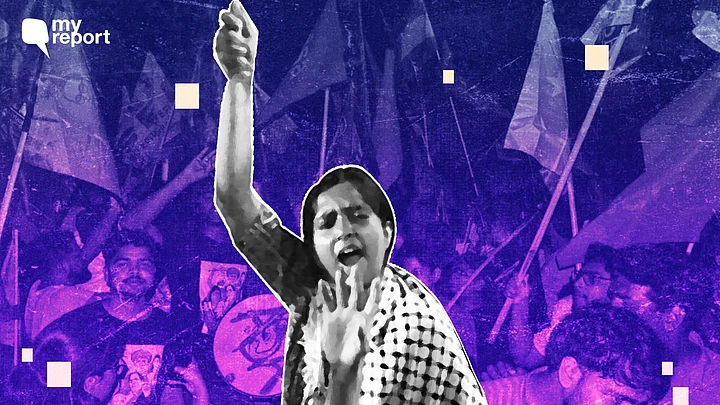
After Akhil Bharatiya Vidyarthi Parishad (ABVP) won three of the four central posts in September's Delhi University Students' Union (DUSU) election, one reading came almost immediately: "Gen Z has spoken".
President-elect Yash Dabas said the result showed Gen Z stood with the ABVP and the nation, and media coverage cast the election results as a window into a changing Gen Z political culture shaped by social media, protests, caste networks, housing, safety, and everyday campus concerns.
But can a student election really tell us what an entire generation believes? The DUSU result itself was more complicated than the three-out-of-four-posts headline suggested. ABVP won the president, secretary, and joint secretary posts, but independent candidate Deepanshu Shokeen, a former National Students' Union of India (NSUI) member, won the vice-presidency.
The presidential race was also relatively close, with Dabas receiving 24,576 votes against the NSUI's Vijay Shankar Meena's 22,523. Several other contests were also closely fought.
The point is not that the DUSU results say nothing about its voters. It clearly does. The question is what happens when students' choices in one institutional setting become a statement about an entire generation.