
Hamas Battling Different Clans for Control in Gaza: Who Are These Groups?
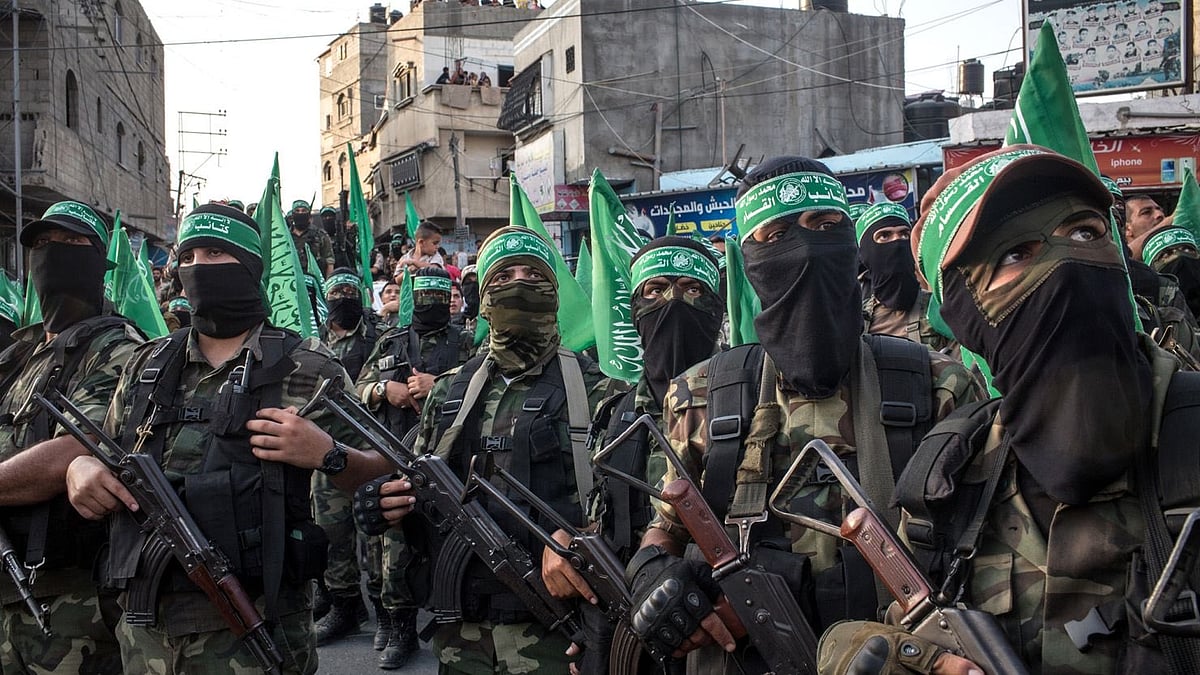
Over two dozen Palestinians have been killed in recent days in clashes between Hamas and members of various clans.
advertisement
So, who are these clans? What role do they play in Gaza? And how much of a threat are they to Hamas?
Who Are the Clans?
Familial clans have existed in Palestinian society for centuries. In recent decades, they have come to play a key role in Palestinian politics.
The clans are primarily collections of family groups in various parts of Gaza. One of the largest and most well-armed is the Dughmush clan in Gaza City, headed by Mumtaz Dughmush. This clan was immediately targeted by Hamas after the ceasefire.
The al-Majayda clan also holds sway in part of Khan Younis. Hamas forces raided their neighbourhood earlier this month, killing several family members. This week, however, the clan publicly supported Hamas’ effort to regain control over Gaza.
As Israeli historian Dror Ze’evi notes, any attempt by Hamas or Fatah to disarm the clans would be seen as an affront and met with serious opposition.
A Long History of Entrenched Power
After the 1948 war that saw the creation of Israel and the Palestinian al-naqbah (or Nakba), around 750,000 Palestinians fled Israel to the Gaza Strip, West Bank and neighbouring Arab states.
As law and order, security and financial independence improved in the territories in the subsequent decades, Palestinians came to rely less on their support. This brought a decline in their power and influence.
This changed, though, during the First Intifada (1987-93) and Second Intifada (2000-05) when Palestinian society was again plunged into crisis. This was especially true in the Gaza Strip, which was known as the engine room of organised Palestinian resistance.
The Second Intifada, in particular, changed the role of the clans significantly, after Israel destroyed much of the organised Palestinian security forces and infrastructure in the territories.
With neither Hamas nor Fatah able to ensure the safety of Palestinians, this created a security vacuum. And some of the clans exploited this by transforming into paramilitary organisations. Again, this was especially true in the Gaza Strip, where Israel’s efforts to crush Palestinian resistance were felt most intensely.
When the Second Intifada ended, the Gazan clans retained a significant amount of political influence and military power. After Hamas won the 2006 elections, some Fatah-aligned clans tried to prevent it from taking power.
Israel Backing Hamas Rivals
This status quo remained until Hamas’ 7 October 2023 attacks on Israel. Israel’s revenge for these attacks devastated the Gaza Strip, once again robbing Gazans of any semblance of safety and security.
Now, with Israel’s partial troop withdrawal, another security vacuum has been created. And many clans appear keen to fill it, some with the help of Israel.
In June, Israeli Prime Minister Benjamin Netanyahu admitted his government was arming some Gazan clans, gangs and militias, such as the Popular Forces, led by Yasser Abu Shabab.
Netanyahu’s rationale was that any opposition to Hamas helped Israel and saved soldiers’ lives. It also pitted Palestinian against Palestinian, placing additional pressure on Hamas.
After the ceasefire came into effect, Hamas began targeting what it called “collaborators and traitors” – an apparent reference to those clans and gangs cooperating with Israel.
The Popular Forces, meanwhile, have refused to lay down their arms. A dozen other new militias have also reportedly emerged across the strip in recent days, including one led by Hossam al-Astal, who said:
While this violence between Hamas and rival groups does not directly affect the ceasefire that ended the war, it is evidence that Israel is still attempting to meddle in Gaza’s security and exert its control.
But the peace plan negotiated by US President Donald Trump looks shakier by the day, given its call for Hamas to disarm. Trump said this week if Hamas refused to disarm themselves, “we will disarm them […] perhaps violently”.
The peace plan also calls for Hamas to withdraw from Palestinian politics, to be replaced eventually by the Palestinian Authority, which currently administers parts of the West Bank. However, Netanyahu has repeatedly rejected the Palestinian Authority assuming control of Gaza.
This ambiguity over the future governance of Gaza opens the possibility that the more powerful clans could become alternate centres of political power, as they had during the Second Intifada. This time they may do so under the auspices of Israel’s military occupation.
This would further fracture Gaza and weaken any effort by the Palestinian Authority to reunite the territories under a single governance structure. It would also make a future Palestinian state tenuous.
(Martin Kear is a Sessional Lecturer at the Department of Government and International Relations at the University of Sydney. This article is republished from The Conversation under a Creative Commons license. Read the original article here.)
- Access to all paywalled content on site
- Ad-free experience across The Quint
- Early previews of our Special Projects
Published: undefined