‘Brown’ Review: Karisma Kapoor Stars in a Been-There-Done-That Whodunnit
'Brown' shows its age. It feels dated as a crime thriller that struggles to be greater than the sum of its tropes.
advertisement
Stop me if you’ve heard this one. A pill-popping, alcohol-swigging, chain-smoking detective is forced back on duty to catch a killer terrorising a decrepit, dingy city. Before the bodies pile up, she must track down and stop the devil whilst confronting her own demons, wading through the ghosts of her past and navigating a moody murder mystery.
The air is thick with despair and grief. The (female) victim was found mutilated. The list of suspects is long, ranging from shifty family members to shifty exes to shifty stalkers. Everyone’s fractured, broken, carrying a truckload of trauma.
Starting Strong
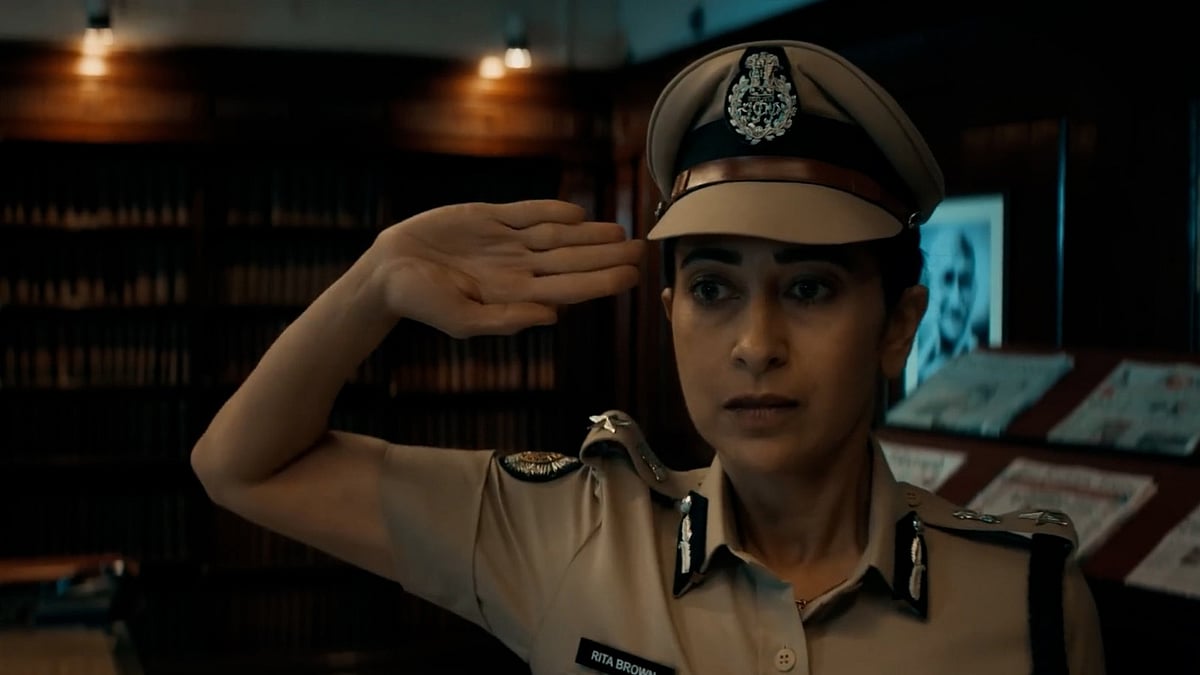
Adapted from Abhik Barua’s City of Death, the Kolkata-set series stars Karisma Kapoor as detective Rita Brown, who returns to policing after a personal tragedy took her out of action for two years. She teams up with a new partner, officer Arjun Sinha (the always-solid Surya Sharma), to track down a violent killer.
In the first few episodes, while the narrative from writers Diggi Sisodia, Sunayana Kumari, and Mayukh Ghosh is conventional and formulaic, Brown remains very watchable.
The storytelling is clean in establishing the crime, the victim (a young girl belonging to Kolkata’s richest family), and the suspects—her estranged industrialist father who seems unaffected by her death (Ajinky Deo), her distraught brother (a suitably unstable Paresh Pahuja), her violent ex-boyfriend (Aryann Bhowmick), her therapist (Jisshu Sengupta), and so on.
Gimmicky Storytelling
Brown descends into an overwritten, dry been-there-done-that whodunnit that increasingly gets away from itself. In terms of both the craft and the writing, you start to see through the design of the series and its ‘permanent shadow’ aesthetic.
Surya Sharma in a still from Brown.
(Photo Courtesy: YouTube)
There’s also the little issue of the fact that you can guess the killer from the moment they’re introduced. Heck, you could probably guess it correctly based on this review alone.
In the patience-testing latter half of the seven-episode series, Brown also casts too wide a net. Instead of sticking to effective bare basics—Rita and Arjun investigating the murders—the series is weighed down by dull subplots about the emotional state of characters that we just don’t care about. Not to mention tiring, repetitive arcs about media trials and politicking as the higher-ups try to take Rita off the case.
Similarly, Soni Razdan plays Rita’s mother and the character serves no purpose and adds nothing to the narrative or to establishing Rita’s psychology.
Karisma Kapoor Like We’ve Never Seen Her
The fact is, eventually, the feeling of gimmickyness and reverse engineering the conventions of a moody crime thriller supersede engaging storytelling. It feels more stagey than sincere.
The use of the Kolkata setting is a prime example. The idea is promising—to use the barely held-together city as an arena for an investigation thriller. But the setting feels like mere synthetic window dressing alone. This story could have taken place anywhere.
There’s also the problem of the show’s gaze.
Brown stars Karisma Kapoor like we’ve never seen her. The tortured cop is a templated archetype at this point. Karisma’s performance hardly breaks any new ground and doesn’t quite convey the level of interiority and dimension needed to ground Rita’s ghosts in real emotion.
Put simply, we’re convinced she’s in pain but we hardly feel it with her. She’s also not the most well-written protagonist, routinely dishing out awkward, corny lines. When the murderer corners her and asks her what she’s most scared of, before threatening to torture her, she screams “love”.
What we’re left with is a series that shows its age. Brown feels derivative and dated as a crime thriller that struggles to be greater than the sum of its tropes.
(Suchin Mehrotra is a critic and film journalist who covers Indian cinema for a range of publications. He's also the host of The Streaming Show podcast on his own YouTube channel. This is an opinion piece, and the views expressed above are the author’s own. The Quint neither endorses nor is responsible for the same.)