
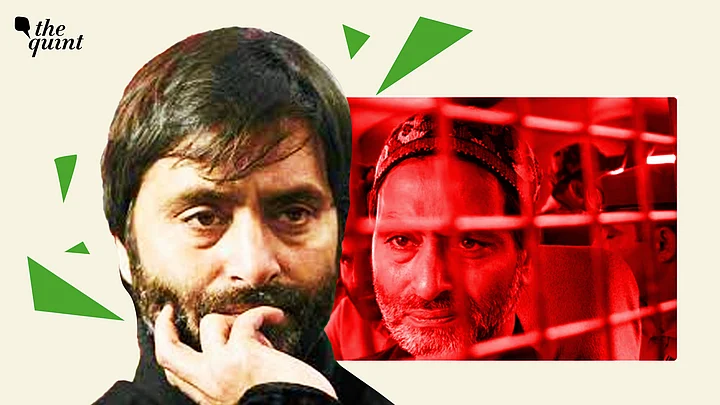
The controversial affidavit that Yasin Malik, the head of the proscribed militant group Jammu & Kashmir Liberation Front (JKLF), has submitted in the Delhi High Court comes with a point-by-point rebuttal of the charges levelled against him by the National Investigation Agency (NIA).
But while mounting his defence, 59-year-old Malik seems to have opened a Pandora’s box. He has brought to light an underside of India’s older security doctrines to showcase how past political calculations blurred the lines between ideology and affinity.
At the same time, the picture that Malik has tried to paint of himself is not of the anti-India separatist he is known for being, but that of a political interlocutor whose actions were allegedly determined upon the orders (or requests, depending on who one believes) from the top echelons of the Indian government and its attendant arms, primarily security agencies such as Intelligence Bureau (IB).
This has sparked a wave of bafflement in Kashmir, where people are struggling to reconcile what they had known about the separatist leader so far, with what he has been revealing about himself now. “Right now, it is difficult to believe what is true and what is not,” said Faheem Nisar, a 26-year-old scholar from Srinagar. “Those who have read the reports are gripped by a sense of shock.”