
ADVERTISEMENTREMOVE AD

Invisible Labour of Tradition: How Women Make (& Pay for) the ‘Festive’ Home

Rituals, festivities do more than confer meaning; they create obligations that institutionalise women’s roles.

Published
story-hero-img
i
Aa
Aa
Small
Aa
Medium
Aa
Large

Unpaid domestic and care work of women is the backbone of daily life in an Indian household; it is the cooking, cleaning, caregiving, shopping, and emotional labour that make households run. In India, this invisible economy is not a small add-on; it is a structural reality that consumes large parts of women’s time and choices. This pattern is hardly anecdotal. The 2019 Time Use Survey by the National Statistical Office found women aged 15–59 spent, on average, 46 percent of their waking hours on unpaid work, roughly eight times more than men.

Similarly, a 2024 survey recorded women spending 289 minutes (over 4.8 hours) per day on unpaid domestic services, while men spent just 88 minutes. These gaps are not trivial; they determine who can work, study, rest and participate fully in public life.

As we move on from the festive, smoggy, hangover of October into the twinkly fairy lights of December, it is worth remembering how exhausted many women have been through this season.

ADVERTISEMENTREMOVE AD

Invisible Workers 

Be it Diwali, Christmas, Eid or Guru Parab, homes look brightly lit, with scrumptious food, lively parties, and piles of gifts. But the choreography behind those images is often invisible.

The colourful pictures we admire on social media are stitched together by unpaid, gendered labour: cleaning, cooking, arranging pujas or get togethers, welcoming relatives, and the countless small tasks that make a home “festive.” For many women, this season is not a respite but a magnified second shift, where the public joy of celebration is piled on top of private, unpaid work. However, you may ask, while gender inequality in unpaid work is well documented, why do festivals matter so much? Rituals and festivities do more than confer meaning; they create obligations that institutionalise women’s roles within the home. When women’s unpaid work goes unseen, the costs of maintaining a social life are borne privately by them rather than shared as a public good.

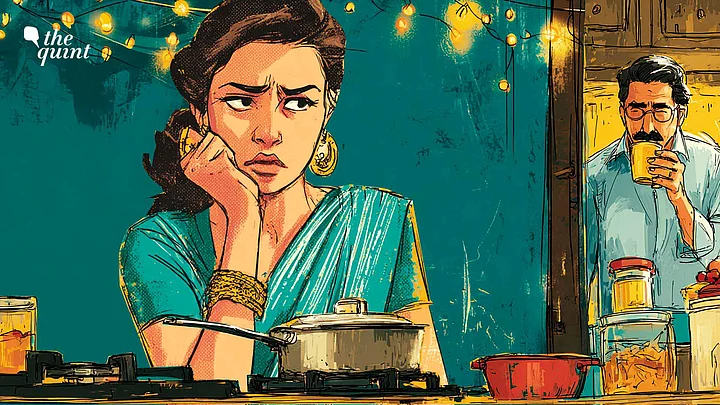
Many ceremonies explicitly call for a woman’s presence or labour and make her the default manager of the festival: she cooks even while fasting, cleans while celebrating, and welcomes the family with a sense of assumed devotion.

That dynamic is visible in small, human scenes. I once watched an Instagram reel of a creator filming her mother in a narrow kitchen, hands dusted with flour, rolling out sweets while the camera lingered on the practiced movements. The caption read in gentle frustration: “If you removed women’s labour from festive celebrations, it would just be men sitting in dirty homes, eating stale food, complaining about why no one’s celebrating.” The clip contained a truth we’ve normalised: the glitter of a festival is stitched together by women’s labour.

This gendered division of work comes with real costs beyond the usual workload. Women in paid jobs must juggle full-time work with expanded household duties during festival season, compounding stress and time poverty. For women outside formal employment, who already shoulder caregiving and domestic responsibilities, festival duties simply add to an already heavy load. The paradox is stark: celebrations meant to bring joy and connection often leave women more exhausted, with little space for rest or leisure. Leisure becomes a luxury, rare, interrupted, and gendered. Projects such as the Instagram initiative 'Basanti: Women at Leisure' have started documenting and encouraging moments of rest and self-expression precisely because those moments are so scarce.

A Policy Matter

If unpaid care is an economic subsidy, policy must treat it that way. Governments can invest in public care infrastructure, subsidized childcare, and community kitchens, and create flexible work arrangements or festival leave to recognise domestic responsibilities. If festivals are a social obligation, then change must come with structural support where men must be invited and expected to share responsibilities, not just participate symbolically.

Data underlines the scale of the problem. India’s female labour force participation remains low relative to men, held back by unpaid care burdens that interrupt education and employment pathways and force women to trade leisure and agency for household upkeep.

Recent analyses show female labour participation lags by decades behind peer economies and that caregiving responsibilities are a prime barrier for women entering or staying in paid work. During festivals, these layers of unpaid work intensify, bringing immediate mental and physical strain, and long-term losses in opportunity.

At the personal and household level, there are simple, practical steps we can take. Share lists and tasks, rotate rituals, and treat festival preparation as a family responsibility, not a woman’s duty. At work, employers can offer flexible schedules around major holidays and normalise staggered leave so that caregiving doesn’t fall on women by default. Lastly, at the policy level, greater public investment in care, community kitchens, and shared festive infrastructure can ease the burden, while campaigns can model men’s equal participation in domestic rituals.

Change is not a betrayal of tradition; it’s a way to preserve its essence. We can hold onto the joy and meaning of our rituals while sharing the labor that sustains them. If festivals are the theatre of family and community life, then the work behind the scenes deserves recognition too. Counting and valuing women’s invisible labor, in data, in policy, and in everyday practice, is a small but necessary act of justice. Only then will the season we call celebratory truly feel like a celebration for everyone.

(The author is a former LAMP fellow; ex-Lead, Governance & Policy Affairs to Dr Amar Patnaik (ex-Member of RS); and Research Volunteer at CGAP. This is an opinion piece. All views expressed are the author’s own. The Quint neither endorses nor is responsible for them.)

Speaking truth to power requires allies like you.
Become a Member
Monthly
6-Monthly
Annual
Check Member Benefits
×
×