
ADVERTISEMENTREMOVE AD

Why Bengal’s Muslim OBCs Are Uneasy About BJP’s Reservation Push

The BJP alleges the TMC's OBC policy favoured the Muslim caste groups at the expense of Hindu OBC communities.

Published
story-hero-img
i
Aa
Aa
Small
Aa
Medium
Aa
Large

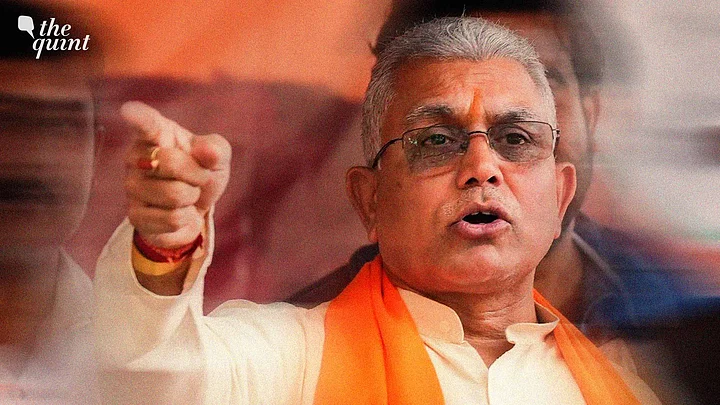
Soon after the West Bengal Assembly election results, Bharatiya Janata Party (BJP) leader and current state minister Dilip Ghosh was seen celebrating the party's landslide win by enjoying a plate of bhaat machh (fish and rice).

The fish festival was organised by the OBC (Other Backward Classes) Morcha of the BJP's state unit, which has been active for over a decade now to mobilise the backward Hindu castes to vote for the party.

The OBC Morcha rose in importance after Dilip Ghosh, who comes from the OBC Goala-Gope community, was made the BJP's state unit President in 2015, forcing the state to reckon with caste politics.

From a mere three MLAs in 2016, Ghosh took the party to great heights with 77 seats in the 2021 Assembly elections, wresting the role of the main Opposition party from the CPI(M) and the Congress.

ADVERTISEMENTREMOVE AD

End of TMC's Caste Politics

In a state dominated by class-based politics of the Left parties, or franchise politics based on the local patron-clientele network promoted by Mamata Banerjee’s Trinomool Congress (TMC), the BJP under Ghosh actively politicised the backward Hindu castes in the states and wooed their votes.

In 2018, just before the Panchayat elections, the BJP demanded 27 percent reservation for the OBCs just like other states in the country, and sought to include more backward caste groups within its ambit.

It is only an irony that soon after coming to power, the newly elected BJP government of West Bengal has reduced the OBC reservation from 17 percent to 7 percent.

A notice issued by the state's Backward Classes Welfare Department cited a Calcutta High Court judgment delivered on 22 May 2024 seeking to do away with Category A (Most Backward, 10 percent) and Category B (Backward, 7 percent) of the state OBC list. It also released a fresh list of OBC groups with 66 communities (including 11 Muslim castes) that were included till 2010, and ended reservation benefits for 77 communities that were given OBC status by the previous governments. Incidentally, 75 of these excluded communities are Muslim or follow Islam.

Urban Development and Women & Child Welfare Minister Agnimitra Paul has promised to conduct a new survey of the backward castes in the state and review the OBC reservation policy later. But the move has effectively ended the ongoing bitter legal battle fought by the previous TMC government, starting soon after the party challenged the 2024 Calcutta High Court order before the Supreme Court.

In March last year, the state government counsel Kapil Sibal informed the Supreme Court that it would withdraw the appeal and prepare a fresh list of OBC communities after studying socially and educationally backward communities in the state.

In June, following a benchmark survey when the Mamata Banerjee government had announced a new OBC list with 142 communities, it retained all but two previously cancelled Muslim castes.  

As the new list also got embroiled in a legal quagmire with the Calcutta High Court staying it on 17 June 2025, the state government rushed to the Supreme Court again.

The apex court ruled in the party's favour by stating that, according to the nine-judge bench in the Indira Sawney case of 1992, backward classes in society could be identified through executive directions.

The BJP fought the 2026 Assembly elections on the pitch that it would end the OBC policy pursued by the Mamata Banerjee government, which it alleged favoured the Muslim caste groups at the expense of Hindu OBC communities.  

Relgionisation of Caste  

Though the Mandal Commission report elaborately discussed the criteria to include non-Hindu communities into the OBC fold on the principle of social justice and inclusive citizenship, the Mamata Banerjee government sought to religionise caste, thereby totally changing the discourse around it in West Bengal.

Soon after she came to power in 2011, she proudly declared that her government has included 99 percent of the Muslim population under the OBC category and increased their reservation from the 7 percent during the Buddhadeb Bhattacharya government to 17 percent.

Though this created a visible Muslim middle class and assertiveness for the first time in the state in the post-Independence era, it also allowed the BJP to campaign against the OBC policy by framing it as reservation based on religion.  

After the latest notification by the BJP-ruled West Bengal government, most of the backward Muslim caste communities like Jolah (Ansari-Momin), Fakir, Sain, Kasai, Nashya Sekh, Pahadia Muslim,Rayeen (Kunjra), Shershabadia, Hajjam (Muslim), Chowduli (Muslim), Kahar, Hawari/Dhobi that found mention in the Mandal Commission report remain on the OBC list.

But the hurried approach of the Mamata Banerjee government to conduct a sample survey (rather than a comprehensive caste survey) to identify new OBCs in order to provide them reservation has vitiated the social justice discourse for many Muslim caste groups.

In an ideal situation, Muslim caste groups like the Khotta Muslims, who find mention in Sharat Chandra Chatterjee’s famous novel Srikanta as a community facing ridicule, or the Muslim Dafadar mentioned in the 1931 caste census as 'backward', or the Muslim Bhangi or Halalkhor, whose counterparts are Hindu Scheduled Caste, should enjoy OBC status for their backwardness. But they have been left out.  

ADVERTISEMENTREMOVE AD

'Second SIR'

Now that West Bengal Cabinet minister Kshudiram Tudu has announced that caste certificates issued during the Mamata Banerjee regime would be re-verified, a large chunk of Muslims in government jobs in the state have been left anxious over fears of a "second SIR".

The special intensive revision (SIR) of voter rolls in the state deleted at least 27 lakh voters from the electoral roll ahead of polls.

There was ample opportunity available for the Mamata Banerjee government to conduct a comprehensive caste survey following the Bihar or Telangana model, which would have surely passed judicial scrutiny but she avoided this route.

During the INDIA meeting of Opposition parties before the 2024 Lok Sabha elections, the TMC was the only party that opposed the nationwide caste census proposed by Rahul Gandhi. The Muslim leadership in the state has also shied away from the politicisation of caste identities and looked at the backwardness of these communities as a "Muslim problem" just like TMC leaders.

As a result, the future of many genuine backward Muslim caste groups are in darkness today. The real goal should be to discuss their backwardness from the ideals of social justice and citizenship.  

(Adil Hossain is a faculty at the School of Development, Azim Premji University. He can be reached at @adilhossain. This is an opinion piece and the views expressed are the author’s own. The Quint neither endorses nor is responsible for the same.)

Speaking truth to power requires allies like you.
Become a Member
Monthly
6-Monthly
Annual
Check Member Benefits
×
×