
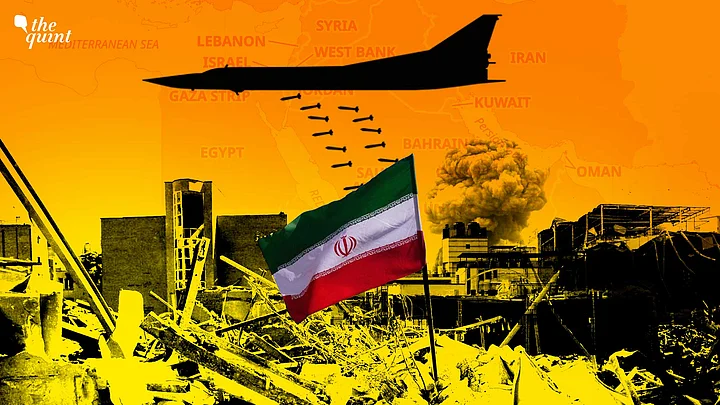
More often than not, in public debates surrounding the war, the discussion gravitates towards the visible costs: the number of jets lost, military expenditure, infrastructure destruction, humanitarian crises, and economic disruption. Governments around the world tally defence budgets, analysts calculate the prices of ammunition, and commentators debate the economic consequences.
However, these debates often obscure the far more consequential reality: the most enduring costs of war are strategic rather than financial. They shape the future of international relations long after the gun falls silent.
The ongoing tension in West Asia illustrates this dynamic with remarkable clarity.
War Economy
As military exchanges expand across multiple fronts and the risk of regional escalation is already high, a quieter diplomatic dynamic is unravelling. Several Arab states, many of which have spent the last decade stabilising their economies and repositioning themselves as global hubs of investment and tourism, are increasingly calling for restraint and de-escalation. Far from just being humanitarian, their concern is also strategic.
This dynamic was on full display a few days ago when Anwar Gargash, the diplomatic advisor to the UAW president, took to X to warn against the strategic cost of aggression. He asked “Iran to return to its senses” before the “circle of isolation and escalation widens”.
In the last few decades, some countries in the region have begun a cautious shift away from permanent confrontation toward economic transformation. Saudi Arabia’s Vision 2030, the UAE’s push to become a global financial and logistics hub, and ambitious infrastructure projects across the Gulf were all premised on the assumption that the region could reduce volatility and attract global capital. War disrupts that trajectory almost instantly.
Speaking at the “Asia in 2050 Conference" in Bangkok, International Monetary Fund's Managing Director Kristine Georgeiva argued that the prolonged conflict runs the risk of undermining economic stability at the global level, adding, “The sooner this calamity ends, the better it will be for the global economy”. Even conflicts that are geographically contained can reshape global perceptions of an entire region.
However, the economic disruption is just one part of the entire picture. In international politics, states possess something less tangible but equally valuable: strategic capital.
It includes diplomatic credibility, regional legitimacy, alliances, and the potential to shape international agendas. Unlike its militaristic counterpart, strategic capital cannot be replenished quickly, and war tends to consume it faster.
Geopolitics of Regime Change
As soft power pioneer Joseph S Nye Jr observed in the aftermath of the Iraq War, power in international politics is not merely the ability to coerce through military strength but the ability to obtain the outcomes one wants. Military victories often mean little without the soft power needed to sustain legitimacy and alliances.
When other countries perceive policies as legitimate, cooperation becomes easier; when that legitimacy erodes, even overwhelming military strength becomes politically costly. It weakens alliances and diminishes a state's global influence. In our global history, there are sobering examples.
The US emerged militarily victorious in Iraq in 2003. Still, the invasion had profound implications for its global standing, with war straining alliances, triggering international opposition, and triggering a broader legitimacy crisis that the US continues to grapple with. Besides Iraq, Russia’s invasion of Ukraine yields similar isolation.
Another glaring example is Saudi Arabia’s intervention in Yemen. In March 2015, Riyadh launched Operation Decisive Storm, a Saudi-led GCC coalition airstrike campaign against the Houthis, who had seized Sana’a and ousted Yemen’s government. Riyadh’s objective was to restore President Hadi, crush the Iran-backed Houthis, and assert Sunni Arab leadership.
Instead, while airstrikes resulted in massive civilian casualties and damaged Saudi Arabia's global image, the Houthis were empowered. They captured Red Sea ports, threatened Saudi oil fields, and are more entrenched today than they were in 2015.
The costly war also exposed and exacerbated fractures within the GCC. The UAE drew down its military presence in 2019 to pursue its own separate agenda in the south, while the 2017 Gulf Crisis saw Qatar expelled from the coalition and blockaded by its neighbours.
Oman, on the other hand, avoided the coalition entirely. Exploiting the diplomatic vacuum, Muscat stayed neutral, hosted Houthi-Saudi ceasefires, mediated US-Iran talks, and successfully positioned itself as the 'Switzerland of the Gulf.'
Therefore, wars launched in pursuit of security often generate wider insecurity.
West Asia on the Churn
West Asia is confronting a similar cycle today. As military operations expand and regional actors worry about their spillover effects, the political patience of the neighbouring states is wearing thin.
Riyadh's recent diplomatic scramble could exemplify this. Saudi Foreign Minister Prince Faisal bin Farhan engaged in calls with global counterparts, including Chinese Wang Yi, to emphasise that Saudi Arabia “does not wish to see the region engulfed in war”. Riyadh is actively choosing restraint to protect its strategic and economic trajectory.
For many Arab states, the stakes are particularly high. Their political legitimacy rests not solely on security but also on economic performance, and large-scale national projects require sustained international confidence. Prolonged conflict undermines that confidence.
Wars and conflicts do something subtle but profound. It shifts political systems into a permanent crisis mode, thereby making governments prioritize security over reform, diplomacy over cooperation, and regional politics revolve more around conflict than economic integration. In the early stages of conflict, the costs appear primarily financial, but as the war drags on, deeper costs emerge, such as diplomatic isolation, weakened alliances, disrupted economic futures, and long-term regional instability. These costs are rarely captured in military budgets, but they make a profound impact on international politics.
The irony is that modern wars often begin with relatively clear tactical objectives like restoring deterrence, eliminating threats, or reshaping the regional balance of power. However, as the conflict escalates, its political consequences become harder to control.
The alliances shift rapidly, domestic pressures intensify, and conflicts expand beyond their original scope. By the time policymakers realise this, much of the damage has already been done. For a region like the purported "Middle East", where some governments are increasingly seeking economic transformation, the stakes could not be higher. Every new conflict is pushing that transition further into the future.
While rebuilding cities is easy and even economies can recover with time, strategic capital, including the trust of allies, confidence of investors, and the legitimacy of regional leadership, is harder to restore. And once it’s spent, no military victory can easily buy it back.
(Pulkit Buttan is a PhD scholar at the Tata Institute of Social Sciences, Mumbai. Vyas Muni is an Assistant Professor at GLA University, Mathura. This is an opinion piece and the views expressed are the author's own. The Quint does not endorse or is responsible for them.)
