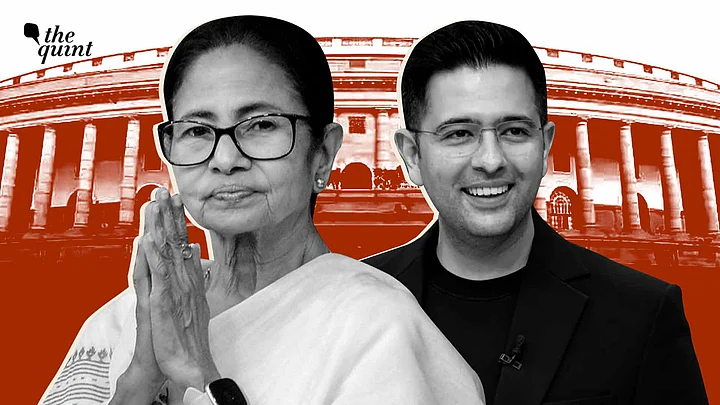
The Tenth Schedule of the Constitution is back in focus, this time in the Lok Sabha. Earlier this week, it was reported that around twenty Members of Parliament belonging to the Trinamool Congress (TMC) may break ties with the party and seek recognition as a separate bloc while extending support to the ruling National Democratic Alliance.
If successful, the development is likely to be challenged for violating the anti-defection law, particularly because the Constitution abolished protection for splits in political parties more than two decades ago and today only recognises the merger exception. Further, such conduct may also raise questions regarding whether the MPs have "voluntarily given up" their membership of their political party, an independent ground for disqualification in itself.
This is the second recent instance of the anti-defection law being discussed in Parliament. Only a few months ago, a group of Rajya Sabha MPs belonging to the Aam Aadmi Party merged with the Bharatiya Janata Party, avoiding disqualification through the protection of the merger exception, a move promptly accepted by the Chairperson.
Both episodes bring the anti-defection provisions into focus and also provide an opportunity to revisit a broader question: forty years after its enactment, is the anti-defection law still serving the purpose for which it was introduced?
The Shift in Democratic Accountability
It must be clarified that defections are not a new phenomenon. In fact, they formed the very backdrop against which the Tenth Schedule was enacted in 1985. Studies have shown that between 1967 and 1983, there were more than 2,700 recorded cases of defections in State Assemblies alone, with the ruling Congress Party being the beneficiary in nearly 1,900 cases.
More recently, a study by the Association for Democratic Reforms found that since coming into power in 2014, the BJP has emerged as the key beneficiary of defections. The statistics clearly highlight that defections have persisted across governments, with the ruling party often being its primary beneficiary.
The anti-defection law sought to address this concern by fundamentally altering the constitutional relationship between the voter, legislator and political party. India consciously adopted a parliamentary form of government, a choice justified by Ambedkar on the ground that it offered greater responsibility as governments remain accountable to legislatures through questions, debates, resolutions, no-confidence motions and other parliamentary mechanisms.
The idea was that elected representatives would represent the interest of their constituency and hold the government accountable, irrespective of the political party to which they belonged. This is evident from the early years of Parliament, where members of the same political party often held differing views on important questions and, at times, voted according to their conscience or their constituencies.
The anti-defection law significantly altered this arrangement. By attaching the consequence of disqualification to voting contrary to party directions, it shifted the focus of accountability from the electorate and the legislature towards the political party. Legislators are no longer free to vote according to their conscience or the interests of their constituents, if party directions or a whip is in place.
The law effectively prioritises party discipline as a virtue over individual legislative autonomy. It is therefore ironic that the most controversial aspect of the anti-defection framework today is a constitutional provision that appears to sideline the political party itself.
The Merger Exception
As discussed in a previous column for The Quint, courts have largely adhered to the disjunctive interpretation. This has increasingly produced a situation where the legislature party assumes heightened significance independent of the political party. The legislators may claim the protection of the merger exception even where the original political party continues to exist outside the House and opposes the move.
Recent examples highlight the difficulty with this outcome. The Aam Aadmi Party continues to exist as a political party, principally opposing the BJP, yet its Rajya Sabha MPs have joined the BJP and claimed protection under the merger provision. Similarly, in 2021, twelve Congress MLAs in Meghalaya merged with the TMC, avoiding disqualification altogether. In both cases, the focus shifted almost entirely to the legislature party and its numerical strength rather than the wishes of the original political party.
This interpretation also sits uneasily with the rationale behind the anti-defection law. If the purpose of the law is to strengthen party discipline and preserve electoral mandates, it is difficult to explain why the political party itself can effectively become irrelevant once a sufficient number of legislators agree to move together.
The consequences are particularly significant in smaller States, where a disjunctive reading of Paragraph 4 makes defections considerably easier, as smaller the legislature, the easier it becomes to engineer the two-third numerical threshold. Researchers at the Vidhi Centre for Legal Policy, analysed defections in smaller States, and found that, in several cases, a single MLA could successfully trigger a merger and avoid disqualification.
A challenge to the disjunctive interpretation of Paragraph 4 is pending before the Supreme Court since 2022.
The Speaker Issue
This brings us to the second, and perhaps more fundamental, problem: the enforcement of anti-defection provisions. Under the Tenth Schedule, disqualification petitions are to be decided by the Speaker or the Chairman.
The assumption underlying this provision is that these constitutional authorities will act impartially.
However, time and again, concerns of partisanship and bias have been raised as disqualification petitions often remain pending for years, prompting parties to approach the courts for relief. By the time such disputes are ultimately decided, either the tenure of the House has substantially progressed or even come to an end in some cases, rendering the dispute “academic” in the courts' own words.
For instance, in 2017, a Congress MLA in Manipur was inducted as a Minister in a BJP-led government, however, the disqualification petition against him remained undecided for nearly three years. Similarly, during the Shiv Sena Split in Maharashtra, the Speaker took considerable time to decide the disqualification petitions, prompting repeated interventions by the Supreme Court. At one stage, the Court expressed its dissatisfaction with the delay and observed that the Speaker was ‘not doing his job’.
However, the problem is not merely one of delay, as in other instances, Speakers and Chairpersons have acted with remarkable speed, raising concerns that political considerations may influence the timing of decisions.
In fact, while upholding the constitutionality of the Tenth Schedule in Kihoto Hollohan v. Zachillhu (1992), Justice Verma, in his dissenting opinion, cautioned that since the Speaker is elected by the majority in the House, ‘the likelihood of suspicion of bias could not be ruled out’. Recently, another bench urged Parliament to reconsider whether disqualification petitions ought to be decided by the Speaker, observing that the Speaker continues to belong to a political party, either de jure or de facto. It urged the Court to vest the power instead in an authority capable of acting both impartially and expeditiously.
Operation Successful, Patient Dead
One of the principal reasons that the Supreme Court in Kihota Hollohan upheld the Speaker's adjudicatory powers in matters of disqualification was the faith that courts would act as a safeguard against partisan or erroneous decisions. However, the courts have often fallen short of this expectation, particularly due to delays in deciding electoral disputes. In one matter, by the time the Supreme Court took up the petition, fresh elections had already been conducted. The Court subsequently described the issue as ‘largely academic’—a situation brought about, at least partly, by the Court’s own delay.
It is true that delays are often prompted by numerous factors, most important of which is the existing backlog of cases. However, some disputes deserve priority because of their impact on elections and democracy, and their inherently time-sensitive nature.
While the petition remains pending, governments are formed, ministries are constituted, and policy decisions are undertaken. Ultimately, by the time the judgment is delivered, the political reality that gave rise to the dispute may have fundamentally changed and the Court may also no longer be in a position to reverse its consequences.
The anti-defection law was enacted with the noble objective of preserving party discipline and respecting electoral mandates. However, its application over the last four decades reveals deficiencies in both its design and enforcement mechanisms, which must be addressed by both Parliament and the courts if the promise underlying the law is to be meaningfully realised.
(The writer leads Charkha, the Constitutional Law Centre at the Vidhi Centre for Legal Policy. He specialises in constitutional law and administrative law, with a particular focus on constitutional interpretation and judicial review. This is an opinion piece and the views expressed above are the author’s own. The Quint neither endorses nor is responsible for them.)