
ADVERTISEMENTREMOVE AD

Supreme Court’s Caste Verdict Deepens Exclusion of Dalit Muslims, Christians

Barring Muslims and Christians from acquiring Scheduled Caste status violates the doctrine of equal treatment.

Published
story-hero-img
i
Aa
Aa
Small
Aa
Medium
Aa
Large

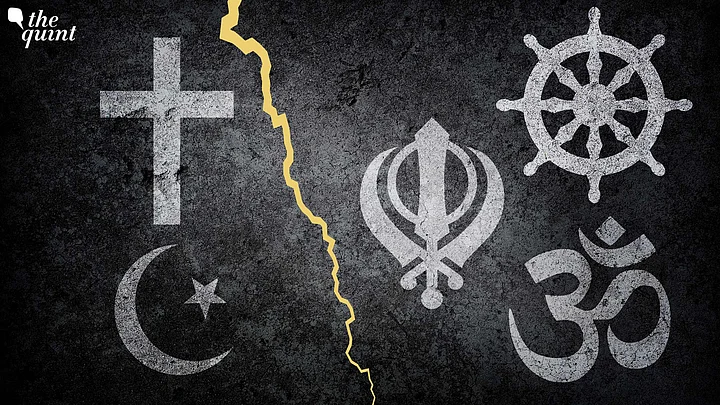
A recent judgment by the Supreme Court of India, where it held that individuals who follow religions other than Hinduism, Sikhism and Buddhism cannot claim the status of Scheduled Caste (SC), missed a historic opportunity to expand the scope of social justice. The judgment also pronounced that any act of conversation to other religions would result in immediate and complete loss of SC status.

The court was hearing the case of an individual named Chinthada Anand, who was born a Hindu Madiga (SC) but converted to Christianity to become a pastor. Because of his Madiga identity he had allegedly suffered repeated caste attacks and slurs, which prompted him to file cases under the Scheduled Caste and Scheduled Tribes (Prevention of Atrocities) Act of 1989.

But, in April last year, the Andhra Pradesh High Court quashed criminal proceedings, stating that caste is not recognised in Christianity and he could no longer seek protection under the  Scheduled Castes and Scheduled Tribes (Prevention of Atrocities) Act, 1989.

ADVERTISEMENTREMOVE AD

'Religionisation of Caste'

While all the affirmative action policies like the Economically Weaker Section (EWS), Other Backward Classes (OBC), and the Scheduled Tribes (ST) categories are religion-neutral, Scheduled Caste is not, and the latest Supreme Court judgment would keep it the same.

After this judgment, all eyes would be on the three member committee constituted under the chairmanship of former Chief Justice of India, KG Balakrishnan, in October 2022 tasked with examining whether Dalits who have converted to Christianity or Islam should be granted SC status. Another petition to accord Scheduled Caste status to Dalit Muslims and Dalit Christians was filed in the Supreme Court in 1994, which continues to be heard today.

Though the Prime Minister of India had taken up the case of marginalisation of Pasmanda Muslims (which includes both Dalit and other backward Muslim groups), his government argued in an affidavit filed in the Supreme Court that caste and untouchability are a ‘feature of Hindu society’ and that “backwardness based on Untouchability is only prevalent in Hindu society or its branches and not in any other religion.”

Christian organisations like the All India Christian Council and the Catholic Bishop Conference of India along with Muslim organisations such as the All India Backward Muslim Morcha and Pasmanda Muslim Mahaz since the 1990s have registered their protest against the Clause 3 of the Constitution (Scheduled Caste) Order, 1950, which says that “no person who professes a religion different from Hinduism shall be deemed to be a member of a Scheduled Caste”. This provision was amended in 1956 and then in 1990 to include people professing Sikhism and Buddhism, respectively.

Scholars like Khalid Anis Ansari argue that such state decisions are “coloured by the orientalist-colonial religionisation of caste, where caste was rearticulated primarily as a Hindu phenomenon, and the ideological factors were privileged at the expense of the political economy.”

Invisibilising Systemic Oppression

Dalit Christian and Dalit Muslim organisations have always argued that despite conversion from ex-Hindu untouchable castes, the nature of oppression remained the same, resulting in similar social disabilities and social and educational backwardness as their Hindu counterparts.

The last caste census done in 1931 by the colonial administration pointed this out as well, where they found continued practice of untouchability and severe forms of discrimination among the Muslim and Christian converts from low/outcaste Hindus.

In recent times, sociologists like Imtiaz Ahmed, P Louis, PK Trivedi, among many others, have documented myriad cases of untouchability and caste discrimination among the Muslim and Christian community.

Today, many safai karamcharis and sanitation workers employed by different city corporations in Indian cities come from these Dalit Muslim groups like ‘Bhisti’ (who used to carry water in leather pouches in earlier times), Muslim Bhangi (scavengers), Halalkhors (sweepers) and there are enough media reports to show how they face untimely death while cleaning sewers without proper gear. But, it is only arbitrary and discriminatory that while their Hindu compatriots could enjoy the SC status, despite doing the same work for generations and facing similar challenges and alienation, Dalit Muslim and Christian groups are kept outside this affirmative policy.

ADVERTISEMENTREMOVE AD

Justifying Historic Injustice

The burden of history is often invoked to highlight the fact that elite Muslim upper caste or Ashraf leadership in newly independent India bargained more for cultural and minority specific rights in the new Constitution (Article 25-31) rather than for socio-economic rights for the Muslim Dalits and other lower caste groups.

The Supreme Court judgment of 24 March erroneously put a seal on such historic negotiations of power between elites of the community as a settled fact, and denied the post-Mandal emergence of social consciousness and leadership among the Dalit Muslim and Dalit Christian groups.

The judgment also laid down the process through which these groups can reconvert to their previous religions to enjoy SC status again and what would constitute a burden of proof. It can be argued that this judgment violates doctrine of equal treatment, discriminates against specific religions and infringes on the freedom to profess any religion under the Constitution. And it is pronounced with more legal and administrative causes rather than any sociological basis.

(Adil Hossain is a faculty at the School of Development, Azim Premji University. He can be reached at @adilhossain. This is an opinion piece and the views expressed are the author’s own. The Quint neither endorses nor is responsible for the same.)

Speaking truth to power requires allies like you.
Become a Member
Monthly
6-Monthly
Annual
Check Member Benefits
×
×